








A Colonial Blueprint for Africa’s Future
Assumpta Weekly Newsletter And Lifestyle Magazines
Presents ”The Lawyer“ with Ms Assumpta-Gahutu and Three Ghanaian Special Broadcast Journalists
A Special edition is coming on Monday, 10th February 2025 at: assumptagh.live/



https://www.instagram.com/hairsenta?igsh=MXAzOThhNGZ0Nm15dQ==
Dark. Mysterious. Unforgettable.
A shadow moves. A breath catches. And then— a transformation begins.
Welcome to Hair Senta, where every strand holds a secret and every style tells a story. Dare to change? Step inside… but beware—you may never look at yourself the same way again. Hair Senta. Beauty with an edge.

African Stream: Article Title Published: “Trump’s Gaza Takeover: A Colonial Blueprint for Africa’s Future?”
Monday Newsletter Title:
“Trump’s Gaza Takeover: A Colonial Blueprint for Africa’s Future?”
Introduction
Colonial powers have used war, displacement, and economic control to seize land and resources for centuries. Today, history is repeating itself—this time under the guise of “development” and “security.” Former U.S. President Donald Trump has openly proposed a full-scale U.S. takeover of Gaza once Israel has completed its military operations. His vision? To rebuild and control the land—just as colonial powers did in Africa.

But this is not just about Gaza. It is a test run for a larger strategy that could soon extend to Africa, particularly Sudan, Congo, and the Sahel region. The pattern is clear: create instability, offer a solution, and take control. From historical colonialism to modern geopolitical conflicts, the same playbook is being used—again.
As Africa continues to battle foreign interference in its politics, economy, and natural resources, the question arises: Will Africa resist, or will history repeat itself?

Trump’s Gaza “Takeover” Plan: A Warning Shot for Africa
At first glance, this may seem like just another discussion about Donald Trump. But the real issue here is Gaza—and the broader implications for Africa. Trump’s recent statements about the U.S. taking over the Gaza Strip reveal a dangerous geopolitical agenda. He has proposed a full-scale U.S. takeover of Gaza once Israel has completed its military operations, which have resulted in mass destruction, displacement, and loss of Palestinian lives. Now, after genocide and devastation, the so-called “real estate mogul” envisions development on stolen land.
But this isn’t just about Gaza. It’s a test run for something bigger.
The Colonial Playbook Repeats Itself
If Trump’s proposal sounds familiar, it’s because it follows the same colonial strategies used in Africa for centuries. European powers once justified their invasion of Africa by claiming they were bringing “development.” In reality, they colonized and exploited the continent. Today, the process is different but the goal remains the same: foreign control over land and resources.
Even in 2024, Africa is still grappling with the remnants of colonization. Take South Africa, for example. President Cyril Ramaphosa recently signed a controversial land bill that some argue could disempower Black South Africans. At the same time, South Africa’s involvement in the Democratic Republic of Congo (DRC) raises questions about its role in regional conflicts. The ANC and the Zionist-backed DA party appear to be working together to seize African land for foreign real estate development—just as Trump has now declared for Gaza.
Gaza, Congo, and Sudan: The Same Strategy
Let’s be clear: The U.S. has no legal or moral authority to claim Gaza as its own. It cannot forcibly remove two million Palestinians from their land without violating international law. Yet this is precisely the model being used in Congo and Sudan today.
- Sudan: Over 8.5 million people have been displaced by ongoing conflict, largely fueled by foreign interests, including the United Arab Emirates, which continues to profit from the war.
- Congo: More than 6 million Congolese are displaced, with 4 million of them in eastern Congo, where the world’s most valuable minerals—such as cobalt and coltan—are found. The U.S., China, and India all benefit economically from this chaos, while local populations suffer.
Trump’s Expanding Colonial Vision
Trump’s ambitions don’t stop at Gaza. Before making these statements, he had already suggested re-colonizing the Panama Canal and even annexing Greenland. Now, his attention has shifted to Africa, particularly the Sahel region, Sudan, and Congo.
Is the U.S. already operating in Africa? The answer is yes. Covert operations in resource-rich areas of Sudan and the Congo are becoming increasingly visible. If Trump’s rhetoric is anything to go by, these operations will soon move into the open.
The Way Forward for Africa
Africa must take proactive steps to resist these neocolonial ambitions. Here’s how:
- Elect Transformative Leaders – From the presidency to local governments, Africa needs leaders who prioritize national interests over foreign agendas. Corrupt elites continue to enable figures like Trump and Macron, to facilitate foreign exploitation.
- Hold Current Presidents Accountable – Citizens must demand transparency and resistance to foreign manipulation. Leaders who serve external powers instead of their people should be challenged and removed from office.
- Strengthen Economic and Political Independence – Africa must move away from reliance on foreign loans, military interventions, and exploitative trade agreements. Self-sufficiency is the only way to prevent foreign takeovers.
Final Thoughts
Trump’s Gaza plan is not just about Gaza—it is a blueprint for future interventions. If history has taught us anything, it is that colonial ambitions never stop voluntarily. They continue until they are challenged and defeated.
The question now is: Is Africa ready to resist?
A Special Dialogue on America’s Frontier Spirit, Trump’s Gaza Plan, and Its Implications for Africa
Introduction and Greetings
Serwaa-Amihere:
Good evening, and welcome to today’s special discussion. I’m Serwaa Amihere, joined by my esteemed colleagues Berla Mundi and Frema Adunyame, as well as a special guest, Ms. Assumpta Gahutu—CEO of Assumpta Newsletter Publications and Principal of Babies and Toddlers Early Learning Center. Ms. Gahutu, welcome to the conversation.


Ms. Assumpta-Gahutu:
Thank you, Serwaa. It’s a pleasure to join you all. This is an important discussion, and I’m looking forward to diving into it.

Berla-Mundi:
Ms. Gahutu, your work spans both media and early childhood education, which makes your perspective unique. Before we get into the heart of the matter—Trump’s Gaza plan—let’s first set the stage with an important concept: America’s Frontier Spirit and how it has shaped U.S. foreign policy.
The Legacy of America’s Frontier Spirit
Frema-Adunyame:
Let’s start here: The United States was built on what they call the “Frontier Spirit.” From the late 18th century through the 19th century, the American government encouraged expansion—taking land from Indigenous communities under the belief that they had a divine right to settle and “develop” it. They called it Manifest Destiny.

Illustration of “The Legacy of America’s Frontier Spirit.“ !
But what started as domestic expansion soon extended beyond America’s borders. This same mentality was later used to justify military interventions and land grabs in places like Vietnam, Iraq, Libya, Syria, and now possibly Gaza.

Ms. Assumpta-Gahutu:
That’s a critical point, Frema. America’s expansionist mindset is not new. It’s part of their national DNA. When we look at Trump’s plan for Gaza, we have to understand that it is just another chapter in the long history of land acquisition, occupation, and resource control.
And Africa should take notice—because what is happening in Gaza is a blueprint for what could happen here.
Trump’s Gaza “Takeover” Plan: A Warning Shot for Africa.

Serwaa-Amihere:
At first glance, people may think this is just another story about Donald Trump. But what he has proposed—a full-scale U.S. takeover of Gaza—is more than just words. Once Israel has finished its military operation, Trump envisions America stepping in to develop and control the land.

Berla-Mundi:
And here’s where history repeats itself. Trump’s approach to Gaza is not about helping Palestinians. It’s about taking over a strategic territory once it has been cleared of its original inhabitants. This is colonialism in real-time.
The Colonial Playbook Repeats Itself

Ms. Assumpta-Gahutu:
If this sounds familiar, that’s because it follows the same colonial strategies used in Africa for centuries. European powers once claimed they were bringing “civilization” to Africa, but in reality, they were stealing land and resources. Today, the methods are different, but the goal remains the same: foreign control.

Frema-Adunyame:
Even in 2025, Africa is still dealing with the effects of colonization. Take South Africa—President Cyril Ramaphosa recently signed a land bill that some believe could weaken Black South Africans’ land rights.
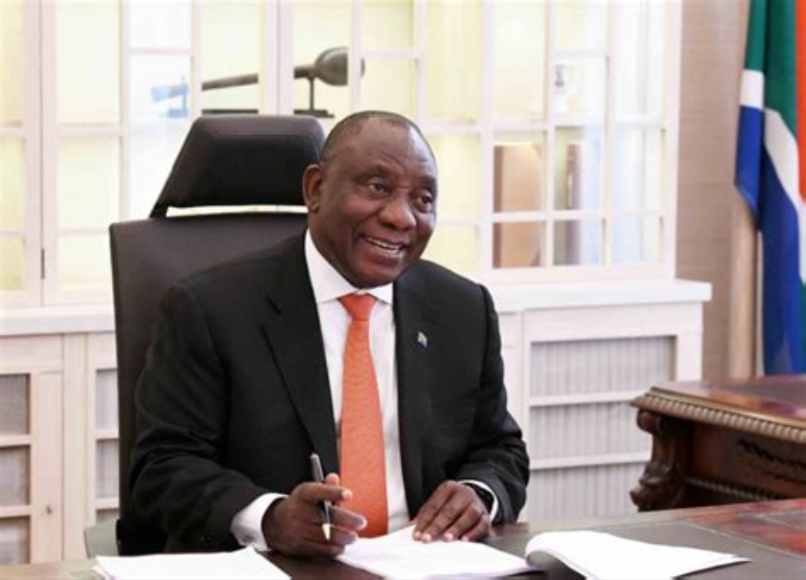
On January 23, 2025, President Cyril Ramaphosa signed the Expropriation Bill into law, repealing the pre-democratic Expropriation Act of 1975. This new legislation outlines how state organs may expropriate land in the public interest for various purposes.
The bill has been the subject of extensive public consultation and parliamentary debate over the past five years. It aims to address historical land ownership disparities stemming from colonialism and apartheid by allowing land expropriation without compensation in specific circumstances.
The enactment of this law has elicited international responses. Notably, U.S. President Donald Trump signed an executive order to freeze aid to South Africa, citing concerns over the land expropriation policy.
For more insights into the political reactions within South Africa, you might find this video informative:
At the same time, South Africa is deeply involved in the Democratic Republic of Congo (DRC), raising concerns about its role in regional conflicts.
Gaza, Congo, and Sudan: The Same Strategy

Serwaa-Amihere:
Let’s be clear: The U.S. has no legal or moral authority to claim Gaza. Forcing two million Palestinians off their land violates international law. Yet, we see the same tactics being used in Congo and Sudan.

Berla-Mundi:
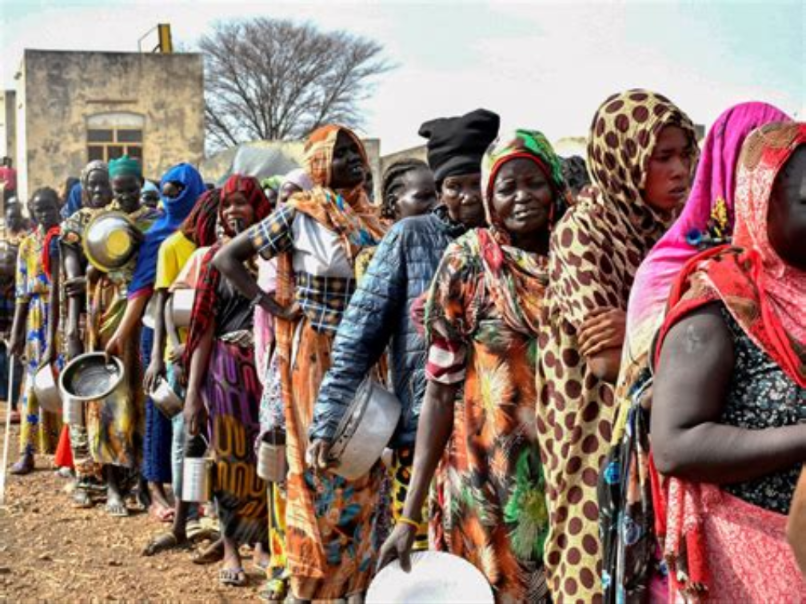
- In Sudan, over 8.5 million people have been displaced because of conflicts fueled by foreign interests—particularly the United Arab Emirates, which profits from the war.


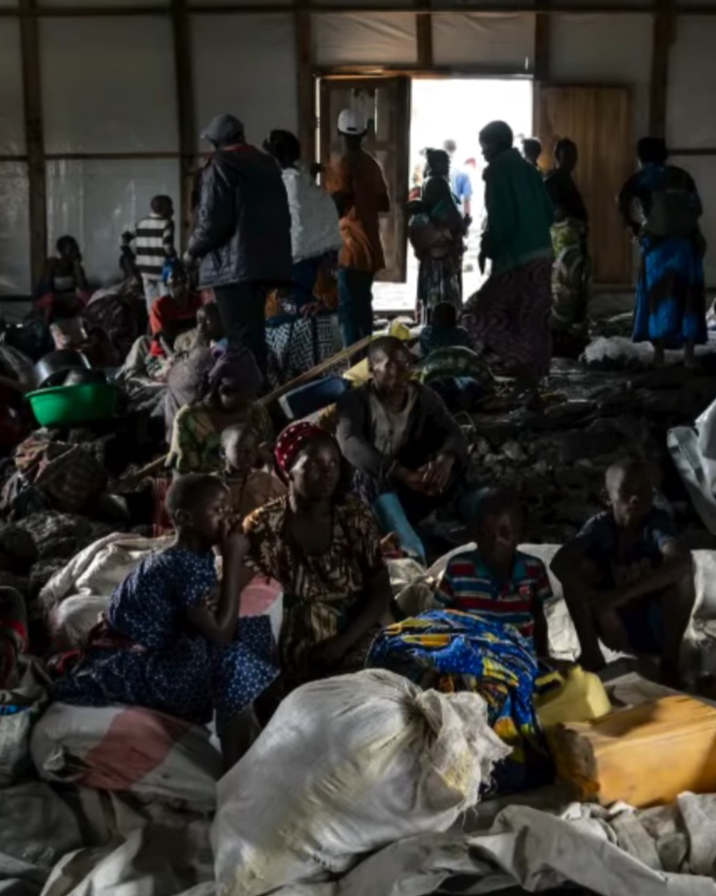
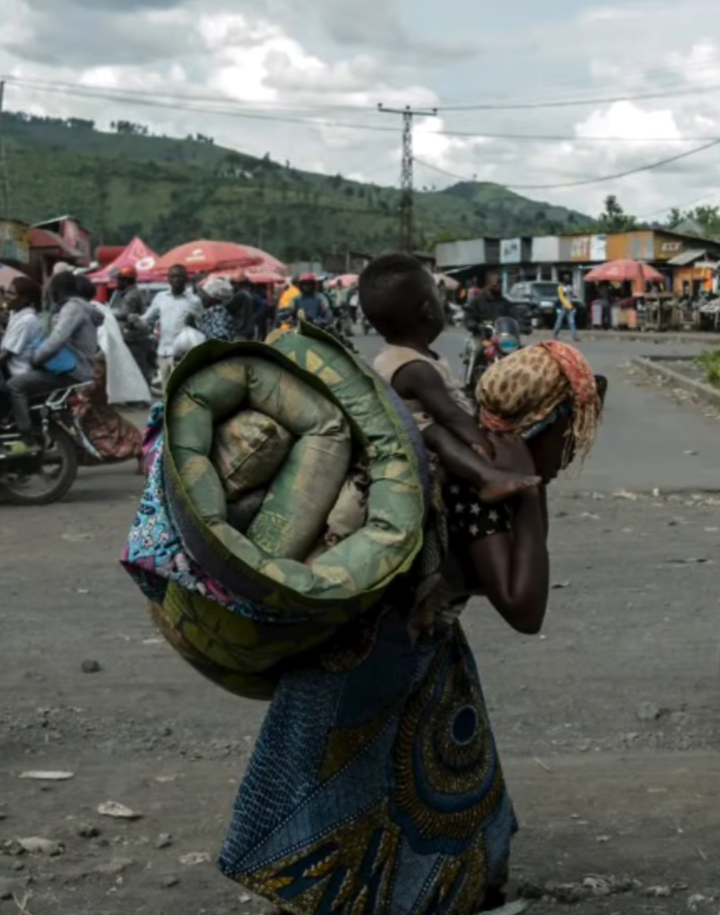
- In Congo, 6 million people are displaced, with 4 million in eastern Congo, where the world’s most valuable minerals—cobalt and coltan—are found. The U.S., China, and India benefit economically from this instability.

Ms. Assumpta-Gahutu:
See the pattern? First, they create or exploit a conflict. Then, they offer “solutions” that give them control over the land and its resources. This is exactly what Trump is proposing in Gaza.
Trump’s Expanding Colonial Vision

Frema-Adunyame:
Trump’s ambitions don’t stop at Gaza. He has already talked about:
- Re-colonizing the Panama Canal
- Annexing Greenland
- Expanding U.S. control in Africa
Ms. Assumpta-Gahutu:
And the truth is, the U.S. is already in Africa. There are covert operations in Sudan, Congo, and the Sahel region. Trump’s loud rhetoric just makes their actions more visible.

Serwaa-Amihere:
You name any country—America, the EU, or Britain, for example—would they ever be prepared to give up 55%, 25%, or even 10% of their land to the Palestinians?
Ms. Assumpta-Gahutu:
Of course not. No country would willingly give away its land like that. That’s why the entire premise of the Palestinian displacement was unfair from the beginning. It was never about coexistence—it was about domination.
Realistically, no major country—whether the U.S., EU nations, or Britain—would willingly give up a significant portion of its land (55%, 25%, or even 10%) to another group, including the Palestinians. Governments prioritize national sovereignty, economic stability, and the interests of their own citizens, making such a land transfer highly unlikely.

Historically, powerful nations have rarely ceded land without extreme circumstances, such as military defeat or negotiated settlements following long conflicts. Even when they have, it has often been under pressure, as seen with decolonization or after wars.
The Palestinian struggle for land is unique because it involves displacement, occupation, and contested historical claims, but expecting any country to willingly give up land sets a precedent that most states would resist. What’s your perspective on this? Do you think any nation should, or are you pointing out the double standards in international politics?

Frema-Adunyame:
Exactly. The issue was never about the existence of Jews in Palestine. Jewish communities had been there for centuries and had deep ties to the land, especially to places like Jerusalem. The problem was the idea of creating an exclusively Jewish state at the expense of the people who were already living there. That’s what made it unjust.
And now, looking back 75 years later, people argue that Palestinians should have accepted losing 55% of their homeland. But that logic doesn’t hold. Because in the end, they lost 78% of it, and the remaining 22% was occupied in 1967.

Serwaa-Amihere:
So you’re saying that even if they had accepted the 55%, the outcome would have been the same?
Ms. Assumpta-Gahutu:
Absolutely. That’s not how history works. When one group is in a position of power and expansion, they don’t stop at an agreement—they keep taking more. We’ve seen this not just in Palestine but across Africa and many other parts of the world.
Also, depended on many factors, including how the agreement was implemented, how both sides responded, and whether external powers supported long-term peace.
If the Zionist movement or Israel had accepted giving 55% (as proposed in the 1947 UN Partition Plan), some possibilities could have played out:
- Peaceful Coexistence (Optimistic View) – If both sides had fully accepted the partition and respected the borders, a two-state solution might have worked, preventing war and displacement.
- Continued Conflict (Realistic View) – Even with acceptance, tensions over borders, Jerusalem, and displaced populations could have still led to violence, especially with external interference from neighboring Arab states and global powers.
- Gradual Expansion (Historical Pattern) – If Israel had accepted 55%, but later sought to expand through settlements or military actions, conflict could have still erupted, leading to outcomes similar to what happened in 1948 and beyond.
History suggests that territorial agreements alone don’t guarantee peace—trust, enforcement, and political will matter just as much. What’s your take? Do you think the Palestinian leadership should have accepted the 55%, or was resistance justified?
Frema-Adunyame:
And let’s put it in perspective. Can you imagine an American agreeing to give up 10% of the United States to Palestinians? If such a proposal were made, Americans would outright reject it. And if that rejection led to war, imagine losing half of half of the country as a consequence. That’s what happened to the Palestinians.
The 1947 UN Partition Plan, which proposed giving 55% of the land to the Jewish state and 45% to the Arab state, was seen by many Palestinians as unjust. At the time, Jews made up about one-third of the population and owned less than 10% of the land, so from their perspective, accepting the plan meant legitimizing what they saw as colonial dispossession. Their resistance wasn’t just about land; it was about self-determination and historical grievances.
On the other hand, had Palestinian leadership accepted the plan, some argue that they could have had a recognized state earlier, possibly avoiding later wars and displacement. However, given the tensions, even if they had accepted, conflicts over borders, refugees, and Jerusalem likely would have continued.
So, was resistance justified? If you view it from the standpoint of indigenous land rights and historical injustice, yes. If you look at it from a pragmatic standpoint—securing some land rather than losing more—acceptance might have been a strategic choice.
What do you think? Was refusal the right move, or do you believe compromise would have changed history? Serwaa-Amihere.

Serwaa-Amihere:
That’s a powerful comparison. So, what does that mean for Gaza today? If history has shown that agreements and land compromises don’t stop expansion, what’s next?
The refusal of the 1947 UN Partition Plan by Palestinian leadership was based on the belief that the division was unfair, given that the majority of the land was allocated to a minority population. From a moral and historical standpoint, their resistance was understandable—no nation or people would willingly give up their ancestral land under foreign-imposed terms.
However, from a strategic perspective, some argue that accepting the partition could have secured an official Palestinian state early on. Instead, rejection led to war, displacement, and decades of struggle with worsening conditions. But would acceptance have truly led to lasting peace? Given the Zionist movement’s goals and later territorial expansions, it’s possible that conflict would have erupted anyway, even if Palestinians had initially agreed.
So, was refusal the right move? If the goal was to resist what was seen as an imposed injustice, yes. If the goal was to secure land and prevent long-term displacement, maybe compromise could have led to a different reality—but there’s no guarantee it would have been a just one.
What’s your stance? Do you think acceptance would have changed history for the better, or was rejection the only rightful choice?

Ms. Assumpta-Gahutu:
That’s the real question—what’s next? If history teaches us anything, it’s that power doesn’t stop unless it’s resisted. Look at Gaza today. The destruction, the mass displacement—it’s all part of the same pattern. And now, Trump is openly talking about a U.S. takeover of Gaza as if it’s some real estate project. That’s not just about Gaza. It’s a warning for the rest of the world, especially Africa.
Palestinian rejection of the 1947 UN Partition Plan was completely understandable. Imagine being the majority population in a land you’ve lived in for generations, only to be told that a foreign-backed minority would receive the larger portion of it. No nation would willingly accept that. Resistance wasn’t just about rejecting land division—it was about rejecting colonial-style imposition without their consent.
Would acceptance have changed history for the better? Maybe in the short term, it could have prevented immediate war and displacement, giving Palestinians some internationally recognized land. But given how Israel later expanded beyond the 1947 borders through war and settlements, even if Palestinians had accepted the 55%, they might have still faced land grabs and displacement.

Frema-Adunyame:
Ms Assumpta-Gahutu: What is your U.S. takeover of Gaza? Under what justification? Does the U.S. has any legal or moral right to just claim another country’s land? Is it a legitimate process for Trump and America to takeover Gaza?

Ms. Assumpta-Gahutu:
Exactly. But when has legality ever stopped powerful nations? The U.S. and its allies justify their actions with narratives of “security,” “stability,” or “humanitarian intervention.” It’s the same strategy they’ve used in Iraq, Afghanistan, and Libya. They create or exploit instability, then step in as the so-called solution.
Also, there is no official or legal process by which the U.S. is taking over Gaza, nor does the U.S. have any legal or moral right to claim another country’s land. If such a move were attempted, it would violate international law, including the UN Charter, which prohibits the acquisition of territory by force.
Historically, the U.S. has supported Israel politically and militarily, but an outright “takeover” of Gaza by the U.S. would be unprecedented and widely condemned. If Donald Trump or any American administration attempted to claim Gaza, it would be seen as blatant colonialism and imperialism, completely disregarding Palestinian sovereignty.
The key question is: under what justification would the U.S. claim Gaza? Humanitarian intervention? Security concerns? None of these justify taking land from its rightful people. If the U.S. were to try, it would likely face massive resistance from Palestinians, global backlash, and even legal challenges at the International Criminal Court (ICC).
Where did you hear about this? Are there discussions about a U.S. role in Gaza that you’re concerned about?

Serwaa-Amihere:
“Ms. Assumpta-Gahutu, how can Africa pay attention to this issue, considering that it isn’t just about Gaza?”

Ms. Assumpta-Gahutu:
Well, the same blueprint is already being applied in Africa. Look at Sudan—8.5 million people displaced. Look at Congo—6 million displaced, 4 million of them in the east. Who benefits from that chaos? Foreign powers and corporations extract resources while the people suffer.
So this isn’t just about Gaza. Africa, and the Global South as a whole, should pay attention because Gaza represents a broader pattern of global power dynamics: land dispossession, foreign intervention, and selective application of international law. These issues have direct parallels with Africa’s colonial past and present struggles for sovereignty.
Why Should Africa Pay Attention?
- Neocolonialism & Foreign Control
- Just as Africa suffered land grabs and resource exploitation, Gaza’s situation reflects how powerful nations impose their will on weaker territories. If this can happen in Palestine, who’s to say it won’t happen elsewhere?
- International Law & Double Standards
- The West often lectures Africa on democracy and human rights but ignores those principles when it comes to Palestine. If international law can be selectively applied, African nations must question who really controls global governance.
- Africa’s Own Territorial Disputes
- Countries like Sudan, Ethiopia, and the DRC have faced border conflicts, foreign-backed interventions, and land/resource struggles. Understanding Gaza helps African leaders anticipate how global powers might interfere in their own affairs.
- Militarization & Proxy Wars
- The U.S., Europe, and even Israel have military footprints in Africa, whether through bases, arms sales, or backing certain regimes. Learning from Gaza, African nations must ask: Are we next?
- Palestine as a Test Case
- If Gaza can be bombed, occupied, and debated as if its people don’t exist, what stops powerful nations from treating African lands the same way? Supporting Palestine isn’t just solidarity—it’s a defense of African sovereignty too.
What Can Africa Do?
- Strengthen Diplomatic Unity: The African Union (AU) must take a firm, united stand on Palestine, just as it does on issues like Western exploitation of African resources.
- Control African Narratives: Western media shapes global opinions. Africa must build independent media to expose global double standards.
- Economic & Political Pressure: African nations should rethink trade and diplomatic ties with countries enabling occupation and oppression.
- Prepare for Future Threats: Gaza is a warning—Africa must strengthen its institutions to resist neocolonial takeovers.
This Isn’t Just About Gaza—It’s About the World Order
If Africa ignores Gaza today, it might find itself in a similar position tomorrow. The lesson is clear: if sovereignty is negotiable for some, it can be negotiable for all.
Berla-Mundi: “What do you think? Should Africa be more vocal, or is it already doing enough?

Berla-Mundi:
And now Trump is openly talking about expanding U.S. influence abroad. He mentioned recolonizing the Panama Canal, annexing Greenland… and now Gaza. Do you think Africa is next?
If you’re asking for my perspective, I’d say Africa should definitely be more vocal. While some African nations have expressed support for Palestine, the continent as a whole could take a stronger, unified stance against injustices like those in Gaza.
Why Africa Should Be More Vocal:
- Historical Parallels – Africa has firsthand experience with colonialism, apartheid, and land dispossession. Ignoring Gaza means ignoring a struggle that mirrors Africa’s past.
- Global Influence – Africa’s 54 nations hold significant voting power at the UN and other international bodies. A unified African voice could pressure global powers to uphold justice.
- Challenging Double Standards – The West often lectures Africa on human rights but ignores Palestinian suffering. Africa should expose this hypocrisy and demand consistency.
- Strategic Interests – Many African nations rely on partnerships with the West. Remaining silent could set a precedent where Africa’s own sovereignty is compromised in the future.
Some African leaders, like those from South Africa, have been outspoken, even taking Israel to the International Court of Justice (ICJ). But many others remain quiet, possibly due to political and economic ties with the U.S. or Israel.
Is Africa Doing Enough?
- If African nations only issue statements but take no real action, then no—it’s not enough.
- If they start using economic, diplomatic, and legal pressure, then Africa can actually shift global conversations.
Ms.Assumpta-Gahutu. What do you think? Should African countries take stronger steps, or is speaking out alone already enough?

Ms. Assumpta-Gahutu:
Without a doubt. And in some ways, it’s already happening. The U.S. has military bases in Africa. France still controls West African economies through the CFA franc. China is taking over key infrastructure through debt traps. The UAE and European companies control massive mining operations. Africa is being recolonized in different ways.
The Way Forward for Africa

Serwaa-Amihere:
So, what can Africa do to resist this new wave of foreign control?

Ms. Assumpta-Gahutu:
There are three key steps:
- Elect Transformative Leaders – We need leaders who prioritize Africa’s interests, not foreign powers. Corrupt politicians enable these takeovers.
- Hold Presidents Accountable – Citizens must demand transparency and leadership that resists foreign manipulation.
- Strengthen Economic and Political Independence – Africa must move away from reliance on foreign loans, military interventions, and exploitative trade agreements.
Final Thoughts: Is Africa Ready to Resist?
Berla-Mundi:
Trump’s Gaza plan is not just about Gaza—it is a blueprint for future interventions. If history has taught us anything, colonial ambitions don’t stop on their own. They must be challenged.

Frema-Adunyame:
So, the final question is this: Is Africa ready to resist?
Serwaa-Amihere:
Ms. Gahutu, we’ll give you the last word.
Ms. Assumpta-Gahutu:
The answer depends on whether Africa wakes up now or waits until it’s too late. We must unite, educate, and fight for our sovereignty. If we don’t, we may wake up one day and realize that we have lost our land, just like Palestine.
Serwaa-Amihere:
Powerful words. Thank you, Ms. Gahutu, for joining us. Thank you to my colleagues Berla Mundi and Frema Adunyame for this insightful discussion. To our viewers: The fight for Africa’s future begins now. Are we ready to resist?
Our Shared Humanity


https://www.instagram.com/laurenhautecouture?igsh=MWxzNXN1Ym5nZ3o3Mg==
Experience Elegance with Lauren Haute Couture
Discover the epitome of luxury fashion at Lauren Haute Couture. Our exquisite, handcrafted designs are tailored to make you feel confident, empowered, and elegant. From show-stopping evening gowns to timeless couture pieces, every garment is a masterpiece of style, sophistication, and unparalleled craftsmanship.
✨ Why Choose Lauren Haute Couture?
- Custom Creations: Every piece is made to fit your unique style and measurements.
- Premium Fabrics: Only the finest materials to ensure that you look and feel your best.
- Exclusive Designs: Stand out with unique, trendsetting pieces that redefine fashion.
- Personalized Service: Experience the VIP treatment as we cater to your every need.
Whether you’re attending a high-profile event or seeking an everyday touch of luxury, Lauren Haute Couture has the perfect outfit to elevate your wardrobe. Shop Now and indulge in the world of haute fashion.
!


