





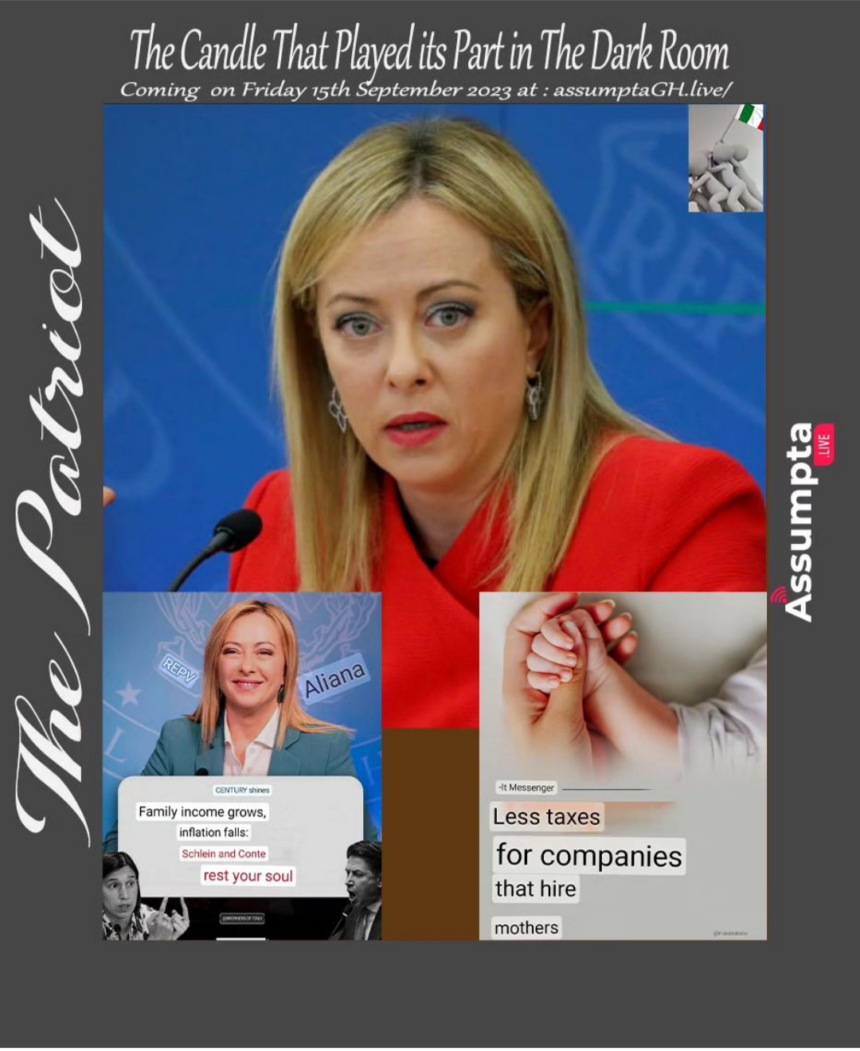

Giorgia Meloni, as noted by many, cast lights on the importance of Italy’s economy, a country that speaks of our own culture, language, values and underlying power, thoughts and actions that move beyond every day life.
Meloni was born in Italy on 15 January 1977. She is an Italian politician who has been serving as the prime minister of Italy since 22 October 2022, the first woman to hold this position.” The Candle That Played its Part in the Dark Room” has always had significance for Italians.
Symbolically in both thoughts and actions, the notion of a candle lighting the way, cast light on ignorance.
Indeed, the symbol of a candle lighting the way is often used to represent knowledge and enlightenment. It signifies the power of her wisdom to dispel ignorance and bring clarity to the thoughts and actions of the people of Italy.

Giorgia Meloni’s story is an inspiring story! A Woman breaking barriers and assuming leadership positions have had a significant impact on the Italian society.
A female prime minister taking on corruption and bureaucratic challenges demonstrates determination and a commitment to good governance.
It would be interesting to delve deeper into the specific actions and initiatives she took to address corruption and streamline the government.

While my story of becoming the first female prime minister of Italy and tackling corruption and bureaucratic challenges can vary depending on the country’s circumstances, I can provide you with a general overview of some possible actions i have taken:
1. Strengthening anti-corruption measures: i implemented and reinforced legislation and institutions dedicated to combating corruption. This include establishing independent anti-corruption bodies, enhancing transparency in government operations, and promoting accountability.
2. I have promoted ethical governance: emphasising the importance of ethics in public service and encouraged a culture of integrity among government officials. This involve implementing codes of conduct, providing ethics training, and fostering a zero-tolerance policy towards corruption.
3. I streamlined bureaucracy to address bureaucratic challenges, initiating administrative reforms to streamline government processes, reducing red tape, and improving efficiency. This includes simplifying regulations, digitising services, and implementing performance-based evaluations.
4. I encouraged citizen participation: Emphasising the involvement of citizens in governance processes. This involve promoting transparency, engaging with civil society organisations, and encouraging public participation in decision-making through mechanisms such as town hall meetings or online platforms.
5. International cooperation: i collaborated with international organisations and other countries to gain support and expertise in combating corruption. This involve sharing best practices, seeking technical assistance, and participating in global anti-corruption initiatives.
It’s important to note that the specific actions you take in this context depended on Italy’s unique challenges and political landscape.

Absolutely, understanding the specific context and challenges of my country was crucial when i assess the actions taken by my government. In the case of my decisions and actions likely were influenced by Italy’s specific circumstances and political dynamics at this time.
It’s important to also consider various factors such as the economy, social issues, international relations, and public sentiment to gain a comprehensive understanding of the choices made by any leader.
- Implementing my tax incentives reforms for companies that hire mothers have had several positive effects.
- I reduced taxes for companies, encouraging them to create more job opportunities for mothers, which in turn can contribute to an increase in family income.
- I saw that when more mothers are employed, it can lead to improved financial stability for families, potentially reducing reliance on social welfare programs.
Additionally, increased employment can positively impact the overall economy by boosting consumer spending and stimulating economic growth. With more people earning income, there is a potential for increased purchasing power, which can have a positive effect on businesses and the broader economy.
Furthermore, if the policy is successful in increasing employment and family income, it could potentially contribute to a decrease in inflation. A rise in income levels can lead to increased consumer demand, which can help stabilise prices and potentially mitigate inflationary pressures.
However, it’s important to consider the specific details and potential trade-offs of implementing such policies, as they can vary depending on the country’s economic situation and the effectiveness of the measures in practice.
Over time, my humanistic care philosophy began to bear fruit. Transparency and accountability became the new norm, and corrupt practices dwindled.The nation of Italy experienced a resurgence of hope and trust in its leadership.
My legacy will extend far beyond my time in office. My unwavering commitment to shining a light on corruption and my dedication to humanistic care will inspire a new generation of leaders who will carry forward my vision.

And so, your story as Prime Minister Meloni reminds us that leaders who anchor their philosophy in humanistic care can indeed bring about profound change, illuminating the path towards a brighter and more just society. Thank you