





Improved water supply and sanitation and improved water resources management boost countries’ economic growth and contributes greatly to poverty eradication.

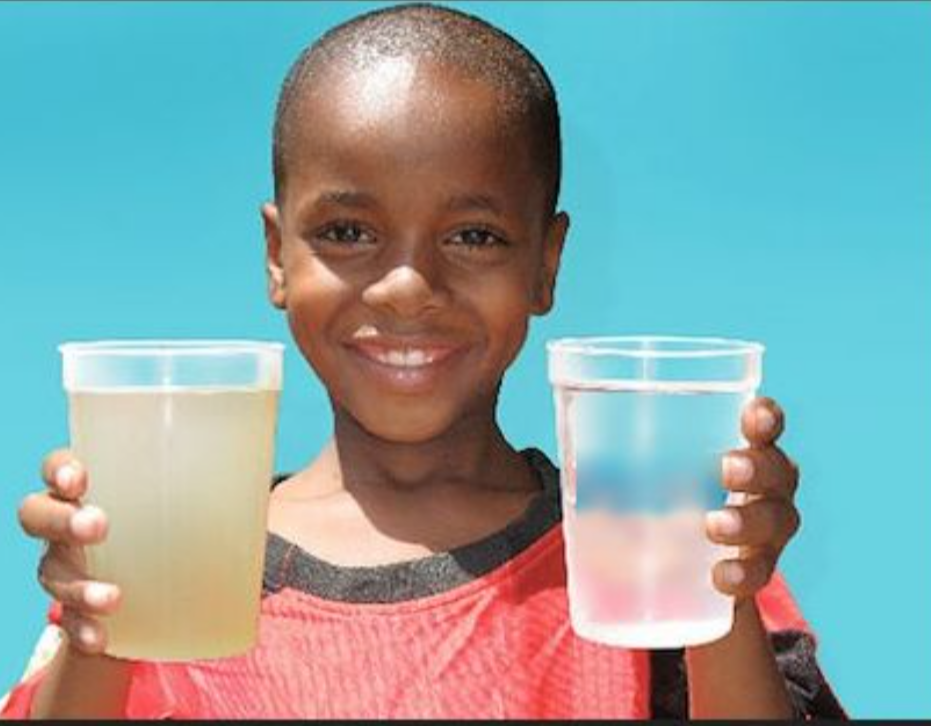
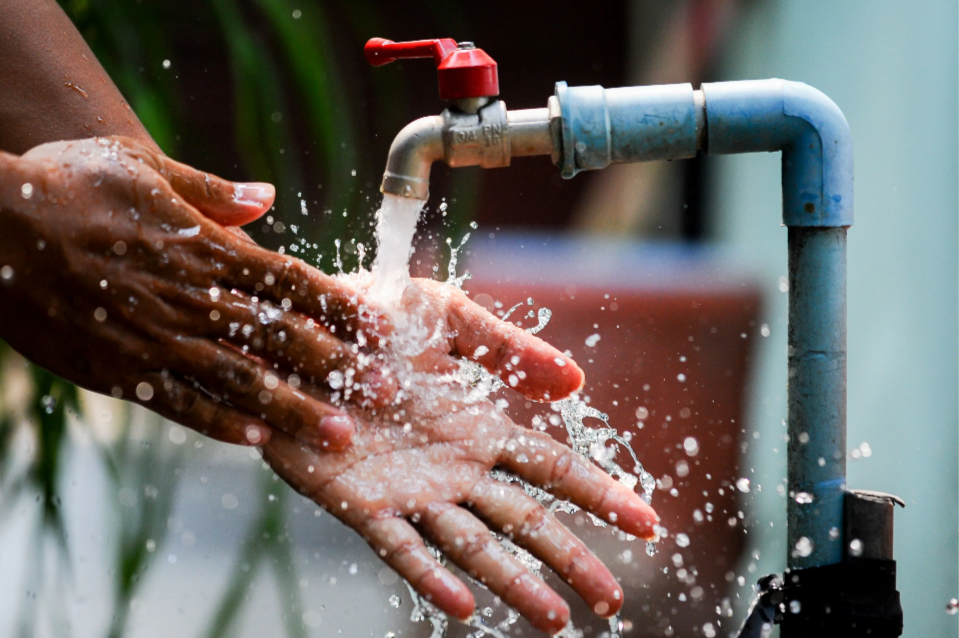
This report articulates the close link between water and the economy and makes the case that investing in water management and sanitation services is absolutely essential for the eradication of poverty and for enabling sustained economic growth. The report also brings to the forefront direct and indirect costs related to inaction, the costs of action and cost-benefit comparisons.
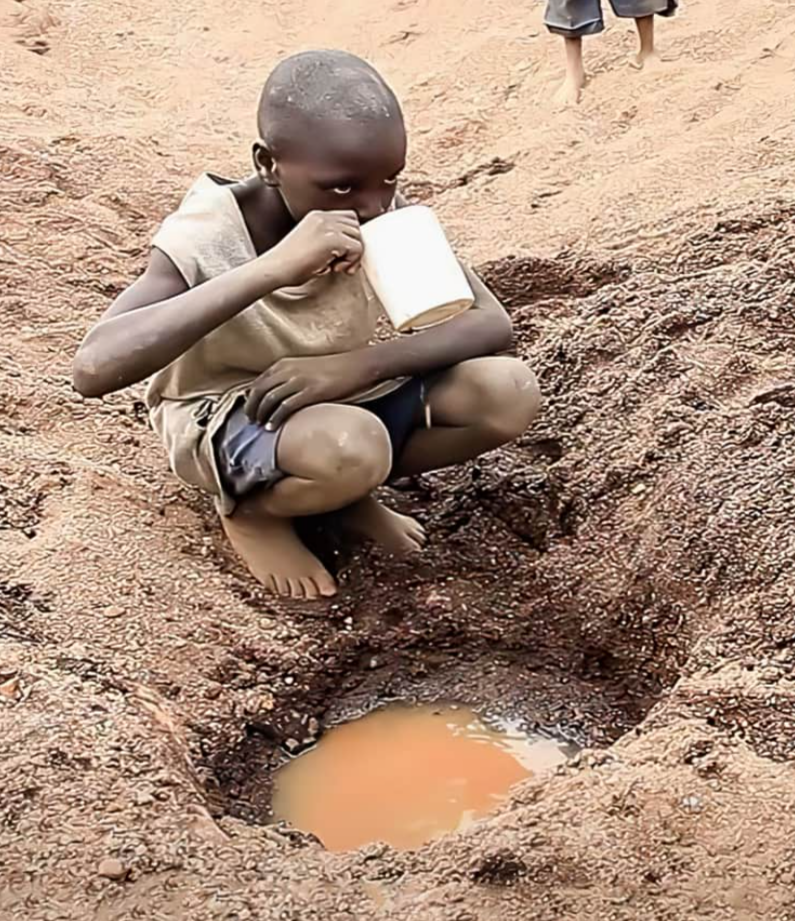
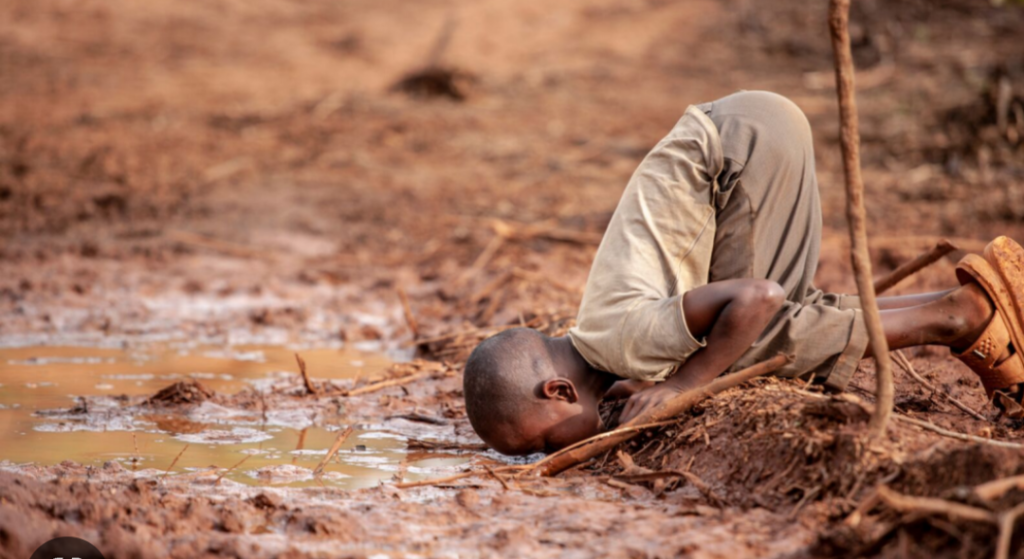
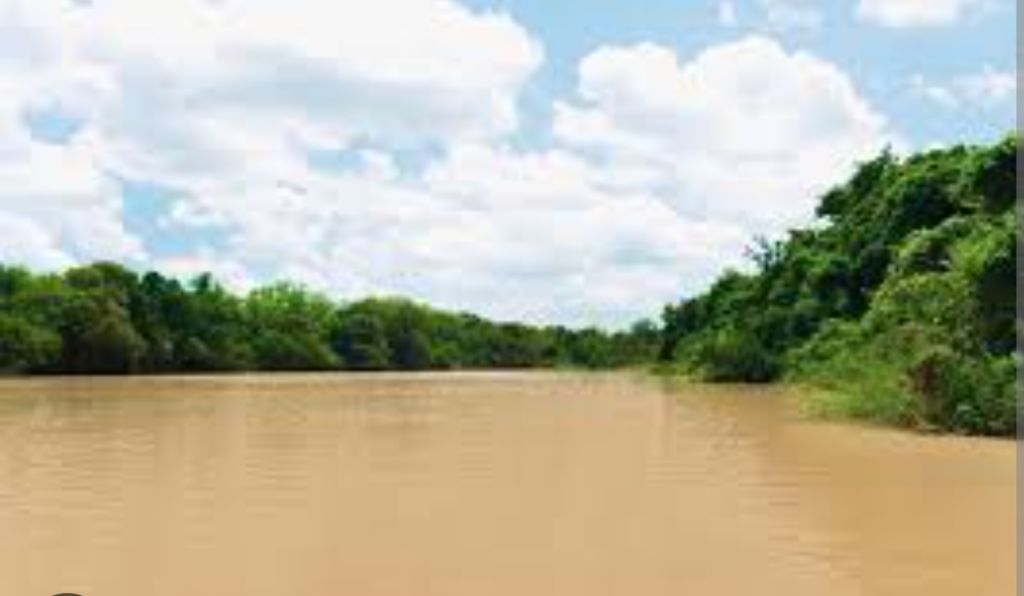
Better access to clean water, sanitation services and water management creates tremendous opportunity for the poor and is a progressive strategy for economic growth.
This report articulates the close link between water and the economy and makes the case that investing in water management and services is absolutely essential for the eradication of poverty and is a necessary condition for enabling sustained economic growth.
Assumpta : Sustainable development, human migration, conflict and natural disasters: water cuts across these and many other major issues on the global agenda. Employment is another key factor in population movements, civil unrest and environmental sustainability.
The 2016 edition of the United Nations World Water Development Report, which was coordinated by the United Nations World Water Assessment Programme of UNESCO in collaboration with UN-Water Members and other partners, illustrates how the connection between water and jobs holds the promise of inclusive and sustainable economic growth for all countries.
Its findings can serve to help reach the Sustainable Development Goals, which are all interlinked, including Goal 6 covering water and sanitation for all, and Goal 8 addressing decent work for all.
Among its findings, this report shows that many jobs in the global workforce depend on water. It demonstrates that water stress and the lack of decent work can exacerbate security challenges.
It also traces the link between scarce or poor quality water, damaged ecosystems and instability that can lead to forced migration. The main message of the report is clear water is essential to decent jobs and sustainable development. Now is the
time to increase investments in protecting and rehabilitating water resources, including drinking water, as well as sanitation while focusing on generating employment.
This report is for all those interested in joining forces to realise our bold vision for sustainable development aimed at creating a future where all people live in dignity on a healthy and peaceful planet.
Tsasi: Sustainable Development Goals call for ensuring the availability and sustainable management of water and sanitation for all by 2030. But water’s significance goes further.
Ghana’s economy shot up in 2011 at a rate of 14 percent as the country began to produce oil. But in 2015 the growth rate crashed to just 3.8 percent. Tens of thousands of jobs were lost, and the government was forced to seek support from the International Monetary Fund again. A big reason was low rainfall.
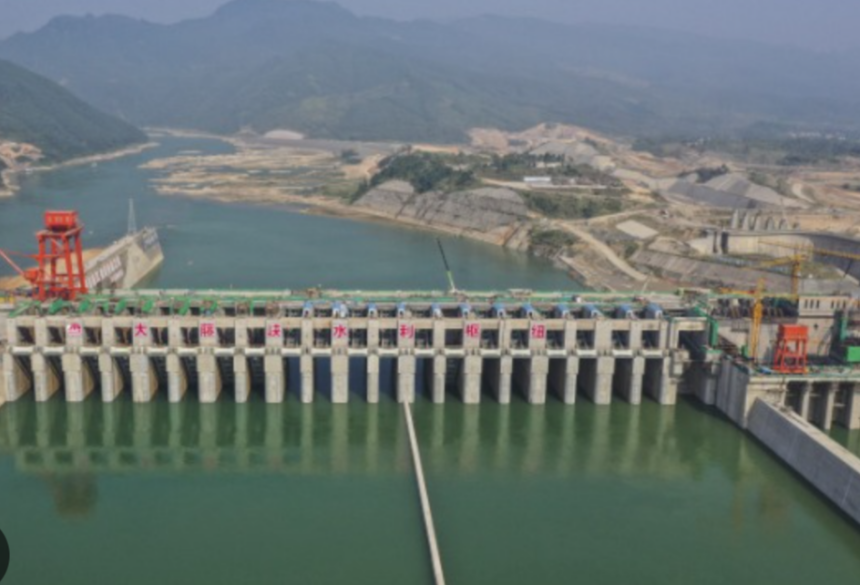
Ghana is mainly dependent on the Akosombo hydroelectric dam on the Volta River for electricity. As less water flowed from the Volta River to the dam, it operated at just half its capacity in 2015. Add in disruptions from geothermal plants, and in June 2015, electricity in the country was being rationed at 12 hours on, 24 hours off.
The crisis illustrates the widening importance of water management as global warming reduces resources and populations grow.
But water’s significance goes further and has a Direct impact on the Economy.
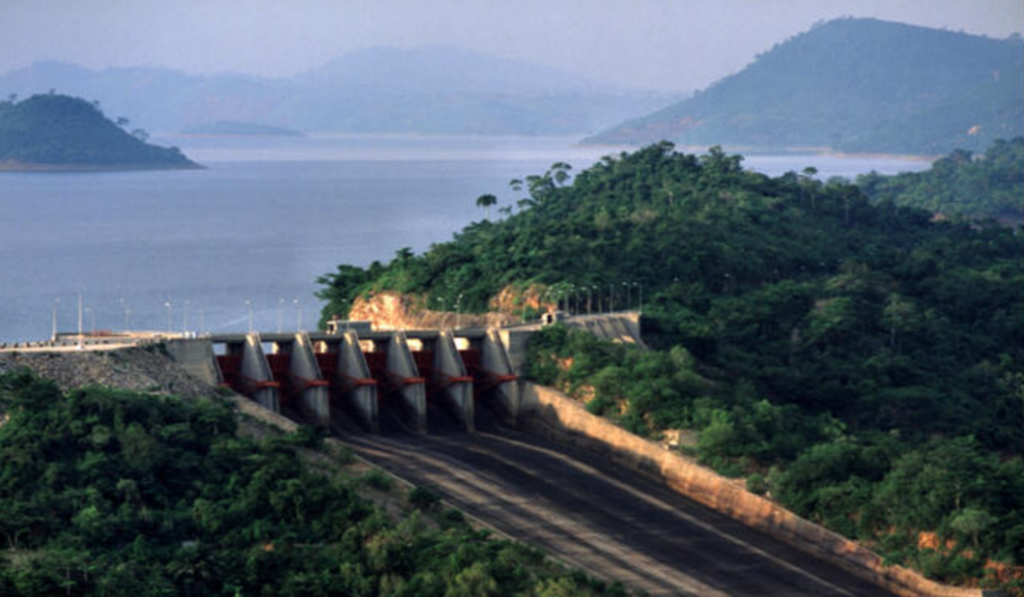
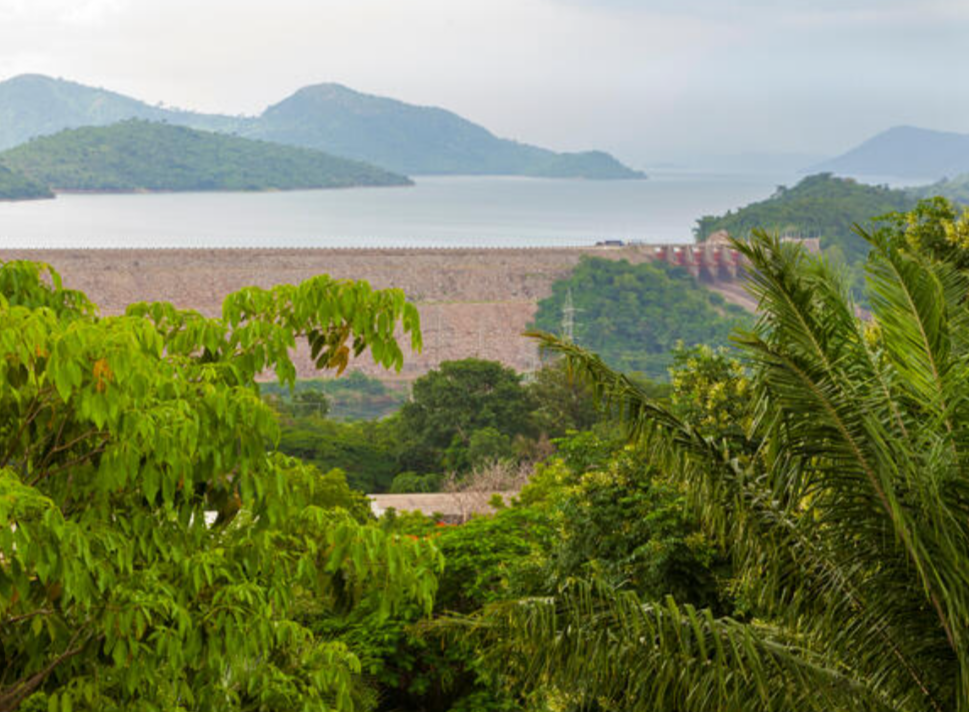
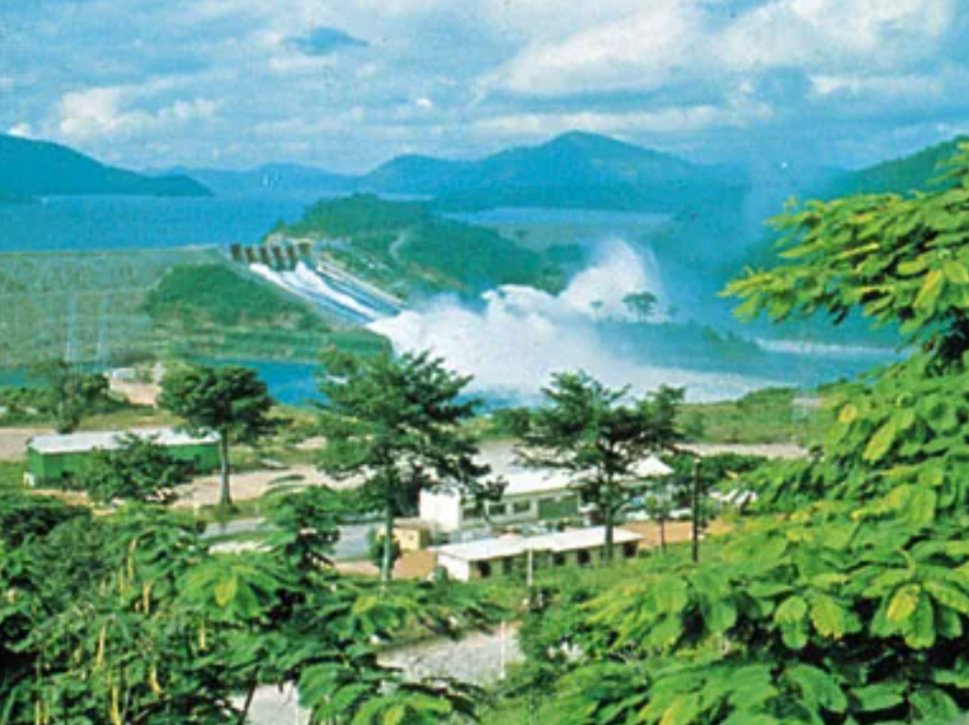
The Akosombo Dam of the Volta River between 1961 and 1965 led to the submersion of thousands of hectares of forest land belonging to nearby communities and the creation of the Volta Lake, the largest artificial lake in the world. It is estimated that nearly half of the 850,000 hectares of the lake contains submerged forest.
Assumpta:The Akosombo Dam across the Volta River in Ghana remains at the centre of debates and imaginations about nationhood, modernity, and development.
Originally designed in the 1920s to serve the British metropole, the Volta River Project was reshaped by the country’s founding leader Kwame Nkrumah in the 1950s. The revised project included a hydroelectric dam, an aluminium smelter to process Ghanaian mined bauxite, new cities, a deep sea harbour, and other infrastructural investments.
The project became central to a modernization program that promised rapid industrialization and reduced the country’s dependence on cocoa exports.
Public discourses increasingly identified the project with Nkrumah and his dream of development.
In the course of its planning and construction, the Akosombo Dam became a manifestation to provide clean and cheap power for both industrial and domestic use.
Tsasi : The United Nations’ “World water development report 2016: water and jobs” demonstrates that water is related to several other SDGs, including Goal 8, which addresses the promotion of sustained, inclusive and sustainable economic growth, full and productive employment and decent work for all.
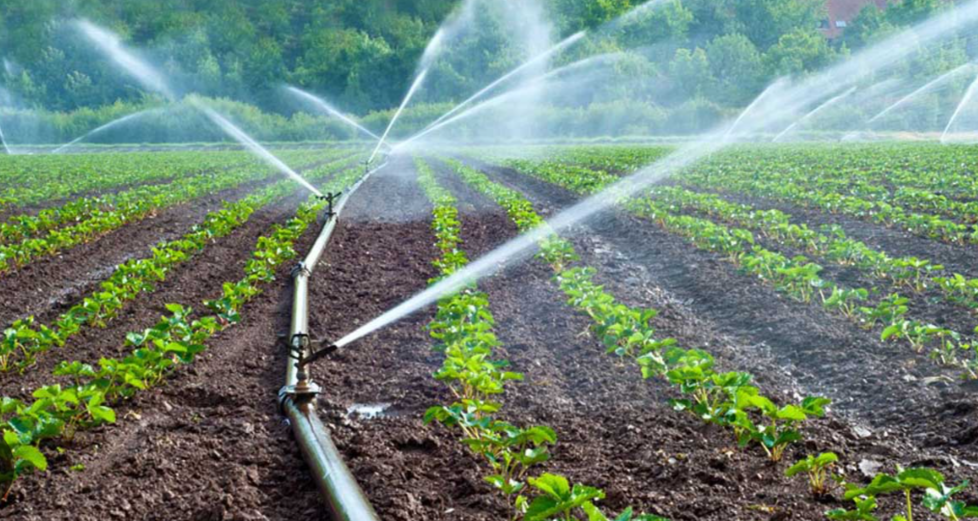
More than 1.3 billion jobs worldwide (42% of the world’s total active workforce) are heavily water-dependent, including work in agriculture, mining and industries ranging from paper to pharmaceuticals. Moreover, another 1.2 billion jobs are moderately water-dependent; though they do not use large quantities, industries such as construction, recreation and transportation do need access to some. In total, 78 percent of global jobs need water.
Investments in safe drinking water and sanitation have been shown to foster economic growth, with high rates of return. The recent Evaluation of the ACP-EU Water Facility gives some examples of direct jobs creation.
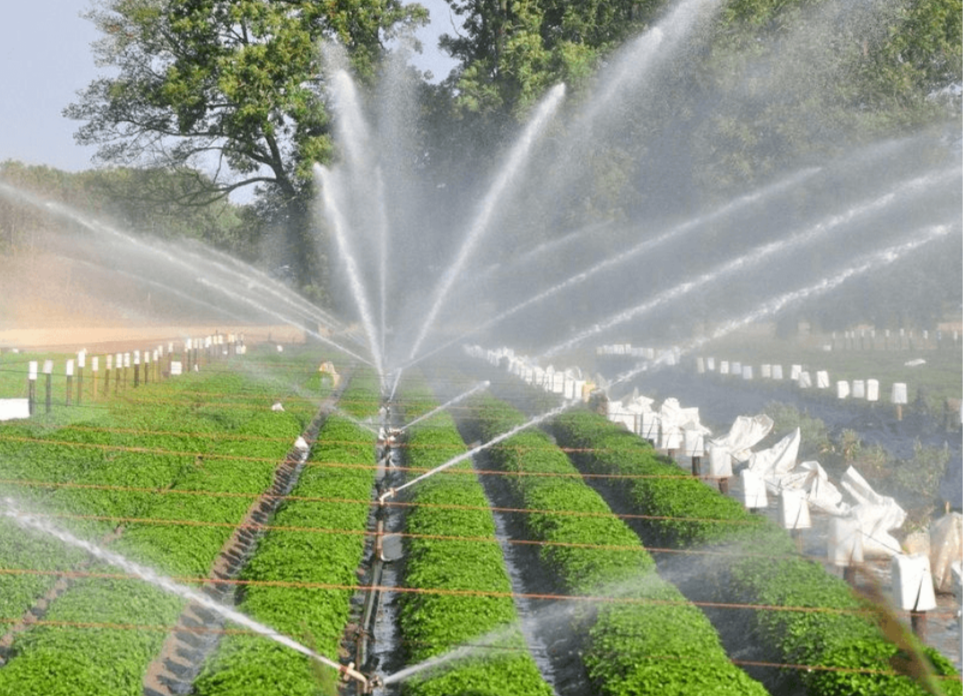
More than 1.3 billion jobs worldwide are heavily water-dependent, including work in agriculture
More than 1.3 billion jobs worldwide are heavily water-dependent, including work in agriculture.

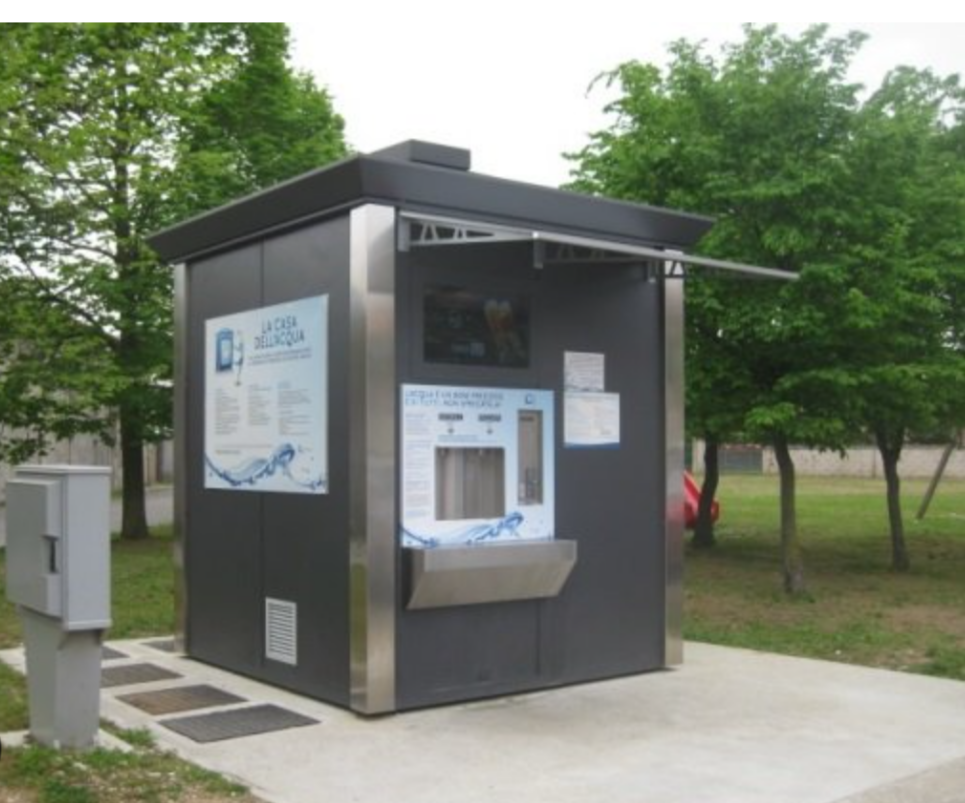
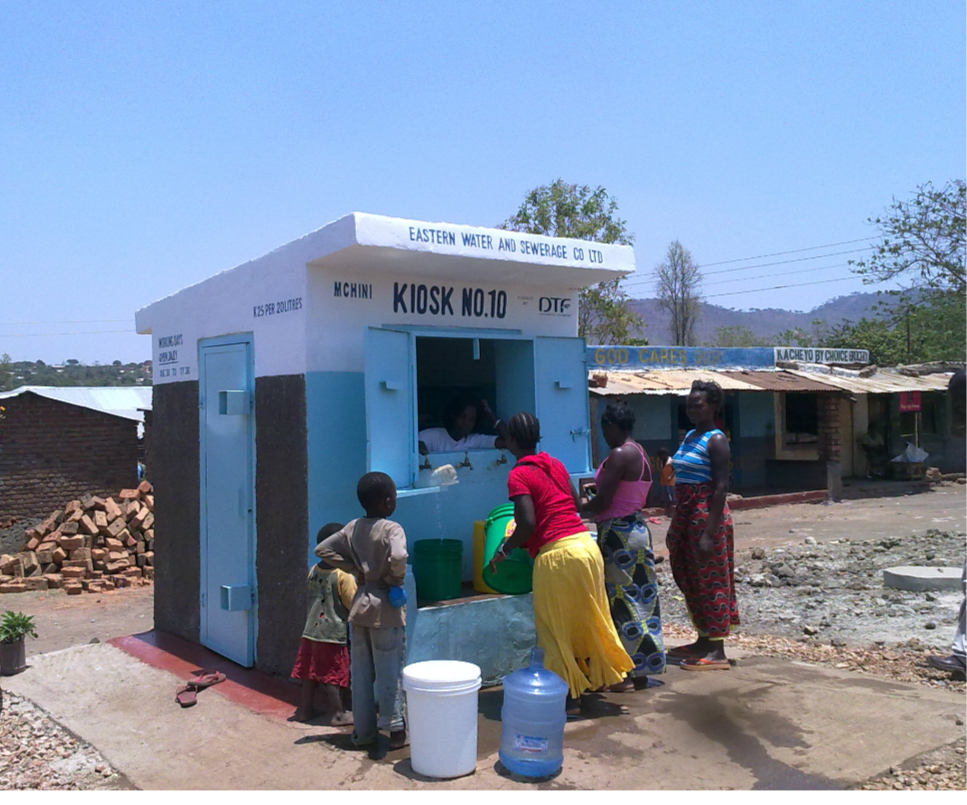

Assumpta: In Zambia, the Water Kiosks installed under the “Support to improving Water Supply and Sanitation for the Urban Poor”, have provided income opportunities for Kiosk Water vendors, solid waste collectors and caretakers of public toilets. It generated a saving and loans program that helped the Community.
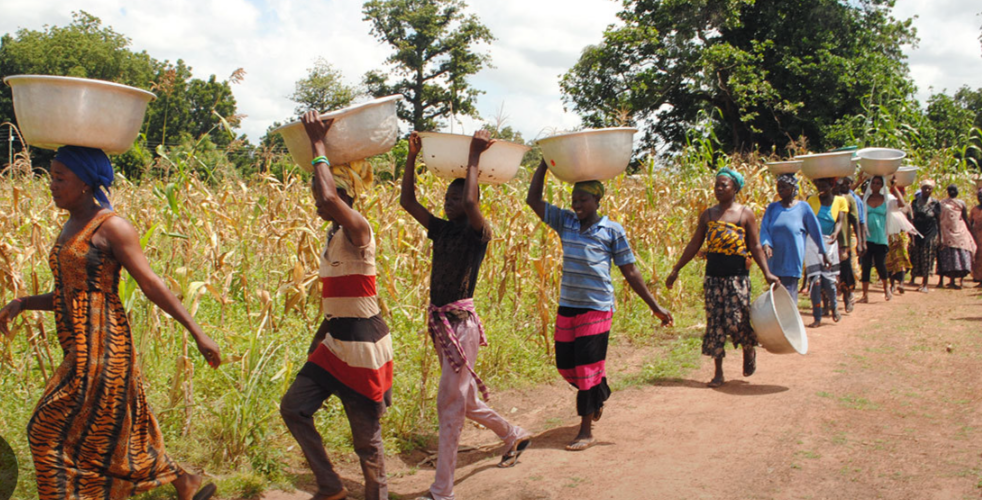

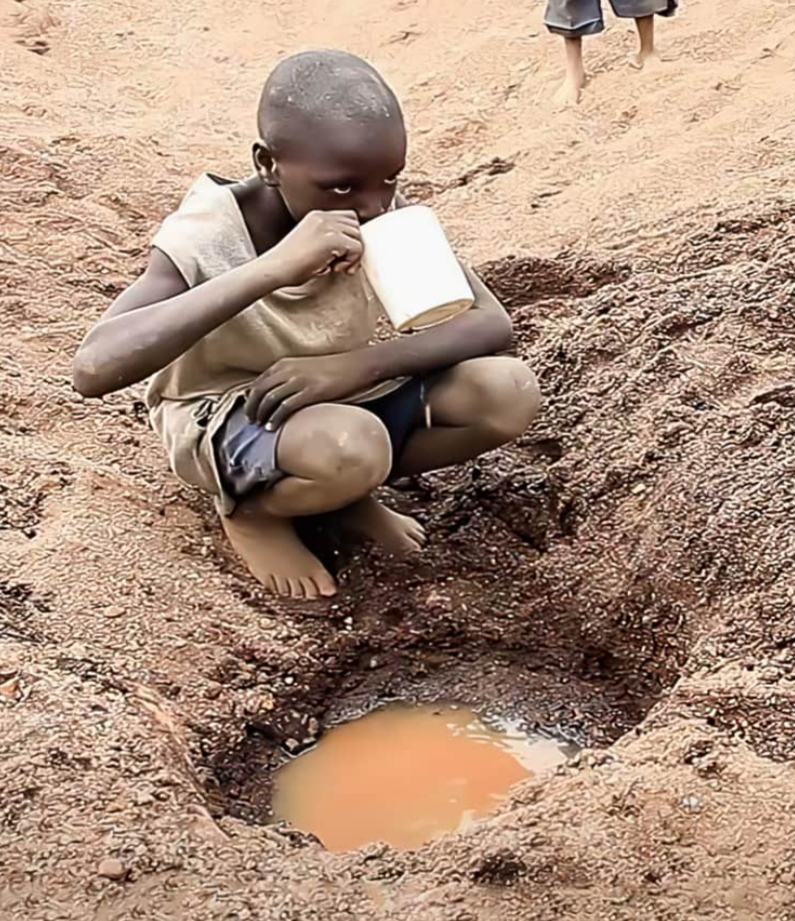
Neglecting water can have potentially catastrophic impacts on economies and livelihoods, and could reverse hard-won gains in poverty reduction, job creation and development. That’s driving a need for imaginative solutions.
One way to conserve water resources is simply to use less. Brewer SABMiller, now part of Anheuser-Busch InBev, announced the aim to reduce water use to three litres per litre of beer produced and 1.8 litres per litre of soft drink. The company invested $1.75 billion in Africa between 2008 and 2013, including its direct operations, infrastructure and support for businesses along the value chain. In Sub-Saharan Africa, 56 indirect jobs are supported for every direct employee, resulting in a total of 765,000 jobs.
But even if water is used efficiently, dry countries will still struggle to meet their needs.
One solution is to reuse wastewater. “In countries that lack resources, using wastewater and promoting purification and reusing treated water is a source of economic development, as we know that a part of economic development is dependent on water,”
Tsasi: Cities also develop at points where rivers merge and where branches flow into main streams. Amsterdam in the Netherlands is good examples. Likewise, the rivers and lakes in Ghan seem to be scattered randomly over the land without any plan or principle. However, if one observes the rivers, a coherent principle becomes evident in the cases of such cities as Takoradi. A similar principle can be seen at points where rivers bend, flow into or out of lakes, and at the ends of canals.
As with rivers, it is natural for cities to develop where main roads meet or cross. Tokyo, for example, was destined to become a great city, not only because of its position at the mouths of important rivers and because it had served as a political center for 200 years, but also because it is located at the center of a large plain and many main roads lead into it .