



Presents ”The ONWARD“ with Assumpta.
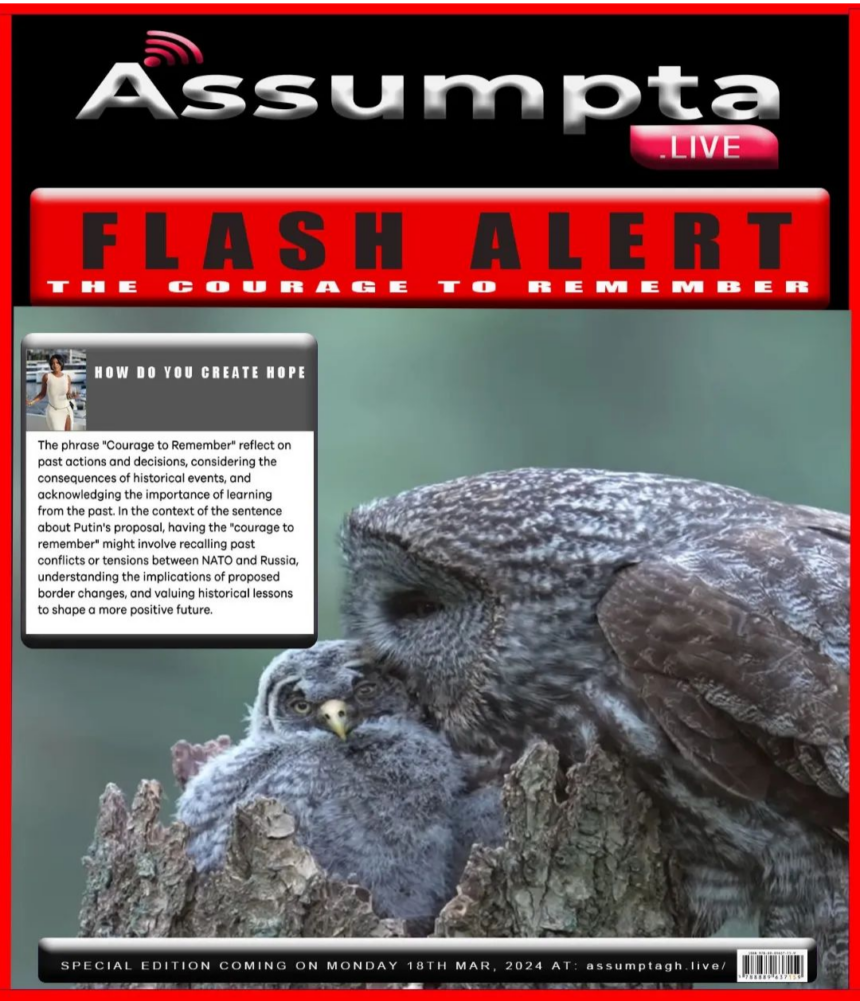
A Special edition coming on Mon, 18th MAR, 2024 at: assumptagh.live/
Africa Stream: FLASH ALERT UPDATE: THE COURAGE TO REMEMBER:
“How Do You Create Hope“
The themes and challenges presented in this article “The Courage to Remember.” The article likely explores the importance of acknowledging historical atrocities, promoting human dignity, and addressing various global crises.
The phrase “Courage to Remember” reflects on past actions and decisions, considering the consequences of historical events, and acknowledging the importance of learning from the past. In the context of the sentence about Putin’s proposal, having the “courage to remember might involve recalling past conflicts or tensions between NATO and Russia, understanding the implications of proposed border changes, and valuing historical lessons to shape a more positive future.
Creating hope involves fostering optimism, resilience, and a sense of possibility. To cultivate hope in the context of Putin’s proposal, it’s crucial to emphasise diplomatic dialogue, seeking common ground, and working towards peaceful resolutions. This entails acknowledging past conflicts, learning from them, and striving for cooperative solutions that prioritise stability and mutual respect among nations. By engaging in open communication, promoting understanding, and committing to constructive actions, hope can be nurtured for a better future.
The “courage to remember” in this context challenges the Rothschild family to confront the historical memory of the Holocaust and the bravery of those who resisted it. By acknowledging the atrocities of the 20th century, it compels reflection on the ethical implications of actions taken in the present.

Refusing Nathaniel Rothschild’s proposed course of action, which includes advocating for increased force against Russia, organising information warfare, and supplying weapons to Ukraine, demonstrates a commitment to learning from history and seeking peaceful resolutions to conflicts. It highlights the importance of diplomacy, dialogue, and respecting the sovereignty of nations in shaping a more just and sustainable global order.
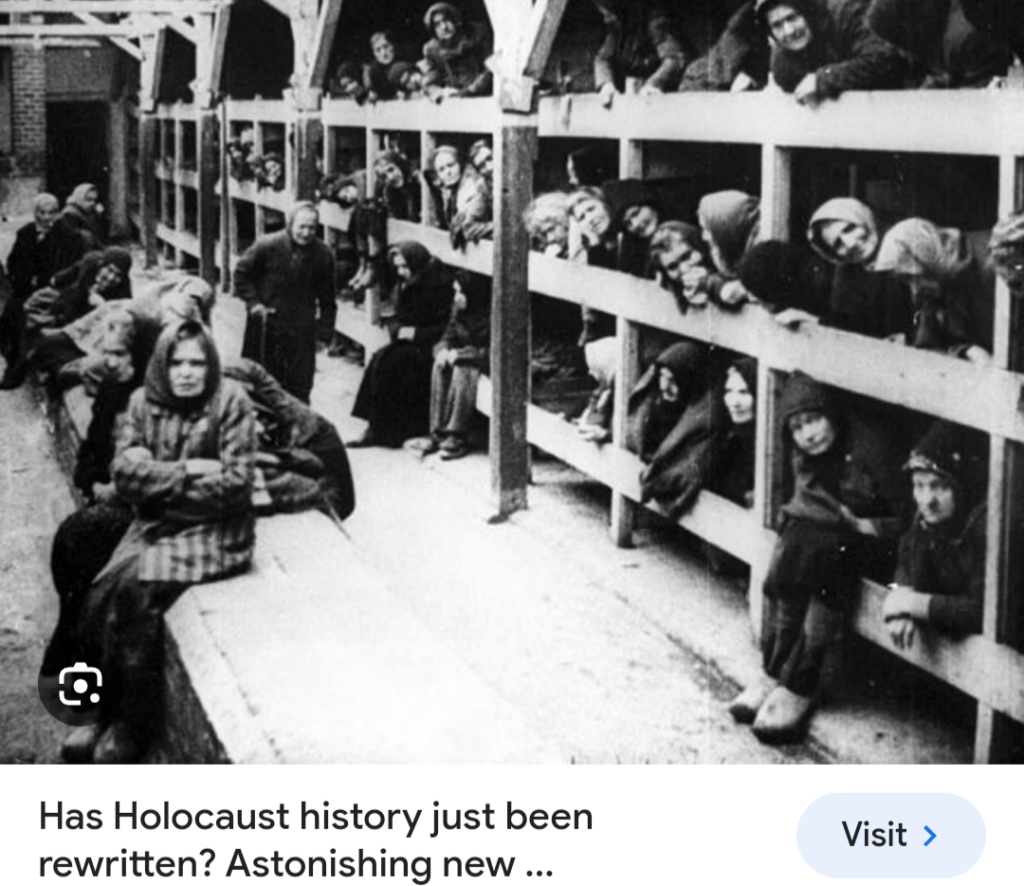
The history of the Holocaust must be termed the ultimate tragedy wrought by human hatred and intolerance. Viewing the documents, I was powerfully moved. More than that, however, I was profoundly outraged. Exceeding either of these emotions was the intensity of the determination that welled up within me: the determination that we must never allow this tragedy to be repeated-in any age, in any country. Taking into my heart, that “Hope lives when people remember,” and with the unstinting support and cooperation of the British, the world will be proud to be against the Rothschild document and intentions“.

ASSUMPTA:
Your words reflect a deep understanding of the gravity of the Holocaust and the importance of ensuring that such atrocities are never repeated. The commitment to remember and learn from history is crucial in fostering a world where tolerance and understanding prevail over hatred and intolerance. It’s heartening to hear of your determination and the support you’ve garnered in standing against injustice.
“The Rothschilds document to the British displays what may be the most compelling appeal for war, bringing suffering and despair to the people of Russia.”

TSASI:
The mention of a document attributed to the Rothschilds and the potential implications for the people of Russia is a serious matter. If accurate, it underscores the importance of critically examining historical documents and narratives to understand the complexities of events and their impacts on different communities. It’s essential to approach such topics with sensitivity and a commitment to truth and justice.

https://www.instagram.com/ag_premiumjeans?igsh=MWpsNjZ1bTFvdHNsdw==
ASSUMPTA:
“While appealing to their wide interests of war with Russia, the Rothschilds have a common objective to share their new vision of dealing with Russia to the world.”

TSASI:
It’s important to recognize that advocating for war or violence against any nation, including Russia, can have severe consequences and goes against principles of peace and diplomacy. Instead of promoting conflict, a more constructive approach would be to engage in dialogue, seek understanding, and work towards cooperative solutions to address underlying issues. Sharing a vision of peace, cooperation, and mutual respect among nations can lead to a more stable and prosperous world for all.




https://www.instagram.com/ag_premiumjeans?igsh=MWpsNjZ1bTFvdHNsdw==
ASSUMPTA:
Related to the Rothschilds documents sent to the British, Is it important we read it and explore the role of the Rothschilds’ vision in our contemporary world?

TSASI:
Indeed. The document reads:
“The letter by Nathaniel Rothschild to the British government reflects a call for increased military action against Russia and its allies, along with advocating for an information war and supplying weapons to Ukraine. It underscores the perceived significance of Ukraine in maintaining the global order.
Analysing this document in the context of contemporary events prompts reflection on several key points:
1. *Historical Context*: The Rothschild family’s influence and involvement in geopolitical affairs have historical significance. Understanding their perspectives and actions can shed light on past events and their impact on global dynamics.
2. *Ethical Considerations*: The letter raises ethical questions about the use of force and information manipulation in international relations. It invites scrutiny of the moral implications of advocating for military intervention and propaganda tactics.
3. *Contemporary Relevance*: Considering the ongoing geopolitical tensions involving Russia, Ukraine, and other nations, the Rothschild family’s stance carries contemporary relevance. It prompts examination of current crises through the lens of historical atrocities and human rights considerations.
4. *Global Order and Stability*: The assertion that “without Ukraine, the global order may not survive” highlights the perceived importance of Ukraine in maintaining stability and balance in international relations. This statement prompts reflection on the interconnectedness of nations and the implications of regional conflicts on the broader geopolitical landscape.
In summary, exploring the Rothschilds’ vision, as articulated in Nathaniel Rothschild’s letter, encourages critical reflection on historical legacies, ethical dilemmas, and contemporary geopolitical dynamics. It prompts us to consider the complexities of global affairs and the imperative of upholding human dignity and liberties amidst ongoing crises.

TSASI:
This is a letter written by Nathaniel Rothschild, the heir of the Rothschild family, to the British government.
Law: “I urge you to deploy more force against Russia and its proxies, organize an information war to correct opinions, especially online, and send weapons to our friends in Ukraine. Without Ukraine, the global order may not survive” .

These were the words with which the heir of the Rothschild family, Nathaniel Rothschild, wrote to members of the British government yesterday given his views that Vladimir Putin is the most dangerous man since Hitler’s defeat, with Xi having jumped to second place, and explained: that Ukraine is an essential piece that we cannot afford to lose on the geopolitical chessboard.
The heir to the Rothschild fortune has argued that Russia must be eliminated from the international banking and economic system. He wrote, and I quote: We must bring Russia to its knees by any means possible, to send a strong signal to the Chinese and to protect our global system of liberal norms and values.
We should be under no illusions if we allow Vladimir Putin to take Ukraine, he will send a signal to our enemies, such as Iran, China and North Korea in particular, that we will do nothing in the face of an onslaught of force. Indeed, our current path of lack of military action means that our global order is completely on its feet.
I urge you to deploy more force against Russia and its proxies, organise an information war to correct opinions, especially online, and send weapons to our friends in Ukraine. Without Ukraine, the global order may not survive.
These words in the letter were not written simply as a reflection of the mistakes of the past, but were informed by a sense of responsibility to the British Government. Reflecting on the dramatic moment in British history when their parliament was formed to serve humanity, I could not repress the sense of surprise at the mission entrusted to the British by Nathaniel Rothschild.
The difficult realities facing Ukrainians were expressed quite explicitly in the words of Nathaniel Rothschild: he wanted war, deep divisions among human beings and called on his institutions to seize the moment by any means.
It is absolutely essential to dismantle this culture of war. We must use dialogue to move resolutely towards creating a truly peaceful global society, where there is genuine respect for differences of position and views, and where there is a common respect for the human dignity of all.
His incremental effort began with the regime change in Ukraine in 2014 to bring Ukraine into NATO. And if Ukraine ever becomes a NATO member state, then Russia will have NATO right on the border with NATO missiles, nuclear-armed missiles that can hit Moscow in minutes.
This is not a security option that Russia is willing to accept. So Russia put its foot down and said: this is our red line, whether you accept our red line or not. This is your choice.

During the Cuban Missile Crisis, the leaders of the United States and the Soviet Union engaged in a tense 13-day political and military confrontation in October 1962 over the installation of nuclear-armed Soviet missiles over Cuba, just 90 miles from the US coasts.
In a televised address on October 22, 1962, President John F. Kennedy (1917-1963) informed Americans of the presence of the missiles, explained his decision to implement a naval blockade around Cuba, and made clear that the United States was willing to use military force if necessary to neutralise this perceived threat to national security.
Following this news, many people feared that the world was on the brink of nuclear war. However, disaster was averted when the United States accepted Soviet leader Nikita Khrushchev’s (1894-1971) offer to remove the Cuban missiles in exchange for a U.S. promise not to invade Cuba. Kennedy also secretly agreed to remove the U.S. missiles from Turkey.
Although Russian President Vladimir Putin has referenced the presence of Ukraine’s far-right Azov Regiment, this is the far-right neo-Nazi group that has expanded to become part of the Ukrainian Armed Forces, a street militia and political party .
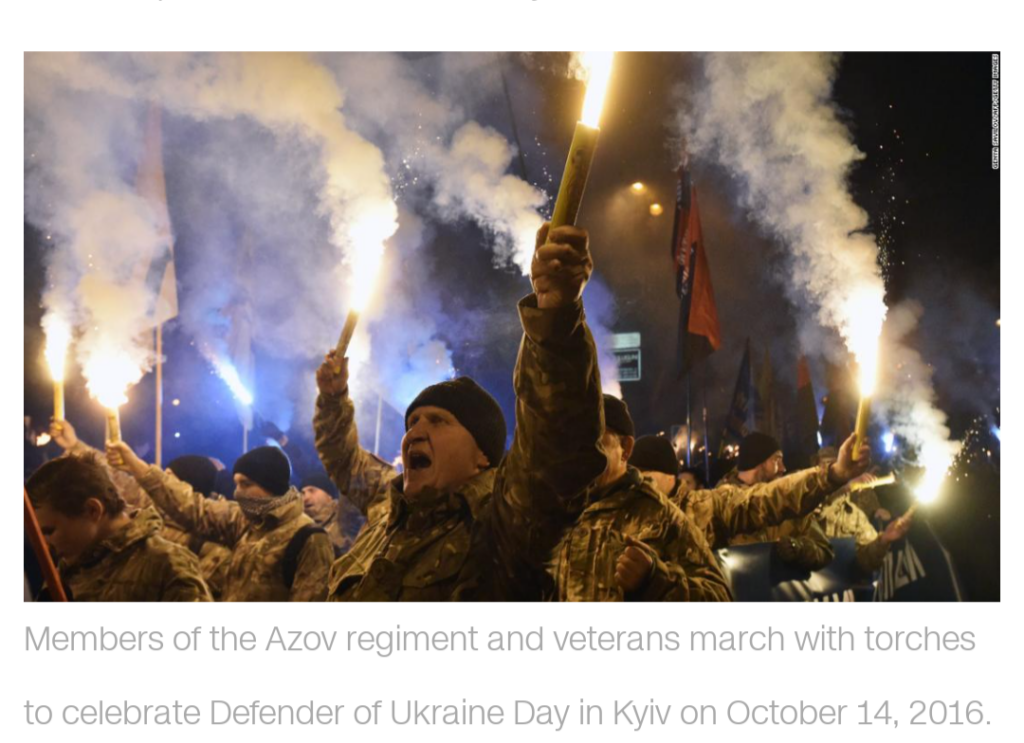
Such units within the Ukrainian army are one of the reasons for launching its “special military operation to demilitarise and denazify Ukraine.
KEEP READING:
Before joining the Ukrainian Armed Forces, who financed Azov? The unit received support from Ukraine’s interior minister in 2014, as the government recognized that its army was too weak to fight pro-Russian separatists and relied on paramilitary volunteer forces.
These forces were privately financed by oligarchs, most notably Igor Kolomoisky, a billionaire energy tycoon and then-governor of the Dnipropetrovsk region. In addition to Azov, Kolomoisky funded other volunteer battalions such as the Dnipro 1 and Dnipro 2, Aidar and Donbas units.
WHO FINANCED AZOV?
The unit was led by Andriy Biletsky, who served as leader of both the Patriot of Ukraine (founded in 2005) and the SNA (founded in 2008). The SNA is known for carrying out attacks against minority groups in Ukraine.
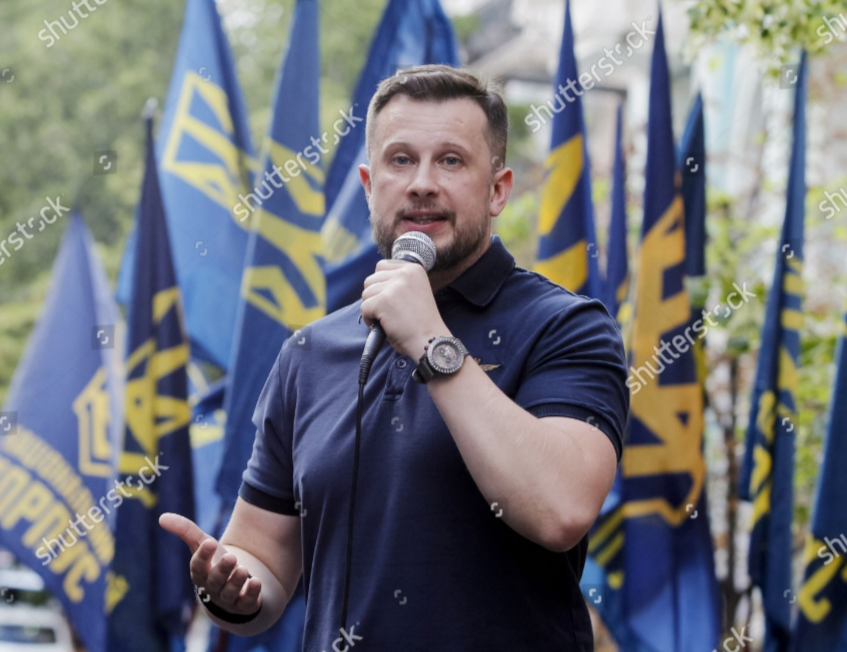
In 2010, Biletsky stated that Ukraine’s national purpose was “to lead the white races of the world in a final crusade against Untermenschen [inferior races] led by the Semites.” Biletsky was elected to parliament in 2014. He left Azov since elected officials cannot be in the armed forces or police. He remained a deputy until 2019.
NEO-NAZIST IDEOLOGY:
In 2015, Andriy Diachenko, the regiment’s spokesman at the time, said that 10 to 20 percent of Azov recruits were Nazis. The unit has denied adhering to Nazi ideology as a whole, but Nazi symbols such as the swastika and SS insignia are widespread on the uniforms and bodies of Azov members.
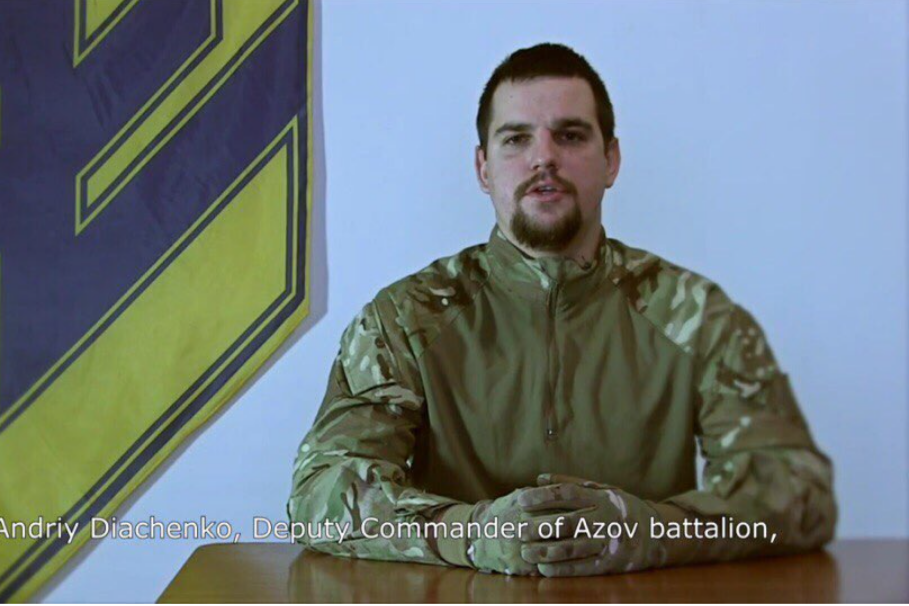
For example, the uniform bears the neo-Nazi Wolfsangel symbol, which resembles a black swastika on a yellow background. The group said it is simply an amalgam of the letters “N” and “I” representing “national idea”
This process of supplanting the exercise of authority to earn respect is expressed in these neo-Nazi attitudes, in which they seek to dominate each other through military and political force or overwhelming economic might.
Rather, each country should compete in the realm of soft power, vying to gain trust and friendship by manifesting diplomatic and cultural strengths and through contributions in the field of international cooperation that deploy the full range of human resources, technology and experience.
This, I believe, is the essence of Putin’s Russian proposal to distance NATO from its borders. It will pave the way for a win-win era in which the dignity of everyone in the world is honoured, with every country constructively competing to make the greatest contribution to humanity.




ASSUMPTA:
It’s important to approach information critically and discern the motives behind various narratives, especially in media coverage of geopolitical events. While some journalism may seek to sensationalise or vilify certain actors, it’s crucial to seek balanced perspectives and consider multiple sources of information.
In the case of coverage portraying Russia as an enemy, it’s essential to analyse the broader context, historical dynamics, and geopolitical interests at play. While Russia may be involved in contentious issues, such as conflicts in Ukraine or Syria, it’s important to avoid simplistic portrayals and instead engage in nuanced analysis.
Ultimately, promoting global security requires constructive dialogue, cooperation, and diplomacy among nations, rather than perpetuating divisive narratives. By critically evaluating information and advocating for informed, balanced discourse, we can work towards a safer and more stable world.
TSASI:
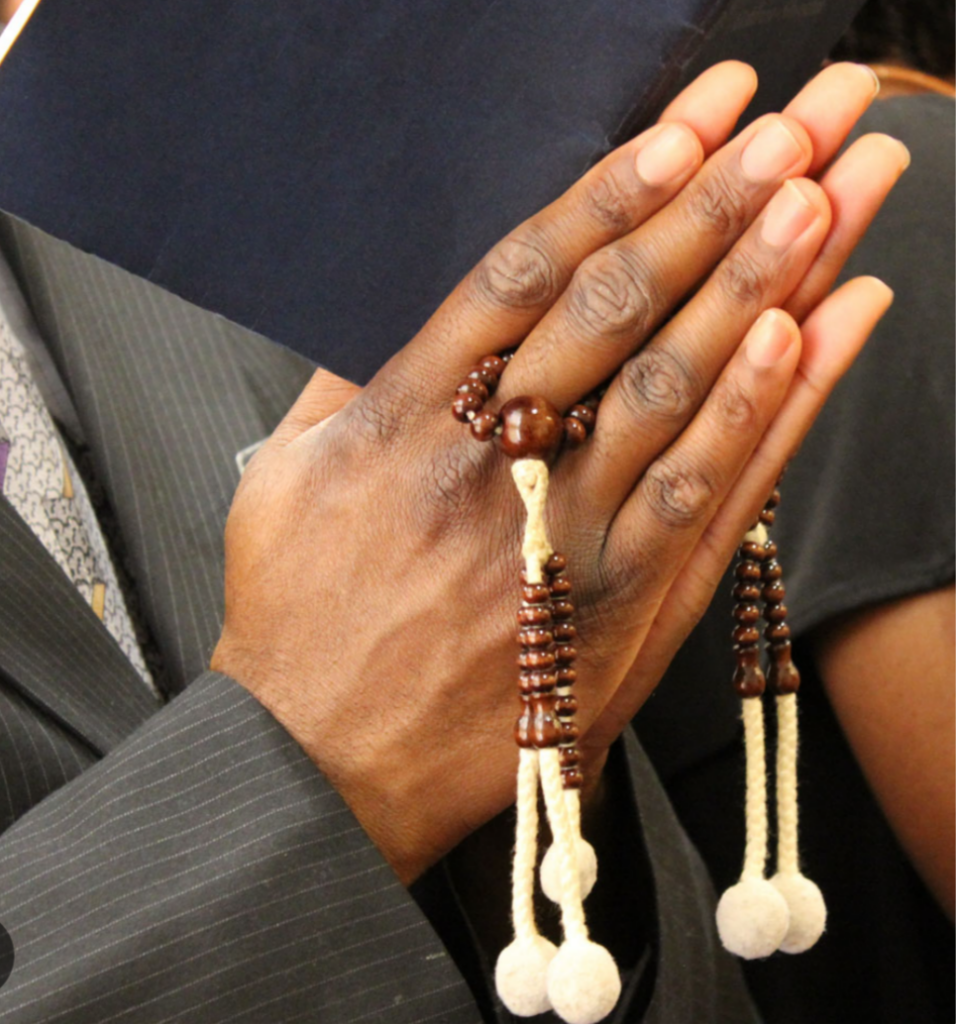
There’s a quote from Nichiren Daishonin’s Gosho that relates to promoting peace and understanding among nations where he said:
“When one passes from this world, if he should hear the name of the Lotus Sutra, he will instantly gain the supreme enlightenment, but if he should hear the names of the provisional teachings, then he will fall into the three evil paths.” – Nichiren Daishonin, “Letter to Akimoto”
This quote emphasises the importance of focusing on teachings that promote universal peace and enlightenment, rather than perpetuating divisions or conflicts. It encourages seeking wisdom and understanding that can lead to a more harmonious world”.
Thank you for the opportunity to have you to discuss these important topics. I would like to explore other topics with you in the coming week. Otherwise, thank you again, and have a great day!