






Presents “I AM A COWARD” featuring Yvonne Nelson in her “Culture” magazine.
“Exploring the tendency of young girls being involved with married people, just to overcome their fears and failures and abandonment to find empowerment and fulfilment.“
Yvonne Nelson: Did our culture play a role in motivating this tendency?
Special Edition coming on Wednesday, 7th February 2024 at assumpta.live/

What is the growth in its response?” The response is healing and who we choose to become, regardless of what we have done or what’s happened in the past. When we look for the lessons, we can find the jewels inside us.
When I learned the lessons, I discovered my true purpose in life. Today, I have understood that life is not about what we accumulate or accomplish, but who we have become in the process, how much we have become awake in the day before it passes, and how much we can believe in the unseen jewels inside that are waiting to be unleashed into the world.

YVONNE
In our country, there lived a young girl named Kessiwaa. She was known for her timid nature, always scared of facing the challenges life threw at her. Kessiwaa carried an invisible weight on her shoulders, burdened with the fears of failure and the haunting abandonment she had experienced in her past.
As Kessiwaa grew older, she started seeking refuge in the arms of those already committed to another. She believed that by involving herself with married individuals, she would overcome her cowardice tendencies and find empowerment and fulfillment in life. She saw it as a way of proving her worth and breaking free from her self-imposed limitations.

https://www.instagram.com/ag_premiumjeans?igsh=MWpsNjZ1bTFvdHNsdw==
Her first encounter was with Kwaku Atta, a charming businessman who exuded confidence and success. Kessiwaa was initially drawn to his charismatic personality, as he seemed to have everything she desired. However, Kwaku Atta was married, and though he too felt the pull of Kessiwaa’s vulnerability, he knew he had committed himself to another. He gently rejected her advances, leaving Kessiwaa shattered and more desperate than before.
Refusing to give up, Kessiwaa continued her quest for empowerment and fulfilment, even though she began to realise the hollowness of her actions. She then met Catherine, a beautiful and accomplished woman who found herself trapped in an unhappy marriage. Kessiwaa believed that by offering solace and affection to Catherine, she could fill the void in her own life.
Their relationship began with secrecy, stolen moments of passion and whispers of love. Over time, Kessiwaa and Catherine faced the harsh realities of their choices. They discovered that the path they walked was full of betrayals, lies, and the heartbreaking consequences of their actions. Both of them craved love and acceptance, but their affair only deepened their fears and unfulfilled desires.
Kessiwaa’s quest for empowerment had only led her deeper into a darkness she couldn’t escape. The guilt, shame, and inner turmoil stifled her spirit, leaving her feeling more afraid than ever. She craved genuine connection, but her choice lured her further away from the true fulfilment she longed for a love that would genuinely accept and empower her.
One fateful day, Kessiwaa realized the magnitude of her mistakes. As she sat alone, reflecting on the broken promises she made to herself and others, a wave of regret crashed over her. She understood that her actions were not born out of courage but rather her own insecurities and thirst for validation.

https://www.instagram.com/ag_premiumjeans?igsh=MWpsNjZ1bTFvdHNsdw==
In that moment of clarity, Kessiwaa pledged to change her path. Determined to face her fears head-on, she sought out a Buddhist friend Araba to address her abandonment issues, her tendency to seek validation from others, and her fear of failure. With each session with Araba chanting Nam-Myoho-Renge-Kyo she gained new insights and tools to face her life with bravery and authenticity.
Over time, Kessiwaa transformed her life. She earned her degree, pursued her passion for art, and built genuine friendships. As she embraced her vulnerability and learned to love herself, she found true empowerment and fulfilment. Kessiwaa became an advocate for others struggling with their own fears and became a symbol of resilience and transformation.
Though her journey had been arduous, Kessiwaa discovered that true empowerment could only be found within oneself. By confronting her cowardice tendencies and facing her past, she realised that she could create her own destiny, breaking free from the chains of her fears and failures. Kessiwaa’s story serves as a reminder that seeking validation in unhealthy situations often leads to temporary satisfaction, but it is the strength from within that ultimately empowers us to overcome our fears and live a genuinely fulfilled life.

ASSUMPTA:
Did our culture play a role in motivating this tendency?

YVONNE:
That being said, it is possible that cultural factors can play a role in motivating some tendencies in individuals. Different cultures prioritise different values, such as collectivism or individualism, which can shape behaviours and motivations.
For example, our culture here in Ghana emphasises competition and success has motivated individuals to strive for achievements and recognition. Additionally, our cultural norms and expectations have shaped social pressures, which may influence young people’s tendencies to act in certain ways.
It’s worth noting that numerous factors influence an individual’s tendencies, and culture is just one of many potential factors. Individual personality traits, upbringing, education, social environment, and personal experiences also play significant roles in shaping behaviour and motivations.

ASSUMPTA:
Which brings us to the central fact that Kessiwaa was without an all featuring-powerful creator God to uphold her transformation, the significance of her experience is altered.

YVONNE
Indeed, Kessiwaa’s belief in herself and her inner strength is a central aspect of her faith. Unlike traditional religious beliefs that often rely on an external deity or a higher power, Kessiwaa’s faith is grounded in her own abilities and the conviction she finds within herself. This internalised belief system shapes the way she perceives and derives meaning from her transformative experiences.

ASSUMPTA :
Faith, in this context, is not about blind religious belief or adherence to a particular doctrine. It is about having confidence in oneself and having a strong conviction in one’s abilities and potential. It is about tapping into one’s inner strength to overcome obstacles and challenges and to live a life that aligns with one’s core values and principles.
Having faith means having the determination and desire to confront and conquer our own inner weaknesses, such as self-doubt or lack of self-confidence. It is about consistently working towards personal growth and development, aiming to become a resilient, positive, and compassionate individual.
Faith also involves being proactive and assertive in creating a life that is filled with meaning and purpose. It is about finding value and purpose in every situation, regardless of the circumstances that one may encounter. This could mean looking for opportunities amidst challenges or finding silver linings in difficult times.
Ultimately, faith is a mindset that empowers us to believe in ourselves, to embrace optimism, and to actively contribute to the betterment of ourselves, others, and society as a whole. It is a belief system that encourages us to tap into our own potential and to strive for personal growth and fulfilment.

YVONNE:
Kessiwaa did admire the courage in her friend Catherine but she was not quite sure how to bring it out in herself, until Catherine taught her how to chant Nam-Myoho-Renge-Kyo.

ASSUMPTA:
Nam-Myoho-Renge-Kyo is a chant associated with Nichiren Buddhism, known for its transformative power and ability to bring out one’s inner courage and potential. Kessiwaa saw this courage in her friend Catherine, leading her to wonder how she could tap into that same strength and conviction. Curiosity piqued, Kessiwaa approached Catherine and expressed her admiration for her courage, asking her for guidance on how to develop it within herself. Catherine, always ready to share her wisdom, explained that chanting Nam-Myoho-Renge-Kyo was her secret to unlocking her inner strength.
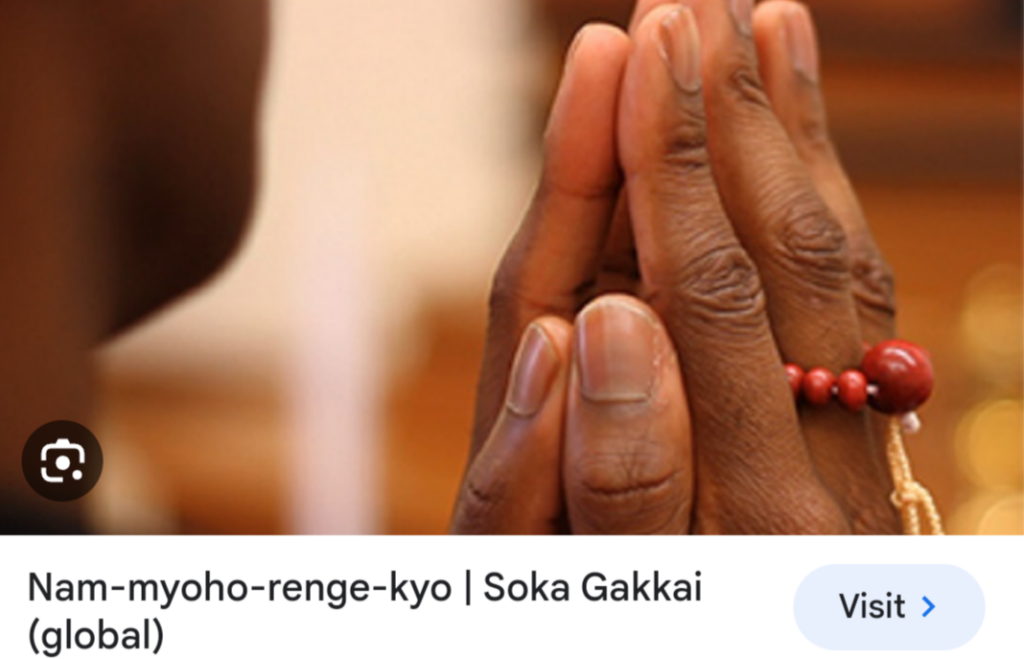
Intrigued, Kessiwaa sought further guidance from Catherine on how to effectively chant and apply Nam-Myoho-Renge-Kyo in her daily life. Catherine patiently taught her the correct pronunciation and encouraged her to chant with a pure heart, focusing on their shared desire for courage and empowerment.

Together, they sat in quiet meditation, repeating the powerful phrase, feeling its resonance deep within their beings. As the vibrations of the chant enveloped them, Kessiwaa began to feel a shift within herself. A newfound determination and confidence started emerging, as if an invisible barrier that had held her back began to dissolve.
Over time, Kessiwaa noticed profound changes happening in her life. She grew more assertive, facing her fears head-on. She started speaking up for herself, unafraid to voice her opinions. The once shy and hesitant Kessiwaa transformed into a courageous and self-assured woman.
As their friendship deepened and their chanting practice grew stronger, Catherine and Kessiwaa both experienced the powerful effects of Nam-Myoho-Renge-Kyo. They supported and encouraged each other, reinforcing their newfound courage and conviction.

Together, they embarked on a journey of self-discovery, embracing the potential within themselves and actively manifesting their dreams. With each chant of Nam-Myoho-Renge-Kyo, they found themselves tapping into an unlimited wellspring of courage, resilience, and determination.
Through the compassionate guidance and support of her friend Catherine, Kessiwaa not only discovered how to bring out her own courage but also became an inspiration to those around her. Their shared practice of Nam-Myoho-Renge-Kyo became a powerful catalyst for personal growth and transformation, allowing them to face any obstacle with unwavering courage and unwavering resolve.

YVONNE
“Courage is not something separate from our daily lives or beyond our reach. It is found right here within our lives, which embodies the principle of the ‘mutual possession of the Ten Worlds.’
ASSUMPTA:
Indeed, anyone, irrespective of age or gender, can bring forth courage. We can overcome our inner weakness with the lion’s roar of Nam-myoho-renge-kyo, and take action to surmount ourself-imposed limitations that make us give up or settle for less. Thank you for joining me in today’s dialogue.
YVONNE:
Thank you for inviting me to join today’s dialogue, I highly appreciate your concern.