


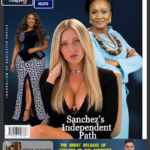





ASSUMPTA WEEKLY NEWSLETTER AND LIFESTYLE MAGAZINE
PRESENTS “The Lawyer” with Ms. Assumpta-Gahutu and Two Ghanaian Brilliant Broadcast Journalists
A Special Edition Coming Tuesday, April 22, 2025, at: assumptagh.live/
African Stream / Article Title: “Is Rebuilding Gaza a Compassionate Act—or a Boardroom of Billionaires Popping Champagne Over Their Next Profit Engine?
Gaza Takeover: A Colonial Blueprint for Palestinians’ Future?”
COMING Tuesday| 22-04-2025


https://www.instagram.com/hairsenta?igsh=MXAzOThhNGZ0Nm15dQ==
Slay with Confidence – Rock the Best Human Hair Extensions from Ghana!
✨100% Premium Quality | Tangle-Free | Long-Lasting Shine✨
Looking for that flawless, natural look?
Hairsenta brings you luxurious human hair extensions straight from Ghana – trusted by beauty queens, influencers & stylists across the globe!
Why Hairsenta?
✔️ 100% Virgin Human Hair
✔️ Soft, Silky & Durable
✔️ Perfect for All Styles – Curls, Waves, Straight
✔️ No Shedding. No Tangles. Just Slay!
Join the movement!
Followed by @gwen_addo, @directionbygwen & 71 others who know what real quality feels like!
Call now: (+233) 0544354455 / 0248629769
Shop online: www.hairsenta.com
Visit us: 24 Jungle Avenue, Accra, Ghana 00233
Glow up starts here. Let your hair do the talking!
#Hairsenta #HairGoals #GhanaBeauty #SlayEveryday
Follow us for more
Instagram | TikTok | Facebook

“When the World Looks Away: How Gaza Became the Graveyard of Global Conscience”
In an unmissable feature led by two of Ghana’s finest broadcast journalists—Frema Adunyame and Serwaa Amihere—alongside humanitarian advocate and CEO of Assumpta Newsletter Magazine, Ms. Assumpta Gahutu, this article exposes the raw, unfiltered truth behind the suffering in Gaza.


While Palestinians search for aid, shelter, and dignity, the world offers silence. Diplomacy has failed. Compassion has vanished. And the so-called global order? Nowhere to be found. With insight from media, humanitarian, and early childhood development lenses, this dialogue isn’t just reporting—it’s a reckoning.
Have we failed Gaza, or have we failed ourselves?
Don’t miss this urgent conversation in the upcoming edition of Assumpta Newsletter Magazine. Because when the world turns its back, someone must speak up.
Title: Is Rebuilding Gaza a Compassionate Act—or a Boardroom of Billionaires Popping Champagne Over Their Next Profit Engine?
The war isn’t even over, and already, the vultures are circling. But here’s the real question: Is the end of war the start of healing, or the beginning of another money-making machine?
Q
War doesn’t end with a ceasefire. It just transitions to the Rebuild.
The same governments and corporations that raked in billions supplying weapons are now positioning themselves to make billions more by rebuilding what they’ve helped destroy. But let’s pause here—are they truly offering help, or are they just using this tragedy as a launchpad for their next profit engine?
And don’t kid yourself—this isn’t charity. It’s a business transaction, funded by taxpayer dollars. Again.
Take Ukraine, for example. The U.S. is already moving aggressively to control reconstruction funds. To some, that might sound like the right move, especially if you believe a significant chunk of the aid to Ukraine has been misused or siphoned off by corruption within the Zelensky regime. But here’s the key question: Who’s benefiting from this?
Because let’s face it: the money isn’t going to the people of Ukraine. It’s going to foreign contractors who will own the very infrastructure they rebuild. Is that humanitarian aid—or a business deal dressed up as a rescue mission?
This is how the war machine works.
Step 1: Fuel the conflict.
Step 2: Watch the destruction unfold.
Step 3: Step in with a “recovery” plan that conveniently looks more like an investment portfolio than a blueprint for healing.
They’ll rebuild the schools, the roads, the power grids—but don’t be fooled. They’ll own them. So what comes next? Will they lease these assets back to the nation they claimed to have saved? Is that rebuilding—or repossession?
Let’s not kid ourselves. War isn’t just about bombs and bullets—it’s about land, assets, and control. The pattern is disturbingly clear: Destroy. Rebuild. Own.
And who pays the price in the end? Ukrainians. Gazans. The people were left with foreign debt, privatised infrastructure, and no real control over what was once theirs.
Some will say, “If the U.S. doesn’t do it, China or the EU will.” Maybe they’re right. But doesn’t that just reinforce the point? Is this really about compassion—or is it a fierce competition for global control?
So, the next time you hear the word reconstruction, don’t let the image of kindness fool you. Picture a boardroom full of billionaires, toasting to their next big win. Because the true face of profit is just beginning to show itself.
Newsletter Introduction:
Is It “The Frontier Spirit”—or Just Americanism Rebranded?

To understand the soul of a nation, we look to its art, its history, and its legacy. Africa gave the world its people for the Slave Trade and its minerals.
Rome, its great architecture and monuments. Greece, its tragedies. Germany, even through its darkest chapter, left a permanent mark on humanity.
But America? What has it given us?
Some call it “The Frontier Spirit”—the idea that to be American is to be a relentless pioneer, always chasing the next land, the next victory, the next resource. It’s a spirit that doesn’t create, but conquers. It doesn’t cultivate beauty, it seizes territory. And it’s this same restless spirit that we now see echoed in the policies and bloodshed of the Middle East.
From Gaza to Syria, from the West Bank to Lebanon, the American-backed vision for a “Greater Israel” is not just ideology—it is strategy. A policy. A mission. One with roots in U.S. foreign policy, including Operation Timber Sycamore, launched under Hillary Clinton and embraced by Netanyahu, to reshape the region in Israel’s image.
This isn’t peacekeeping—it’s pioneering with bombs. It’s empire-building in the 21st century. And Gaza? Gaza has become the testing ground, the crucible of conquest—where the “Frontier Spirit” isn’t a myth of the Wild West, but the machinery behind mass displacement, occupation, and destruction.
In this edition of Assumpta Newsletter Magazine, Ghanaian journalists Frema Adunyame and Serwaa Amihere sit down with humanitarian and early childhood advocate Ms. Assumpta-Gahutu, CEO of the magazine and principal of Babies and Toddlers Daycare, to explore Gaza’s suffering—and the silence of the world around it.
Drawing on the wisdom of SGI President Daisaku Ikeda’s 2016 Peace Proposal, which urges a shift from national security to human security, this dialogue confronts the question:
Are we witnessing compassion—or just conquest in disguise?
Newsletter Overview | April 22, 2025 Edition
“Is Rebuilding Gaza a Compassionate Act—or a Boardroom of Billionaires Popping Champagne Over Their Next Profit Engine?”

“Gaza & The Middle East Takeover: Blueprint for America’s Frontier Spirit?”
In a world that claims to champion justice, Gaza has become the graveyard of that very claim.
This edition of Assumpta Newsletter Magazine is not just a publication—it’s a siren in the silence. As Gaza lies in ruins, the cries of mothers, children, and the displaced echo unanswered. And while the global community looks away or mutters rehearsed sympathies, powerful governments and corporations are preparing to do what they do best—profit from pain.
Led by Ghana’s award-winning journalists Frema Adunyame and Serwaa Amihere, and joined by humanitarian educator and advocate Ms. Assumpta Gahutu, this issue exposes the grotesque theatre of war, diplomacy, and reconstruction.
Ms. Gahutu draws sharp insight from SGI President Daisaku Ikeda’s 2016 Peace Proposal, reminding us that real peace is not made in boardrooms or battlegrounds but by centring human dignity and collective conscience.
This newsletter also investigates how America’s “Frontier Spirit”—once used to justify colonial expansion and the displacement of native peoples—is now alive and well in the halls of Washington and Tel Aviv. Gaza, Syria, Lebanon, and the West Bank have become the new frontiers: lands to be taken, owned, and reshaped.
Through historical reflection, bold questioning, and global analysis, we ask:
- Does Israel have a legal right to occupy Palestinian land?
- Is this reconstruction or recolonisation?
- Are we witnessing aid or acquisition?
- What future do we leave behind if we allow justice to be privatised and peace to be sold?
This edition demands your attention, challenges your silence, and calls for moral clarity in an age of comfortable complicity.
The world may look away, but we will not.
Join us in this urgent reckoning.
2016 Peace Proposal
Universal Respect for Human Dignity:
The Great Path to Peace:
SGI’s annual peace proposals, authored by Daisaku Ikeda, president of SGI, put forth ideas grounded in Buddhist humanism in response to global issues. These proposals serve to guide the SGI’s work at the UN. They also inform about the activities undertaken by local Soka Gakkai organisations around the world.
Share this page

- Peace
- Disarmament
- Environment & Sustainability
- Human rights education
- Gender equality & women’s empowerment
- Humanitarian relief
- Nuclear Abolition
Synopsis
All people have the right to live in happiness. The prime objective of the Soka-Gakkai International (SGI) movement is to forge an expanding solidarity of ordinary citizens committed to protecting that right and, in this way, to rid the world of needless suffering.
Our activities in support of the United Nations are a natural and necessary expression of this. In carrying out these activities, we have taken a learning-centred approach, one that emphasises the practice of dialogue and fostering an ethos of global citizenship.
One important function of learning is to enable people to accurately assess the impact of their actions and to empower them to effect positive change. Another is to bring forth the courage to persevere in the face of adversity. Educator and founding Soka Gakkai president Tsunesaburo Makiguchi termed this “the courage of application.” Such courage keeps us from being overwhelmed by our circumstances and enables us instead to create the kind of future we desire.
In addition to this learning-based approach, we have stressed the importance of dialogue as the foundation for all our activities.
Our awareness of people belonging to different religions or ethnicities can be transformed through direct contact and conversation with even one member of that group. When we engage in open and frank dialogue, the world begins to appear in a warmer, more human light.
It is my conviction that dialogue is essential if we are to build a world in which no one is left behind. SGI President Ikeda.
Three areas of action
I would like to offer ideas on three areas that require prompt and coordinated action by governments and civil society:
- Humanitarian aid and human rights protection;
- Ecological integrity and disaster risk reduction; and
- Disarmament and the prohibition of nuclear weapons.
These proposals are oriented to the ideal of a world in which no one is left behind, as articulated in the Sustainable Development Goals (SDGS) adopted in September 2015 as a successor framework to the Millennium Development Goals (MDGS). The SDGS represent a significant advance on the MDGS through their commitment that no one should be abandoned to their fate, as epitomised by the very first goal, “End poverty in all its forms everywhere.”
About humanitarian aid and human rights protection, I would like to offer two concrete proposals for the World Humanitarian Summit set to take place in Istanbul, Turkey, this May.
First, that all participants reaffirm the principle that our response to the worsening refugee crisis must be based on international human rights law; and I urge them to express a clear commitment to the primacy of protecting the lives and human rights of refugee children.
Second is to strengthen UN programs in support of host countries taking in refugees in the Middle East, and to prioritise a similar approach in other regions of Asia and Africa.
The UN’s Regional Refugee and Resilience Plan (3rp) currently links refugee relief operations to support for recipient communities in the Middle East. I propose that the World Humanitarian Summit express a commitment by all countries to work in solidarity to facilitate activities under the 3rp, such as improvements in the supply of food and safe drinking water and provision of health care.
Ecological integrity and disaster risk reduction
I would like to call for cooperation among China, Japan and Korea–which together account for one-third of global greenhouse gas emissions–in the sharing of knowledge and best practices in the fields of energy efficiency, renewable energy and efforts to minimise their resource footprint.
I welcome the renewal of the summit meetings between the leaders of the three countries. The Tripartite Environment Ministers Meeting has continued to contribute to cooperation on environmental issues even at times of heightened political tensions, based on the understanding that Northeast Asia is “one environmental community.” I urge the leaders of the three countries to adopt a China-Japan-Korea environmental pledge focused on regional cooperation to counter global warming.
In addition to cooperation among national governments, I would like to propose that the world’s cities work together to promote the goals set out in the 2015 Paris Agreement on climate change.
If people change, the world will change.
In recent years, the role of ecosystems in disaster risk reduction has attracted growing attention. As a follow-up to the UN Decade of Education for Sustainable Development (DESD), the UN has launched the Global Action Programme for ESD.
The engagement of young people is listed as one of the program’s priorities, and in this context, I would like to wholeheartedly encourage young people and children everywhere to become engaged as active participants in Ecosystem-based disaster risk reduction (Eco-DRR), such as tree-planting campaigns
Disarmament and the prohibition of nuclear weapons:
I would like to offer two proposals regarding disarmament and the prohibition of nuclear weapons. The first relates to strengthening the institutional framework to prevent the proliferation of conventional weapons, which exacerbate humanitarian crises and contribute to incidents of terrorism around the world.
International activities to prevent terrorism can be strengthened significantly through the synergies between the Arms Trade Treaty, which seeks to regulate the trade in conventional weapons, and the numerous antiterrorism conventions that have been established.
Each year, an unconscionable number of lives are lost due to the influx of small arms into conflict areas. I urge states to promptly ratify the Arms Trade Treaty as proof of their pledge to make steady efforts toward the achievement of the SDG target of reducing violence, insecurity and injustice.
The second area of disarmament I would like to address concerns the prohibition and abolition of nuclear weapons, the use of which could render meaningless in an instant all of humankind’s effort to resolve global problems.
I call on the remaining eight states that have not yet ratified the Comprehensive Nuclear-Test-Ban Treaty to do so as soon as possible so that the Treaty can enter into force and help ensure that nuclear weapons are never again tested on our planet. The UN General Assembly has adopted a resolution setting up an Open-ended Working Group (OEWG) to address effective measures to attain and maintain a world without nuclear weapons.
I would like to propose that the following three items be included in the OEWG’s deliberations:
- Removal of nuclear retaliatory forces from high-alert status;
- Withdrawal from the nuclear umbrella; and
- A halt to the modernisation of nuclear weapons.
I strongly hope the work of the OEWG will lead to the start of negotiations for a treaty prohibiting nuclear weapons.
In Hiroshima last August, the International Youth Summit for Nuclear Abolition, jointly organised by six groups including the SGI, issued a pledge that declared:
Nuclear weapons are a symbol of a bygone age; a symbol that poses an imminent threat to our present reality and has no place in the future we are creating.
The participants undertook to convey to the world and the future the experiences of the hibakusha, raise awareness among their peers and take other forms of action to protect the shared future of humankind.
It is the firm pledge of the SGI to offer our unflinching support for the abolition of nuclear weapons and the achievement of the Sustainable Development Goals by fostering the solidarity of youth, the generation of change. In this way, we will continue to work for a world, a global society, in which no one is left behind.
FEATURE DIALOGUE | EXCLUSIVE ROUND-TABLE CONVERSATION
“Gaza Takeover: A Colonial Blueprint for Palestinians’ Future?”


Serwaa Amihere:
Good evening to our viewers across Ghana, the continent, and the global diaspora. You’re tuned into a very special feature from Assumpta Newsletter Magazine. I’m Serwaa Amihere—joined by my colleague, the brilliant Frema Adunyame—and today, we are deeply honoured to be in conversation with a woman whose humanitarian voice has stirred hearts across Africa and beyond.
She is the CEO of this publication and also the principal of Babies and Toddlers Daycare, where compassion meets education. Ms. Assumpta Gahutu, thank you for being with us.

Ms. Assumpta Gahutu (smiling gently):
Thank you, Serwaa. Thank you, Frema. It’s a joy to sit with two powerful African women who bring truth to the surface. And to our audience, thank you for giving your time and conscience to this conversation.

Frema Adunyame:
Let’s begin where the world has fallen silent. Gaza. A land battered by war, its people displaced, its future hanging in the balance. But instead of global empathy, we’re seeing foreign investors, U.S. firms, and private contractors already circling the ruins. Ms. Gahutu, is this compassion—or is this capitalism in its most brutal form?
Ms. Assumpta Gahutu:
Frema, what a powerful and painful question.
Let’s be very clear: Reconstruction without justice is not compassion—it’s conquest in a new costume. What we’re witnessing in Gaza is not rebuilding with empathy; it is asset acquisition. It is the coloniser returning in a tailored suit, with blueprints in hand, pretending to rescue what they helped destroy.
Imagine: A child in Rafah today has lost everything—home, parents, school. And as they search for bread and shelter, foreign powers are already drafting billion-dollar contracts to “rebuild” that child’s neighbourhood… not for that child, but for their portfolio. This is not aid. It’s ownership.

Serwaa Amihere (nodding):
That is chilling. And it reminds us of something Ms. Gahutu has written about before—the idea of the American Frontier Spirit. A doctrine once used to justify the massacre and displacement of Indigenous peoples is now global policy. Could you speak to that?
Ms. Assumpta Gahutu:
Yes, Serwaa. The so-called Frontier Spirit is deeply embedded in American history—and it’s far from dead. It tells the story of a people who move not to build community, but to take land, claim ownership, and erase indigenous presence.
Now look at Gaza, Syria, the West Bank. The same spirit has evolved. It no longer wears cowboy boots—it wears Pentagon medals and UN-approved reconstruction bids. But the goal is the same: Expansion. Exploitation. Erasure.
When Hillary Clinton authorised Operation Timber Sycamore in 2011, it wasn’t just military intervention—it was a strategic destabilisation of the Middle East to create new markets, new alliances, new frontiers. And Netanyahu has never hidden his desire to redraw the map in Israel’s image.
Frema Adunyame:
It almost feels scripted—destroy, then rebuild, then own. We saw it in Iraq. In Libya. In Ukraine. And now, Gaza is the latest chapter.
Ms. Assumpta-Gahutu:
Yes, Frema. This is the rhythm of the modern empire:
Step 1: Bomb.
Step 2: Sanction.
Step 3: Rebuild—with conditions.
And those conditions often include privatised water systems, foreign-owned telecoms, and permanent military presence. So the people become tenants in their land.
Serwaa Amihere:
As someone who works daily with children and families at Babies and Toddlers Daycare, how does this hit you personally?
Ms. Assumpta Gahutu (visibly moved):
Serwaa, I see Gaza’s children in the eyes of my students every day. They’re curious. Innocent. Deserving of dreams. And yet, in Gaza, we are raising children beneath rubble. We are denying them not just homes, but history, identity, and peace.
What breaks me most is this: Children in Gaza are being born into trauma, and dying before they ever taste safety. If our global system allows this, it is not broken—it functions exactly as designed.
Frema Adunyame:
You’ve often cited SGI President Daisaku Ikeda’s 2016 Peace Proposal. Can you share how it applies to Gaza now?
Ms. Assumpta Gahutu:
Of course. President Ikeda urges us to shift from “national security” to “human security.” That means putting people above profit, dignity above dominance. His proposal calls for humanitarian aid rooted in dialogue, education, and shared responsibility.

What Gaza needs now isn’t just reconstruction—it needs recognition. It needs reparations. It needs a collective global admission that the silence has killed more than bombs ever could.
Serwaa Amihere:
And as African women, what can we do?
Ms. Assumpta Gahutu:
We must remember—we are not powerless. We are the conscience of this generation. Let us speak. Let us educate. Let us call our leaders to account. Gaza does not just need aid—it needs advocates.
A quote from SGI president Ikeda “It is the function of evil to divide; to alienate people from each other and divide one country from another. The universe, this world and our own lives, are the stage for a ceaseless struggle between hatred and compassion, the destructive and constructive aspects of life… . In the end, the evil over which we must triumph is the impulse toward hatred and destruction that resides in us all. [Essay, “The Evil Over Which We Must Triumph,” From Daisaku Ikeda)
Frema Adunyame :
Powerful words. And to our readers, this is just the beginning. The story of Gaza is the story of empire, of silence, and survival. But it can also become the story of resistance, truth, and healing—if we dare to tell it.
Serwaa Amihere:
Thank you, Ms. Gahutu, for your wisdom. And thank you to our readers. This is not just a conversation—it is a call to moral action.
Join us this Tuesday, April 22nd, for the full feature:
“Gaza Takeover: A Colonial Blueprint for Palestinians’ Future?”
Only in the Assumpta Newsletter Magazine.
Because when the world looks away, we must look closer.
SGI-Our Shared Humanity.

https://www.instagram.com/oh_my_hairr?igsh=MThqbDNneDZzcTF3cw==
Meet the Power Sisters Behind Beauty & Boss Moves!
Serwaa Amihere & Mami Gyamfua Yeboah
Co-Founders of @officeandcobysa & @oh_my_hairr
Your One-Stop Beauty & Glam Spot!
@oh_my_hairr
✨ 100% Virgin Human Hair Extensions & WIGS
✨ Slay with premium quality – soft, sleek & flawless
✨ WORLDWIDE SHIPPING!

https://www.instagram.com/officeandcobysa?igsh=dmxucTZ2a2t1eDBn
@officeandcobysa
Get the ultimate beauty treat:
💅 Nails | Pedicure | Manicure
Location: Bawaleshi Road, East Legon
Call/WhatsApp: +233 50 206 5705
Shop now: bitly/3BrePSd
Glow Up with the Best – You Deserve It!
#OhMyHairr #OfficeAndCoBySA #HairGoals #BeautyBar #BossSisters #VirginHair #EastLegonGlam

https://www.instagram.com/ankarazone?igsh=OWpuaml6dHdiZHpq

https://www.instagram.com/laurenhautecouture?igsh=MWxzNXN1Ym5nZ3o3Mg==

https://www.instagram.com/officeandcobysa?igsh=dmxucTZ2a2t1eDBn

https://www.instagram.com/flourishheights?igsh=cTExenQ3bnptZGgx


https://www.instagram.com/delish_bakerygh?igsh=MW5ic2c0NnR5cHBwZQ==


https://www.instagram.com/serwaaamihere?igsh=N216N3hzeTE3eHho


