






📰 Assumpta — Newsweek Edition
FLASH ALERT: From Kwame Nkrumah to Modern Ghana — What True Stability Looks Like
📍 Special Historical & Economic Reflection
📅 Release: March 2026
🌐 Read exclusively at: assumptagh.live/
📰Newsletter – Editorial Reflection
Featuring Historical Insight & Modern Civic Perspectives
This edition examines the deep through‑line between Kwame Nkrumah’s foundational activism and today’s conversation around Ghana’s economic stability, inspired by media leader Nana Aba Anamoah’s recent commentary on national direction and public sentiment. This issue explores ideas:
dignity, stability, capacity, and nation-building — from 1947 to today.
HAIR SENTA ADVERTISEMENT


https://www.instagram.com/hairsenta?utm_source=ig_web_button_share_sheet&igsh=ZDNlZDc0MzIxNw==
More Than Just Hair. It’s Your Crown. 👑
At Hair Senta, we don’t just sell extensions; we release the excellence, courage, and confidence already inside you. From the moment you walk through our doors at 24 Jungle Avenue, you aren’t just a customer—you are royalty.
Our legendary quality is matched only by our world-class hospitality. Experience the “Senta” welcome and discover why we are Ghana’s most trusted trademark for premium human hair.
- ✨ Feel the Difference: Premium Human Hair Extensions.
- 🌍 Global Reach: Shipping from Ghana to the World.
- 📍 Visit Us: 24 Jungle Avenue, Accra, Ghana.
Ready to transform?
📞 Call: (+233) 0544354455 / 0248629769
🌐 Shop: www.hairsenta.com
📚 Historical Spotlight: Kwame Nkrumah’s Return & the Birth of Mass Politics
The Return — December 1947
Kwame Nkrumah arrived in the Gold Coast to serve as General Secretary of the United Gold Coast Convention (UGCC). At that moment, the nationalist movement was dominated by elite leadership and advocated for a gradual transition to independence.

The Spark of Sovereignty: Kwame Nkrumah’s Revolutionary Return
The mid-1940s marked a period of intense transformation for West African independence, anchored by Kwame Nkrumah’s return to the Gold Coast in December 1947. Originally invited by J.B. Danquah to serve as the General Secretary of the United Gold Coast Convention (UGCC), Nkrumah soon found himself at odds with the leadership’s conservative approach of “self-government in the shortest possible time.”
Driven by a radical vision for “Self-Government NOW,” Nkrumah’s organizational genius and appeal to the “Verandah Boys” created a rift with the UGCC elite—a tension that only tightened after the 1948 Accra Riots and the subsequent imprisonment of the “Big Six.” Realizing his mission for immediate liberation could no longer be contained, Nkrumah broke away to form the Convention People’s Party (CPP) on June 12, 1949.
Nkrumah’s transition was a deliberate, soul-searching shift away from the polished corridors of the elite to the heartbeat of the streets. By empowering the “Verandah Boys” and the ordinary worker, he sought to make the common Ghanaian person indispensable to the struggle for freedom. His mission was to prove that the strength of a nation lay not in its aristocracy, but in the collective power of its people, elevating their status and making them a force to be reckoned with in the global community.
Before a massive crowd of 60,000 at the Accra Arena, he launched this new movement under the motto “Forward Ever, Backward Never,” effectively shifting the independence struggle from a slow diplomatic process into a mass-based crusade. This bold transition, fueled by his “Positive Action” campaign of 1950, ultimately accelerated the British exit and paved the way for Ghana to become a sovereign nation on March 6, 1957.
Internal Friction & Diverging Visions
Nkrumah introduced a radical alternative:
“Self-Government NOW.”
His ability to mobilize workers, youth, and the “Verandah Boys” quickly shifted the national mood and exposed ideological tensions within the UGCC.
The Turning Point — 1948 Accra Riots
After the riots, the arrest of the “Big Six” unexpectedly elevated Nkrumah’s public profile and reshaped the struggle’s direction.
June 12, 1949 — The Birth of the CPP
Before a crowd of nearly 60,000, Nkrumah founded the Convention People’s Party (CPP), Ghana’s first mass-based political party built on urgency, empowerment, and direct action.
Motto: “Forward Ever, Backward Never.”
🧭 Modern Perspective: Nana Aba Anamoah on Ghana’s Stability Today
Media executive and civic commentator Nana Aba Anamoah recently sparked national discussion by assessing Ghana’s current economic climate through the lens of stability, public mood, and institutional confidence.

Her view emphasizes:
- comparative stability versus past turbulence
- improved communication and governance tone
- the broader social atmosphere beyond technical economic indicators
Her perspective echoes a deeper historical pattern:
stability is not only financial — it is cultural, emotional, and civic.
🔍 Connecting the Dots: From Positive Action to Modern Stability
Kwame Nkrumah’s “Positive Action” in 1950 was not just a protest strategy — it was a capacity-building movement rooted in dignity, unity, and national self-belief. Today’s discussions of economic stability reflect that same underlying question:
Does the nation give its people the capacity to thrive?
This edition argues that true stability is made of three elements:
✔ Economic Structure
Systems that support growth.
✔ Civic Confidence
People believe in the direction of the country.
✔ Human Dignity
Policies and leadership that treat citizens as active participants in national progress.
These ideas create the philosophical through‑line from Nkrumah’s 1947 return → CPP 1949 → independence in 1957 → Ghana’s contemporary conversation on stability.
🏁 Conclusion (Integrated & Polished)
Kwame Nkrumah did not start the independence movement —
He transformed it.
By shifting activism from elite negotiation to mass mobilization, he accelerated Ghana’s journey toward freedom and anchored national development in the power of ordinary people.
Does Nana Aba Anamoah’s modern reflection on economic stability echoes that legacy?
A nation’s strength is best measured not just by its numbers, but by the confidence, dignity, and capacity of its citizens.
From 1947 to the present, one truth remains unchanged : Transformational progress emerges when leadership, ideas, and people converge.
1️⃣ FULL POLISHED ARTICLE :
Title:
FROM NKRUMAH TO NOW: What True Stability Looks Like
Article (Publish‑Ready) : True national stability has always been measured through numbers — inflation rates, deficits, GDP figures, currency performance. But as Ghana’s public discourse evolves, so does the definition of stability itself. A new wave of thinkers, analysts, and civic leaders argue that statistics alone cannot fully describe the lived reality of a nation.
This perspective draws inspiration from a deeper historical tradition. In 1950, Kwame Nkrumah advanced a philosophy known as Positive Action — not merely a political strategy, but a framework built on dignity, agency, and citizen capacity. His belief was simple yet radical: a nation becomes stable when its people become empowered.
Today, that foundational idea is finding new expression through what some call a dignity‑based model of development. Entrepreneur and writer Gwen Addo describes this as placing human worth — not numbers — at the center of governance. She suggests that progress should be evaluated by asking: Do citizens feel respected? Do institutions serve with fairness? Do people believe in the future of their country?
This shift reframes stability as both economic and emotional:
- Economic stability ensures the system works.
- Emotional stability ensures people feel it works for them.
Across civic discussions, one theme is emerging: capacity. Not just the capacity of governments to manage fiscal systems, but the capacity of citizens to thrive, innovate, and participate meaningfully in national life.
This perspective encourages a broader interpretation of national performance — one that accounts for social trust, shared responsibility, and the common good.
As Ghana and other nations navigate global uncertainty, these questions matter more than ever. Around the world, leaders, scholars, and practitioners are examining how societies can build resilience not only through numbers, but through values.
A global panel of thinkers — from business leaders to social theorists — is now exploring how foundational philosophies like Nkrumah’s intersect with contemporary ideas of human-centered development. Their common message is clear:
True stability is not merely financial.
True stability is dignity.
True stability is shared purpose.
True stability is the ability of a nation to care for its people while preparing them for the future.
As modern governance evolves, the conversation is shifting from growth alone to growth with humanity. And that, perhaps, is the real measure of a nation’s strength.
2️⃣ SUMMARY : 🔍 Beyond the numbers. Beyond the headlines.
True stability isn’t just inflation or GDP — it’s dignity, trust, and national capacity.
From Nkrumah’s Positive Action to today’s development debates, Ghana’s story shows:
➡️ A nation rises when its people rise.
#Development #NationBuilding #Stability
(Inspiring) : What if dignity were our most important economic data?
A new conversation is unfolding about stability, leadership, and the common good.
📌 Numbers matter — but people matter more.
#FutureOfAfrica #Ghana #Governance
(Thought Leadership):
Stability = Economics + Dignity + Capacity.
A powerful new lens on nation-building is emerging — rooted in Nkrumah, expanded for today.
#Policy #CivicLeadership #HumanCenteredDevelopment
3️⃣ INTRODUCTION FOR “OSAGYEFO NEWS-week”
Osagyefo Newsweek — Editorial Introduction (Polished & Neutral):
Welcome to this week’s edition of Osagyefo Newsweek, where we explore the ideas shaping our nation’s past, present, and future. Today we examine a topic at the center of Ghana’s civic debate: What does true stability look like?
Beyond inflation charts and economic reports, a deeper conversation is emerging — one inspired by Kwame Nkrumah’s enduring philosophy of Positive Action and enriched by modern dignity‑based development theory. In this issue, we unpack how values, capacity, and human-centered governance are redefining national progress.
This is not a discussion about parties or personalities.
It is a discussion about principles — and the future.
Let’s dive in.
4️⃣ SPEECH / BLOG POST / NEWSLETTER VERSION
5️⃣ BREAKDOWN OF THE TWO KEY THEORIES
Nkrumah’s Positive Action — In Simple Terms
Positive Action wasn’t a protest movement — it was a framework built on:
- Consciousness — an educated, aware citizenry
- Unity — collective identity above divisions
- Moral Purpose — governance rooted in justice
- Capacity Building — training, empowerment, self‑determination
- Civic Participation — people actively shaping their nation
In other words: Stability grows from people, not structures.
Dignity-Based Development Theory
This modern perspective argues:
- Dignity is data.
- Human experience is an economic variable.
- National progress requires emotional and social stability.
- Policies should build confidence, trust, and fairness.
It shifts the question from:
“How big is the economy?”
to
“How well are people living?”
🌍 Featured Global Voices : Human-Centered Growth, Stability & the Future of Ghanaians
⭐ Gwen Addo — Entrepreneur, Value Theory Advocate & Founder, Hair Senta

Gwen Addo stands at the forefront of dignity-based economics — a modern framework that argues that human worth, not statistics, forms the true foundation of national stability. Through her work as an entrepreneur and thinker, she champions a model of development grounded in:
- agency
- dignity
- shared prosperity
Her philosophy challenges conventional metrics and reminds leaders that development must uplift, not merely measure. “Success that harms others is not value — it is anti-value.”
⭐ Dzigbordi Kwaku-Dosoo — Global Leadership Architect & Human Skills Visionary

Dzigbordi is an internationally recognized entrepreneur, executive coach, and media personality whose work centers on human transformation in a tech-driven world. Through DCG Consulting Group, Allure Africa, and decades of global expertise — including earlier years on Wall Street — she has shaped leaders by elevating:
- emotional mastery
- confidence
- human-centered performance
Her philosophy offers a roadmap for leadership that thrives amid rapid technological disruption. “The future will not belong to those with the best tools, but those with the strongest humanity.”
⭐ Frema Adunyame — Media Leader, Journalist & Valedictorian

Frema Adunyame is a celebrated Ghanaian broadcaster and Head of Events & Partnerships at Citi FM/TV and Channel One TV. With a career that spans prime-time news, editorial leadership, and cultural programming, she has become a vital voice in shaping Ghana’s media landscape.
Her recent recognition as valedictorian at the University of Ghana highlights her exceptional commitment to excellence, communication, and nation-building.
“Great leadership sparks not just hope, but a generational shift in vision and values.”
⭐ Giorgia Meloni
Global Human Development Scholar & Specialist in the Ethics of Leadership

Giorgia Meloni is an internationally recognized architect of civilizational resilience and a leading voice in the study of leadership ethics. Her work serves as a bridge between traditional foundational values and the complexities of the modern globalized state.
- Societal Stability: Her research investigates the mechanisms by which societies preserve their structural integrity in the face of rapid technological and economic upheaval.
- Institutional Advisory: She provides strategic counsel to global institutions on fostering social cohesion and re-anchoring economic prosperity within a framework of moral responsibility.
- Human-Centered Policy: Meloni’s framework prioritizes the “human element” as the primary metric of a nation’s success, advocating for development that honors cultural identity and personal dignity.
- “Authentic leadership in the 21st century requires us to reject the drift toward fragmentation. We must reimagine prosperity not as a mere accumulation of data or capital, but as the active protection of the human spirit.”
🧭 What This Issue Unpacks:
This edition explores the deep connection between Ghana’s historical struggle for self-determination and modern conversations about economic stability, dignity, and national resilience.
It examines:
🔹 The Historical Blueprint
Kwame Nkrumah’s return in 1947, the ideological split within the UGCC, and the founding of the CPP as Ghana’s first true mass movement.
🔹 The Modern Reflection
Nana Aba Anamoah’s contemporary insights on stability, governance tone, and the emotional climate of the nation.
🔹 The Theoretical Bridge
How “dignity as data,” value theory, and human-centered leadership mirror the principles of Positive Action.
🔹 The Core Question
What does stability look like when measured not only through economics, but through trust, dignity, and collective capacity?
Together, these perspectives paint a compelling picture:
From Nkrumah’s radical empowerment of the masses to today’s search for holistic stability, Ghana’s story is one of continuous evolution toward dignified nationhood.
🧭 What This Issue Unpacks
This edition dives into the intersection between historical vision and modern stability, bridging:
- Kwame Nkrumah’s transformation of Ghana’s independence movement
- the rise of mass political consciousness in the late 1940s
- dignity-based theories of economic and social stability
- contemporary perspectives on Ghana’s economic climate
- the timeless idea that stability is both structural and human
From Nkrumah’s call for “Self-Government NOW” to today’s discussions around dignity, civic confidence, and national capacity, this issue explores the deeper question:
What does true stability look like for a nation — not only financially, but spiritually, culturally, and socially?
✅ BELOW IS THE PANEL DIALOGUE YOU REQUESTED
WITH:
- Warm greeting to readers + panelists
- Introduction of all panelists
- Frema’s structured opening commentary
- Transition to Gwen Addo for the first answer
🗞️ THE GLOBAL DIALOGUE BEGINS
Assumpta — Osagyefo Roundtable Special Edition

FREMA ADUNYAME:
Good morning, good afternoon, and good evening to all our Assumpta readers across the world.
From Accra to Amsterdam, from Nairobi to New York — we welcome you to this historic conversation.
Today’s panel brings together four extraordinary women whose voices shape how we think about:
- human dignity,
- national stability,
- leadership ethics,
- and the future of development.
To our global audience: thank you for joining us.
And to our distinguished panelists — we are honored to have you.
🌍 INTRODUCING OUR PANELISTS

⭐ Gwen Addo
Entrepreneur, author of Direction, value theorist, and founder of Hair Senta and TLS — The Leading Senta.
Gwen approaches economics through the lens of value, not politics — grounding prosperity in dignity, purpose, and human potential.

Dzigbordi Kwaku-Dosoo
Renowned entrepreneur, global leadership architect, media personality, and executive coach.
She has trained leaders worldwide in emotional mastery, human confidence, and transformation in a tech-driven landscape.

Giorgia Meloni
Global Ethicist of Leadership & Scholar of Human Prosperity.
Her research focuses on civilizational resilience, moral responsibility, and the human-centered redefinition of prosperity.
She is an internationally respected leader specializing in:
- civilizational ethics,
- human-centered prosperity, and
- moral frameworks for modern leadership.
Her work explores how societies transition from instability to dignity-led progress. She is often consulted on global questions of social cohesion, cultural resilience, and the moral foundations of future economies.
“Leadership today means rejecting barbarism and reimagining
Frema Adunyame — Host
Ghanaian broadcast journalist, media leader, Head of Events & Partnerships at Citi FM/TV and Channel One TV, and valedictorian of her graduating class at the University of Ghana.
🙏 FREMA ADUNYAME — THANKING THE PANEL

FREMA:
Ladies, thank you for joining us. Your expertise spans economics, leadership, human dignity, development ethics, and societal transformation.
Before we begin our dialogue, I want to touch briefly on the rich, political, historical, and philosophical conversation outlined in this month’s newsletter.
Today, we explore one central question : What does true stability look like for Ghana — beyond the numbers?
What the Newsletter Really Explores: “True Stability” Beyond Numbers
FREMA: The article outlines four major ideas.
1️⃣ Stability Is Not Only About Economic Indicators
Inflation, GDP, and deficits tell part of the story — but public trust, dignity, fairness, and governance culture are equally forms of stability.
A nation may grow on paper while its people feel insecure or unheard.
This aligns with modern human development thinkers worldwide.
2️⃣ “Dignity as Data” — A Philosophical Shift
Gwen Addo’s contribution asks new questions:
Not: How fast is the economy growing?
But: Do people feel respected? Do institutions act with fairness? Is the system humane?
This reflects Nkrumah’s philosophy that the human being is the center of development.
3️⃣ The Nkrumah Connection — Positive Action as a Framework
Positive Action meant:
- moral purpose
- unity
- national identity
- political awareness
- shared responsibility
It wasn’t only protest — it was nation-building
4️⃣ The “80% Stability Score” — Sentiment, Not Math
Nana Aba Anamoah’s observation is not a technical economic rating — but a perception of calm, direction, and trust.
Numbers show performance.
Sentiment shows experience.
Both matter.
5️⃣ The Through‑Line: From Founding Ideals to Future Governance
Our panel today explores how Ghana can:
- define success
- restore dignity
- empower citizens
- build stability that is emotional, cultural, and ethical
Or as the newsletter puts it:
Prosperity without dignity is incomplete stability.
🎙️ FREMA ADUNYAME — FIRST QUESTION
FREMA:
So Gwen — I want to start with you, because the world is reading and listening.
⭐ Question to Gwen Addo:
Your philosophy argues that economic stability is not growth alone, but value that improves human lives.
Can you help us understand why dignity, purpose, and mental freedom are essential to true national stability?
And how does this relate to Ghana’s journey from Nkrumah to today?
🎙️ THE PANEL DIALOGUE CONTINUES
GWEN ADDO — RESPONSE

GWEN ADDO:
Thank you, Frema — and thank you for the clarity with which you’ve framed this conversation.
You are absolutely right: stability is more than numbers. Numbers describe a nation, but dignity defines it.
When I speak of stability, I am not thinking only about macroeconomic charts — I am thinking about the human experience inside the economy.
Because when a person wakes up every morning with fear, insecurity, or humiliation, the economy is not stable — regardless of what the graphs show.
My philosophy begins with value, and I define value simply as:
“Economic activity that produces benefit to human lives.”
If the economy grows but people are deteriorating emotionally, spiritually, professionally, or socially, then that growth is anti-value — progress that produces harm.
This is why I say greed can never sustain stability.
Greed is not political; it is moral failure, wherever it occurs. And moral failure always becomes economic collapse.
You mentioned Nkrumah, and I think his example is important here.
When Nkrumah returned, the Gold Coast was economically active — but it was not stable.
Why?
Because the people were excluded. They were not empowered. Their dignity was suppressed.
He understood that stability is capacity.
Not comfort — capacity.
Not silence — empowerment.
And this is where dignity meets economics.
A stable nation is one where people have:
- the mental freedom to think
- the economic space to grow
- the social respect to stand tall
- the opportunity to become indispensable
When people are reduced to survival, they cannot build, innovate, or dream.
And a nation without dreams is a nation without destiny.
This is why in all my institutions — TLS, HIBS Africa, CAGA Heights — my work is not about money; it is about mental liberation.
Because a free mind is a stable foundation.
Ghana must move from political rivalry to humanitarian competition:
Not who holds power, but who contributes most meaningfully to the welfare of our people.
Stability begins with dignity.
Development begins with value.
And prosperity begins when the system strengthens the human being — not the other way around. Thank you, Frema, for raising this essential conversation.
FREMA: Gwen, thank you for your insight.
⭐ DZIGBORDI KWAKU‑DOSOO — PERSPECTIVE

DZIGBORDI : Thank you, Frema — and thank you, Gwen, for such a powerful foundation.
I want to look at stability through a different lens — the human skills lens, which is often ignored in national conversations.
When we say “stability,” we often think of economics, infrastructure, or governance.
But the truth — which many CEOs, governments, and institutions are now realizing — is that no country can rise above the emotional intelligence of its people.
A stable nation is one where people are skilled not only technically, but emotionally:
- the ability to manage pressure
- the discipline to be consistent
- the confidence to contribute
- the courage to speak
- the resilience to adapt
- the emotional maturity to collaborate
These are not soft skills — they are human skills, and they form the bedrock of national transformation.
When I coach leaders around the world, I see one message repeated everywhere:
“Human stability precedes economic stability.”
You cannot build a stable economy with unstable minds, unstable emotions, and unstable work cultures.
This is why Nkrumah’s Positive Action was so transformative.
It wasn’t only about resisting colonialism — it was about awakening consciousness.
It was human development disguised as political movement.
And today, Ghana needs the same level of consciousness-building.
Because stability is not just what leaders do — it is what citizens become.
If people learn:
- how to regulate their minds
- how to direct their energy
- how to collaborate without ego
- how to innovate without fear
Then the nation stabilizes from the inside out. And so I believe this era requires a new definition of development: Development is not only infrastructure — it is instruction of the human soul.
Thank you, Frema, for opening this space.
Thank you, Gwen, for connecting dignity to development.
FREMA : Thank you, Dzigbordi, for your insight.
⭐ Giorgia Meloni’s— VIEWPOINT

Giorgia Meloni : Thank you, Frema — and thank you, Gwen and Dzigbordi, for your deeply grounded perspectives. My work as Italian prime minister also focuses on the moral architecture of modern societies — and what I see, not just in Ghana but across the world, is this:
🧭 A stable nation is a moral nation.
Not moral in the religious sense — but moral in the human sense:
- where truth outweighs convenience
- where justice outweighs privilege
- where leadership prioritizes cohesion over fragmentation
- where prosperity is measured by human well-being
When a society loses its moral center, it becomes technologically wealthy but spiritually bankrupt. Your newsletter made a profound point, Frema, when it said: “Prosperity without dignity is incomplete stability.”
That is absolutely true. Throughout history, civilizations did not collapse only because of economic weakness.
They collapsed when their inner values decayed —
when greed replaced governance,
when arrogance replaced accountability,
when people became statistics instead of citizens.
This is why I speak about the human spirit.
A nation cannot thrive if its people are losing hope.
When you look at the philosophies of Nkrumah, or dignity-based theories today, or Nana Aba’s perspective on stability, one pattern emerges:
Stability is not what a country has —it is what a country upholds.
It is a cultural contract:
- between the leader and the citizen
- between the system and the soul
- between prosperity and purpose
If Ghana — and any nation — protects dignity as fiercely as it protects revenue, then stability will not be an aspiration; it will be an identity.
Thank you, Frema, for guiding us into this conversation.
And thank you, Gwen and Dzigbordi, for reconnecting economics to humanity.
FREMA : Prime Minister Meloni, thank you for your insight
This lets us explore the truth you want deeply, powerfully, and safely.
🎙️ FREMA ADUNYAME — FOLLOW‑UP QUESTION

FREMA : Thank you, ladies, for your powerful insights so far.
Now, I want us to move into a deeper and more uncomfortable space — because this dialogue must reflect the reality Ghanaians are living.
Recently, media personality Nana Aba Anamoah shared her personal perception that Ghana’s current economic atmosphere feels 70–80% stable compared to what she described as prior turbulence.
But it is important for us to remember that:
- perception is different from lived experience,
- and stability must hold true across all layers of society.
Because while some citizens may feel calmer or more optimistic —
There are nurses in Ghana who have worked six months without pay.
There are traders, many of them women breastfeeding babies under the scorching sun, who cannot afford daily essentials.
There are families who cannot pay rent or buy basic food items.
And we have seen housing projects and industrial projects that ordinary citizens cannot afford to benefit from. So my question to the panel is this:
⭐ **“If stability is awarded a 70% or 80% score,
but the people at the bottom of the economic ladder are still suffering deeply,
then what exactly is that percentage measuring?”**
Is it:
- financial indicators?
- middle‑class comfort?
- a change in tone?
- or simply the absence of panic?
Or is it, perhaps, a perception bubble that does not reflect the full Ghanaian reality?
Ladies, I want us to wrestle with this honestly.
Gwen, Dzigbordi, Abena —
what does a high stability score mean when so many cannot feel it?
Thank you, and I invite you all to respond.
CROSS-PANEL DEBATE
GWEN ADDO — RESPONSE
GWEN : Thank you, Frema, for bringing us into the heart of the matter.
The truth is this: A stability score that does not reflect the struggle of the most vulnerable
is not stability — it is optics.”**
Stability must first be measured by the experience of the person who is suffering,
not the person who is comfortable.
If nurses working half a year without pay cannot feel the stability,
then the stability is incomplete.
If traders cannot afford rent,
then stability cannot be declared achieved.
Stability is not calm at the top — it is dignity at the bottom.
“A nation is stable when its weakest citizen is protected.”
So when someone gives 70% or 80% stability,
I ask:
70% for whom?
80% for whom?
Real stability is measured by:
- access,
- affordability,
- justice,
- dignity,
- and human empowerment.
Anything else is a sentiment, not a reality. Thank you, Frema.
FREMA : Thank you, Gwen, for your insight.
DZIGBORDI KWAKU‑DOSOO — RESPONSE

DZIGBORDI: Frema, thank you for this question — it is the question everyone is afraid to ask.
A stability score becomes meaningful only when it matches the emotional climate of the people.
If the emotional temperature of a nation is anxiety, fear, exhaustion, and overwork —
then the stability rating cannot be 80%.
“You cannot declare stability in a country of unstable lives.”
You mentioned nurses unpaid for months.
That is not a statistic — that is emotional trauma.
A trader standing under the sun with a breastfeeding child
is not experiencing stability —
she is experiencing survival.
And survival is the opposite of stability.
Economic charts cannot replace human experiences.
The real measure of stability is psychological peace.
“If citizens are mentally, emotionally, and financially drowning, the nation is not yet stable.”
So yes, Frema — a stability score that ignores suffering is incomplete. Thank you.
FREMA : Thank you, Dzigbordi, for your clarity.
Giorgia Meloni’s— RESPONSE
Giorgia Meloni: Frema, thank you for confronting the moral dimension of this discussion.
Let me be very direct:
“A stability score is only ethical when it tells the truth about the suffering of the most invisible citizens.”
When a society celebrates stability while its nurses cannot feed their children,
that society has lost its moral compass.
When a mother cannot buy baby food yet someone calls the economy 80% stable,
that is a distortion.
Real stability must ask:
- Can people live in dignity?
- Can they afford housing?
- Can they survive a medical emergency?
- Can they raise their children without humiliation?
A nation that is stable only for the privileged
is not stable — it is stratified.
The housing issue you mentioned is critical.
When developers build cities the citizens cannot live in,
Those cities become monuments to inequality.
So my position is simple: “Stability that cannot be felt by the poor is an illusion.”
Thank you, Frema.
FREMA :Thank you, Abena, for your insight.
SECOND ROUND OF DEBATE — HEATED BUT RESPECTFUL
🎙️ FREMA ADUNYAME — OPENING THE SECOND ROUND
FREMA : Thank you all for those powerful responses.
Now, I want us to go even deeper — because stability is not only a present conversation; it is a historical one.
Kwame Nkrumah made Ghanaians indispensable:
teachers, nurses, engineers, pilots, scientists, farmers, railway workers —
He built an economy around Ghanaian capacity, not foreign dependency.
Today, we see the opposite: People feel dispensable, invisible, or forgotten.
So I ask you again:
⭐ “How do we reconcile ‘perceived stability’ with lived instability —
and what can Ghana learn from Nkrumah’s model of making the citizen indispensable?”
Ladies — let’s go deeper.
Let’s go sharper.
Let’s go honest.
⭐ GWEN ADDO — INTENSE RESPONSE
GWEN: Let me say this plainly, because we cannot sugarcoat reality:
“You cannot build national stability on the broken backs of unpaid workers.”
Nkrumah understood something modern leadership often forgets:
A nation rises when its people rise in value.
He trained Ghanaian engineers when the world laughed at us.
He built universities to produce Ghanaian scientists, not colonial clerks.
He built railways, not to impress foreign auditors, but to empower the local workforce.
He made the Ghanaian necessary —
and that is what made Ghana stable.
Now let me speak personally.
At Hair Senta, at TLS, at HIBS Africa —
I have built teams.
Hundreds of workers have passed through my hands. And let me tell you what I’ve learned:
“When you don’t pay people on time, you break them.”
You break their confidence.
You break their trust.
You break their hope.
A person who is worried about feeding their child
cannot innovate, cannot concentrate, cannot dream.
I have seen this with my own staff.
When their pay is delayed even one week, their spirit changes.
So I made a decision in my businesses:
“Nobody who builds with me will ever feel disposable.”
And if we, as private leaders, understand this —
then the national leadership must understand it too. Thank you, Frema.
FREMA : Thank you, Gwen, for your courage and honesty.
⭐ DZIGBORDI KWAKU‑DOSOO — STRONG COUNTERPOINT
DZIGBORDI: Gwen, I agree with you — but let me add another layer.
In Ghana, we confuse activity with capacity. We build buildings, factories, housing units —
yet the Ghanaian cannot afford any of them.
That is not capacity — it is exclusion.
Nkrumah did not build for aesthetics;
he built for utility — and the utility was Ghanaian empowerment.
We must ask ourselves:
- Why do we build houses the Ghanaian cannot buy?
- Why do we create jobs the Ghanaian cannot qualify for?
- Why do we call an economy stable when its citizens are emotionally collapsing?
And let me be frank:
“A mother under the sun with a baby strapped to her back IS the economic report.”
Not the index.
Not the rating.
Not the rhetoric.
If you want to measure stability, measure her life.
Measure her dignity.
Measure her access.
Measure her safety.
This is why human skills matter.
You cannot call a nation stable while its people are in constant emotional emergency. Thank you, Frema, for daring to ask these questions.
FREMA : Thank you, Dzigbordi.
⭐ Giorgia Meloni, ETHICAL POSITION
Giorgia: Let me respond strongly — because this is the moment where nations either rise or collapse.
A stability score that ignores suffering is morally irresponsible.
Full stop.
We cannot separate economics from ethics.
We cannot separate governance from humanity.
We cannot separate prosperity from dignity.
Nkrumah’s brilliance was not only his policies —
it was his moral clarity. He understood a universal truth:
“People who are empowered become patriotic.”
People who are respected become productive.
People who are indispensable become defenders of the nation.
Today, we have reversed the equation.
We expect patriotism from citizens who are suffering. We expect productivity from citizens who are hungry. We expect stability from citizens who are drowning.
Let me be clear: “A stability score means nothing if the citizen cannot feel it.”
Stability is not a number —
It is a lived experience.
Until the Ghanaian at the bottom of the ladder experiences dignity,
we cannot claim national stability. Thank you, Frema, for insisting on the truth.
FREMA : Thank you, Giorgia — powerful as always. Thank you, ladies. This conversation has moved from economics to ethics, from history to human experience. In this final round, I want us to confront the question at the heart of this entire dialogue:
⭐ “What does Ghana need to do — practically and philosophically — to build true, lasting, people-centered stability?”
Let’s go deeper.
Let’s be bold.
Let’s be honest.
Gwen, Dzigbordi, Abena — take us home.
GWEN ADDO — FINAL DEBATE ARGUMENT
GWEN : Thank you, Frema.
What Ghana needs is value‑based development — not development built on noise, fear, competition, or political victory laps.
Let me be very clear:
“You cannot build a stable nation with unstable systems.”
If salaries delay,
if opportunities concentrate at the top,
if the pathways to success are blocked by greed or bureaucracy,
then no amount of GDP growth will make Ghana stable.
And let me bring this home again through personal experience:
When I started Hair Senta, when we opened multiple branches, when we built CAGA Heights and TLS — the thing that held everything together was trust.
Not money.
Not logos.
Not branding.
Trust.
My staff trust me because they know they matter.
They trust me because I pay them on time.
They trust me because I see them as partners, not tools.
“A nation is simply a large version of a business — and stability is the culture you build.”
If Ghana wants stability, then Ghana must build:
- a culture of respect
- a culture of accountability
- a culture of punctuality
- a culture of truth
- a culture of fairness
That is what will make us indispensable the way Nkrumah made us indispensable.
Thank you.
FREMA : Thank you, Gwen.
⭐ DZIGBORDI KWAKU‑DOSOO — FINAL DEBATE ARGUMENT
DZIGBORD I: Thank you, Frema. Let me speak plainly, as a coach who works with global leaders:
“Ghana does not have an economic problem. Ghana has a capacity problem.”
We do not lack intelligence.
We do not lack talent.
We lack structure, discipline, and human development.
You know why Nkrumah succeeded so quickly?
Because he awakened capacity.
He made Ghanaians builders.
He made them engineers.
He made them thinkers.
He made them owners of their destiny.
Today, we must do the same — in every home, every business, every institution.
Stability will come when:
- managers learn to lead without ego,
- workers learn to work with excellence,
- leaders learn to tell the truth,
- institutions learn to respect people,
- and citizens learn to trust again.
“Human development is national development.”
And without it, 80% stability will remain a number floating above a nation that cannot feel it.
Thank you.
FREMA : Thank you, Dzigbordi.
⭐ GIORGIA MELONI — FINAL DEBATE ARGUMENT
GIORGIA : Thank you, Frema. Let me close this round with something simple:
“A nation becomes stable when the dignity of the citizen becomes non-negotiable.”
That was Nkrumah’s genius.
He didn’t just fight the British — he fought for the soul of the Ghanaian.
He said:
- You deserve education.
- You deserve electricity.
- You deserve transportation.
- You deserve to be seen, heard, paid, and respected.
He made systems that affirmed the citizen.
Today, Ghana must reclaim that same moral courage.
We must build:
- policies that honor dignity,
- institutions that protect fairness,
- social systems that lift the vulnerable,
- and leaders — at every level — who believe that prosperity is meaningless if it excludes the masses.
“Stability is not the silence of crisis — it is the presence of justice.”
Until the Ghanaian can live, eat, work, dream, and hope with dignity,
our stability remains incomplete. Thank you.
FREMA : Thank you, GIORGIA.
🌟 CLOSING STATEMENTS FROM EACH PANELIST
GWEN ADDO — CLOSING STATEMENT
“True stability begins with the human soul.
When we honor people, we honor the nation.
When we uplift dignity, we uplift the economy.
Ghana’s future will be written by those who choose value over noise, purpose over politics, and humanity over greed.”
DZIGBORDI KWAKU‑DOSOO — CLOSING STATEMENT
“Stability is not a financial document — it is a human condition.
When the Ghanaian is empowered emotionally, mentally, and skillfully, the nation rises.
Let us build people, and people will build Ghana.”
ABENA‑JEWEL — CLOSING STATEMENT
“A stable nation is a moral nation.
Justice, dignity, and truth must become our anchor.
If we center humanity in our development models, stability will not be a score — it will be our identity.”
FINAL SUMMARY — FREMA ADUNYAME
Ladies and gentlemen, across Ghana and around the world — as we conclude today’s dialogue, one truth sits at the center of everything we’ve discussed:
⭐ True stability goes far beyond economics.
It is:
- dignity
- trust
- capacity
- moral responsibility
- emotional peace
- and the empowerment of the Ghanaian citizen
From Nkrumah’s Positive Action to today’s civic reflections, one message echoes through time:
**“A nation is stable not when its numbers rise —
but when its people rise.”**
And that, my dear viewers and readers, is the heart of our article:
FROM NKRUMAH TO NOW: What True Stability Looks Like
Stability is not simply financial.
Stability is emotional.
Stability is cultural.
Stability is ethical.
Stability is human.
When dignity grows, Ghana grows.
🙏 CLOSING THE DIALOGUE
FREMA : To our extraordinary panelists — Gwen Addo, Dzigbordi Kwaku-Dosoo, and Abena-Jewel — thank you for your wisdom, your courage, and your honesty.
To our global Assumpta readers — thank you for engaging with us.
This dialogue continues.
This journey continues.
And so does Ghana’s story.
Good night, good morning, and good afternoon — wherever you are.
Dialogue closed.
Our Shared Humanity Soka Gakkai Buddhist Movement
An introduction to the Soka Gakkai and Nichiren Buddhism.
Where do the teachings originate from?
What is the philosophy of Buddhism?
How do Soka Gakkai members apply it in their daily lives?
The Soka Gakkai is a global community-based Buddhist organization that promotes peace, culture and education centered on respect for the dignity of life. Its members in 192 countries and territories study and put into practice the humanistic philosophy of Nichiren Buddhism. Soka Gakkai members strive to actualize their inherent potential while contributing to their local communities and responding to the shared issues facing humankind. The conviction that individual happiness and the realization of peace are inextricably linked is central to the Soka Gakkai, as is a commitment to dialogue and nonviolence. Subscribe to our channel: / sgivideosonline Visit our website: https://www.sokaglobal.org/ Like us on Facebook: / sgi.info Follow us on Instagram: / sgi.info Follow us on Twitter: / sgi_info

BABIES AND TODDLERS
Where Little Hearts Find a Home to Grow. 🌿✨
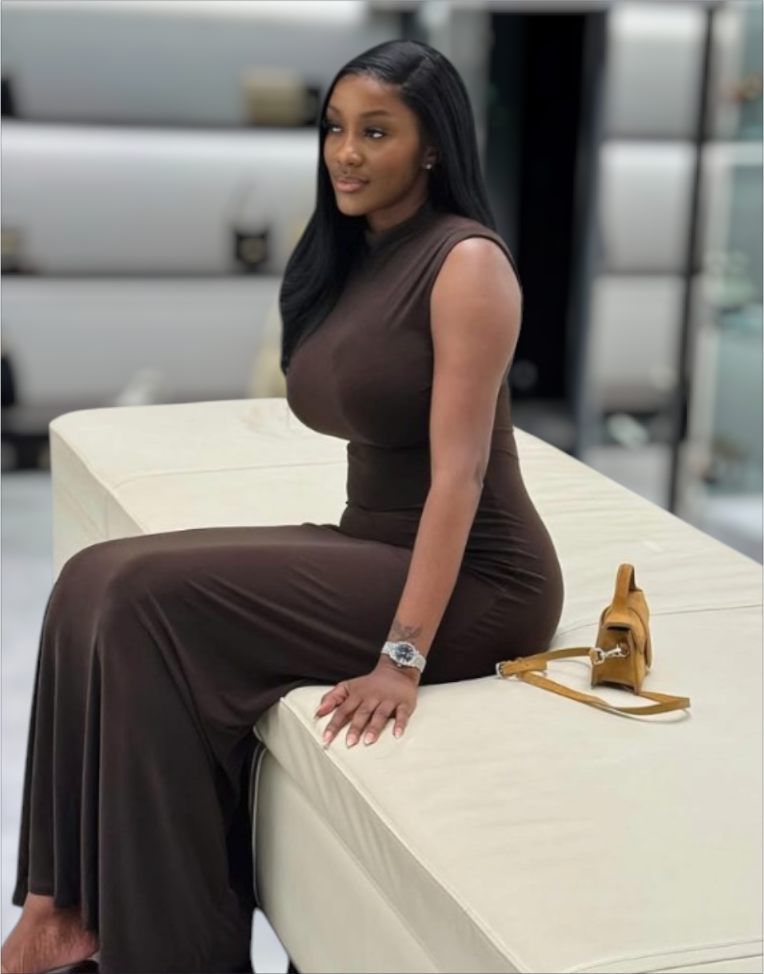
Nestled in the heart of Windhoek, Babies & Toddlers Daycare (BTDC) is more than just a school—it’s a vibrant community. We believe that every child is a masterpiece, and our mission is to provide a nurturing sanctuary where they can grow, learn, share, and create. 🎨🤝
At BTDC, we don’t just teach; we inspire. Our curriculum is built on a humanistic philosophy, promoting:
🕊️ Peace & Culture – Celebrating our global diversity.
📚 Education with Heart – Focused on the dignity of life.
🌱 Holistic Growth – Respecting the unique journey of every child.
Join our family and give your child a foundation built on respect and joy.
📞 Connect with us: +264 81 673 7599
🌐 Explore more: www.babiestodds.com
#WindhoekParents #NamibiaEducation #EarlyChildhood #HumanisticEducation #BabiesAndToddlers


https://www.instagram.com/yartelgh?utm_source=ig_web_button_share_sheet&igsh=ZDNlZDc0MzIxNw==
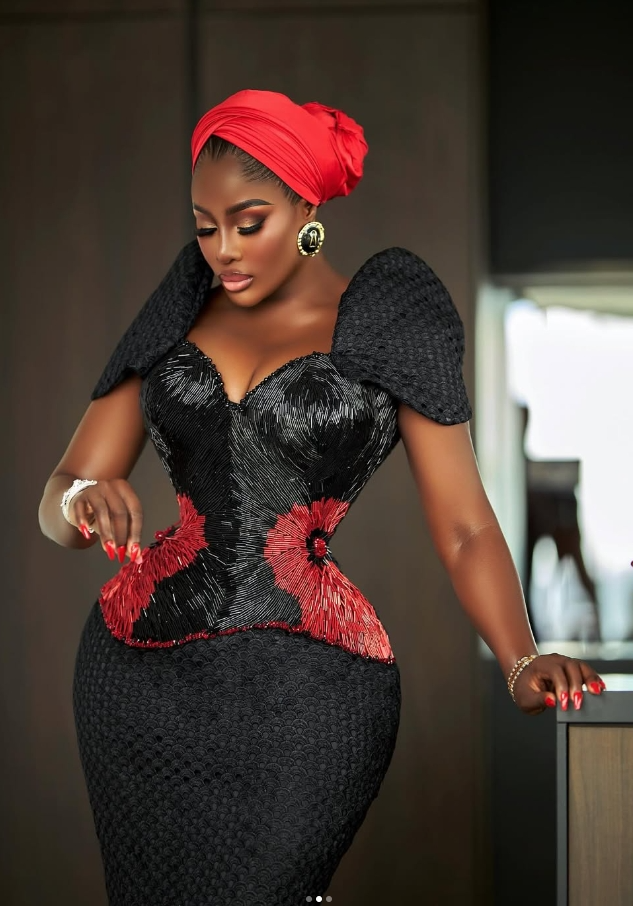
Yartelgh: Where African Heritage Meets Global Couture
The fashion world is turning its eyes toward Ghana as Yartelgh takes center stage, recently honored with the prestigious Assumpta-IMAGINE: Works from the Heart African Designers Prize. This recognition isn’t just about a trophy; it’s a testament to a brand that weaves culture, confidence, and impeccable tailoring into every stitch.
The Yartelgh Aesthetic: A Story in Every Silhouette
Yartelgh isn’t just making clothes; they are crafting narratives. Their design philosophy sits at the intersection of bold innovation and timeless elegance, making them a powerhouse in contemporary African fashion.
- Sculpted Elegance: As seen in their award-winning designs, Yartelgh specializes in architectural silhouettes—like the iconic structured shoulders and corseted waists—that celebrate the natural curves of the female form.
- Modern Heritage: The brand masterfully blends traditional African influences with modern, high-fashion trends, proving that cultural roots are the ultimate foundation for global style.
- Corporate Prestige: Beyond the red carpet, Yartelgh is redefining “power dressing.” Their pieces bring a sense of authority and sophistication to the modern corporate office, empowering women to lead with style.
Why the World is Watching
Yartelgh is more than a brand; it’s a movement led by visionary talent shaping the future of global fashion. By focusing on inclusive styling and prestige craftsmanship, they provide an experience that feels personal, purposeful, and profoundly African.
”Every Yartelgh outfit is a celebration of heritage and a glimpse into the future of African creativity.”
Connect with the Heart of Design
Experience the elegance and prestige of a brand that designs from the heart. Whether you are seeking a statement piece for a gala or a sophisticated ensemble for the boardroom, Yartelgh delivers unparalleled artistry.
Official Facebook: Yartelgh on Facebook
Customer Experience/WhatsApp: +233-20-XXX-XXXX


https://www.instagram.com/officeandcobysa?utm_source=ig_web_button_share_sheet&igsh=ZDNlZDc0MzIxNw==
Headline: Elegance Meets Ambition 💼✨
When you’re styling the nation’s top celebrities at Oh My Hair, your own look needs to be nothing short of iconic.
Model and entrepreneur Maame Afua Gyamfua shows us exactly how it’s done in our latest corporate collection. Our brand is more than just fashion; it’s a uniform for the upwardly mobile woman who values precision, style, and Ghanaian craftsmanship.
”Clothes mean nothing until someone lives in them.” — Make your mark in OFFICE + CO.
📦 Worldwide Shipping Available.🔗 Click the link in bio to shop the


https://www.instagram.com/talensigh?utm_source=ig_web_button_share_sheet&igsh=ZDNlZDc0MzIxNw==
Elegance Rooted in Strength
Introducing the latest from Talensi Atelier, inspired by the grace and resilience of renowned broadcast journalist, Berla Mundi.
This piece isn’t just a garment; it’s an embodiment of the woman who is clothed in strength and dignity, moving through the world with a confidence that laughs without fear. Designed for the modern leader, the Talensi woman commands every room she enters.
The Feature Piece: The “Mundi” Aesthetic
- Design: A masterfully tailored, floor-length silhouette featuring intricate ruching that celebrates the form.
- Pattern: A vibrant, multi-tonal print blending deep teals, rich reds, and earthy ochres—a nod to traditional roots with a contemporary edge.
- Philosophy: Craftsmanship that balances high-fashion sophistication with the effortless poise required for a life in the spotlight.
Join the Talensi Tribe
Elevate your wardrobe with pieces that tell a story of power and purpose.
Visit Us: No. 20 Koi Street, Accra
Shop Online: talensi.com/shop
Call/WhatsApp: +233 243 211 717
Follow the Journey: @talensigh
