


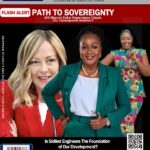


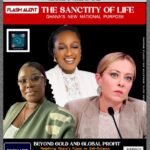

ASSUMPTA ONLINE NEWS MAGAZINE
PRESENTS: “ONWARD”
Hosted by Ghana’s finest — Serwaa Amihere & Berla Mundi — joined by young American voice Titan.
A bold conversation bridging continents and ideas!
Feature Article: Trump’s Stargate Project
Topic: The World’s Prospect for America’s Prosperity
Streaming Live: Tuesday, August 5, 2025
Watch here: assumptagh.live
Don’t miss this groundbreaking edition. #ONWARD #AssumptaMagazine #AIandEconomy #StargateProject #BerlaMundi #SerwaaAmihere #Trump2025 #GlobalDialogue
ADVERTISEMENT


https://www.instagram.com/hairsenta?igsh=MXAzOThhNGZ0Nm15dQ==
✨ Hair Senta – Rare Vitality, Unmatched Beauty ✨
There’s a reason Hair Senta is admired by women across the world. With rare vitality and refined skill, Hair Senta doesn’t just enhance your look — it transforms your confidence.
💎 Shopping & Retail | Trademarked Excellence
We ship only the best human hair extensions, sourced and styled in Ghana, delivered to women across the globe who know the power of quality.
📦 Worldwide Shipping
🌍 From Ghana to the world – because you deserve luxury, no matter your location.
📍 Visit Us: 24 Jungle Avenue, Accra, Ghana 00233
📞 Call Us: (+233) 054 435 4455 / 024 862 9769
🌐 Browse: www.hairsenta.com
📸 Followed by @directionbygwen and 87 others
💫 Hair Senta — Where every strand tells a story of elegance, excellence, and empowerment.

Subject: ONWARD: Trump’s Stargate Project + Global Prosperity — Streaming Aug 5
Dear Reader, you’re invited to a special edition of ONWARD, presented by Assumpta Online News Magazine.
Join Ghana’s top journalists, Serwaa Amihere and Berla Mundi, alongside Titan, a rising young American voice, as they dive deep into Trump’s Stargate Project and the Ending the IRS Fair Act of 2025—a bold vision to reshape America’s economy and its global role.
🗓️ Air Date: Tuesday, August 5, 2025
🌐 Watch Live: assumptagh.live
📰 Featured Topic: The World’s Prospect for American Prosperity
This is journalism beyond borders—be part of the conversation. Warm regards, The Assumpta Team
THE WORLD’S PROSPECT FOR AMERICAN PROSPERITY:

This bold and timely piece explores what may become the most ambitious national transformation in modern American history—President Trump’s Stargate Project and the proposed Ending the IRS Fair Act of 2025. At the heart of this vision is a renewed mission to Make America Great Again through cutting-edge AI infrastructure and a redefined landscape of economic freedom.
This article dives deep into the strategies designed to reshape the prosperous future that Americans have long envisioned. It highlights how these initiatives aim to restore economic independence and global technological leadership.
Across the nation, Americans are reacting with optimism and excitement, applauding what many now call the arrival of the “Angel of Compassion.” The President is being hailed for his bold pursuit of American prosperity through the creation of the Stargate Project—a global AI initiative—and for his push to end the IRS Fair Act of 2025, aiming to transform the economy fundamentally. This movement is not just about domestic renewal—it has far-reaching implications for the future of the nation and the global economy.
The World’s Prospect for America’s Prosperity: A Philosophical Reckoning
Civilization, for many philosophers, has not always been a symbol of progress. According to Jean-Jacques Roussea (1712–1778), civilization itself is a corrupting influence. In his view, the so-called civilized person is the true barbarian, while the noble savage—untouched by societal decay—remains inherently good.

From this standpoint, true human goodness can only flourish under the right environmental conditions. In our modern context, that could mean bold systemic changes—social, economic, and political. One such example is President Trump’s vision: constructing the world’s largest AI initiative, The Stargate Project, and ending the IRS Fair Act of 2025—moves intended to uplift low-income Americans and liberate them from economic hardship.
President Trump’s tenure reflects a growing belief: that America’s system must change to benefit its citizens, especially those whose hopes for prosperity have long been deferred. Yet this ambition challenges a darker historical reality.
America, despite its global dominance, rose from a legacy of barbarism, conquest, and disregard for the sanctity of life. It built vast material power while distributing firearms to its citizens, fostering violence and fear rather than unity and growth. Instead of spiritual or moral conviction, the nation often promoted power through spectacle—images as potent as artillery, used to mesmerize rather than mobilize.
For decades, America underestimated its ability to plan strategically for all its people. Instead, it built an empire on two pillars:
- The Dollar
- The Promise of Power
Not on infrastructure, not on high-speed rail, not on mutual prosperity.
While other nations build bridges, trade routes, and sustainable industries, America has too often chosen extraction over collaboration—stealing resources, imposing taxes, and allowing violence to persist domestically and abroad.
So, we ask:
Is this cheap war against its own people finally coming to an end?
Has the time come for America to truly be great—not just for the few, but for the many?
Will President Trump’s Stargate Project truly challenge the innate evil that has shaped decades of systemic oppression? Or will it become yet another superficial reform benefiting the wealthiest 1%, leaving the rest behind?
This is the moral and philosophical crossroads we now face. The world watches to see whether America will embrace its prospect for prosperity—not just as a slogan, but as a living truth.
Prologue / Review Introduction
ONWARD: A Dialogue for a Changing World
Introduction to the Series:
In an age marked by uncertainty, disruption, and digital transformation, one nation once again stands at the crossroads of power and purpose: the United States of America.
On January 21, 2025, President Donald J. Trump unveiled one of the most ambitious infrastructure initiatives in modern history—the Stargate Project. Backed by a coalition of global tech giants including OpenAI, Oracle, SoftBank, and MGX, the initiative promises to pour $500 billion into building the largest AI data infrastructure the world has ever seen. But beyond the economics and engineering lies something deeper.
What does it mean when a nation with a long, conflicted legacy of power, conquest, and exceptionalism claims a new frontier—not of land, but of consciousness, intelligence, and control?
In this special global edition of ONWARD, acclaimed Ghanaian journalists Serwaa Amihere and Berla Mundi, alongside rising American student voice Titan, explore the meaning and implications of this seismic shift. Together, they ask:
- Is America finally turning from empire to enlightenment?
- Can AI be a force for shared prosperity, or will it deepen old inequalities under a new digital disguise?
- Does President Trump’s bold action represent compassion, opportunism—or both?
And perhaps most importantly:
Is this the beginning of a moral recalibration—or the end of one?
This dialogue is not just about America’s future. It is about all of us. Because in an interconnected world, what America builds, the world must live with—or rise to challenge.
Welcome to ONWARD.
Where global voices converge to question, to critique, and to imagine.
ONWARD – Special Dialogue Edition
Title: “Beyond the Frontier: America’s Stargate Gamble and the Age of AI”
[Opening – Host: Serwaa Amihere]


Serwaa Amihere:
Good day to our global audience and welcome to this special edition of ONWARD, brought to you by Assumpta Online News Magazine. I’m your host, Serwaa Amihere, coming to you from Accra, Ghana — and today’s dialogue promises to challenge assumptions, ignite ideas, and explore one of the most radical national projects of our time. I’m joined by two phenomenal guests.

First, my co-host and colleague in journalism, Berla Mundi — an award-winning Ghanaian broadcast journalist, media personality, and voice of integrity across the continent. Berla has built her career on fearless reporting and thoughtful storytelling that bridges Africa and the global stage.

Also with us is Titan, a young but sharp-minded American student and public commentator. Titan represents a new generation of thinkers—tech-savvy, policy-aware, and deeply passionate about the role of government, equity, and innovation in shaping the future of the United States and the world.

Serwaa Amihere:
Welcome, Berla. Welcome, Titan. It’s such a pleasure to have both of you here for today’s dialogue. Today’s discussion centers around a bold new vision for American power—one that opposes the old frontier spirit of conquest and expansion, and instead looks inward toward innovation and reconstruction.
We’re talking about the Stargate Project, announced earlier this year on January 21, 2025, by President Donald J. Trump. This monumental venture, Stargate LLC, is a joint collaboration involving OpenAI, SoftBank, Oracle, and the investment firm MGX.
The vision?
To commit $500 billion over four years, starting with an immediate $100 billion investment, to build 10 to 20 cutting-edge AI data centers across the United States, beginning in Texas.
Expected outcomes include:
- Over 100,000 new U.S. jobs
- Strengthening national security
- Securing American leadership in artificial intelligence
- And driving a new era of economic growth
Now, personally, I believe President Trump is showing strategic vision and compassion. He’s positioning America for a technological rebirth, and spanning that kind of infrastructure plan is, by all measures, a remarkable accomplishment. Berla, what are your thoughts on this? Is this a turning point for America—or simply another high-stakes spectacle dressed in opportunity?
[Co-Host: Berla Mundi]

Berla Mundi:
Thank you, Serwaa—and what a pleasure to be here on this edition of ONWARD. The scale of the Stargate Project is undeniably impressive. A $500 billion commitment with partners like OpenAI, Oracle, and SoftBank signals that this isn’t just another campaign slogan—it’s a serious, structural attempt to reshape America’s digital and economic foundations.
But here’s where I feel cautious optimism. While the job creation numbers are promising, and positioning America as an AI superpower may be strategic, we must ask: Who really benefits from these investments?
Historically, massive government and corporate tech initiatives tend to favor the top 1%—those already holding economic and digital capital. So, my question is: Will the average American—especially low-income families and marginalized communities—see real, lasting improvement in their lives?
Or will we witness yet another cycle of digital elitism, where infrastructure is built around communities rather than with them?
Still, I will say this: If implemented transparently, equitably, and with real oversight, this could signal a new era in American policy—one not driven by war or extraction, but by technology, employment, and national purpose.
Berla Mundi (turns to Titan):
Now Titan, as a young American student and someone who’s grown up watching your country wrestle with inequality, opportunity, and innovation—how do you see the Stargate Project? Do you see it as a hopeful path forward?

[Titan – American Student Guest]
Titan:
Thank you, Berla. I appreciate the chance to share my perspective—especially on a platform that brings African and global voices together in such a meaningful way.
To be honest, I’m excited about the Stargate Project. For years, we’ve seen my generation burdened by student debt, gig work, and a tech industry that seems to work against people more than it works for them. So, when I hear about an AI infrastructure plan that creates over 100,000 jobs and aims to decentralize opportunity away from Silicon Valley and into places like Texas, I pay attention.
But like you, I’m skeptical too. We’ve been promised “trickle-down” innovation before—and it rarely trickled beyond the boardrooms of billionaires.
That said, I believe this is the right kind of risk. If America wants to lead in AI, it must build the roads, the rails, and the data centers. But it also needs to build trust—something President Trump still needs to prove. That means fair wages, digital rights, inclusion in education, and reinvestment into communities left behind.
If the Stargate Project can truly do that—it’s not just an AI plan. It’s a new American blueprint.
[Host: Serwaa Amihere]

Serwaa Amihere:
Thank you, Titan—and thank you, Berla. You’re both surfacing important realities. And as we continue, I want to bring a deeper philosophical question to the table—one that’s long haunted political thought and now feels oddly relevant again.
It was Jean-Jacques Rousseau who famously said that “civilization corrupts.” That the so-called civilized man is actually the barbarian, while the noble savage, untouched by modern society, represents true goodness and purity.
Now, if we apply Rousseau’s lens to America’s current crossroads—what do we see?
America has long claimed to be the world’s moral and democratic compass. But it’s also a country founded on displacement, slavery, economic exploitation, and an addiction to war and weaponry. And despite its power, it has struggled to extend prosperity beyond the top 1%.
So now, with President Trump pushing for two radical reforms—the Stargate Project, and the Ending of the IRS Fair Act of 2025, which aims to reduce tax burdens on low-income Americans—we must ask:
Are these simply economic moves?
Or are they a moral recalibration—a genuine attempt to return to some innate good buried under centuries of systemic oppression? Berla, let me bring you back in. Do you think the Ending of the IRS Fair Act is a compassionate gesture—or is it a political maneuver disguised as economic mercy?
[Co-Host: Berla Mundi]

Berla Mundi:
That’s a powerful question, Serwaa. And I think it depends on how we define compassion in leadership.
On one hand, reducing the tax burden for low-income Americans—many of whom struggle daily just to afford healthcare, housing, or education—is undeniably humane. It recognizes that the system, as it stands, is stacked against the poor.
But on the other hand, this policy cannot exist in isolation. If you’re lowering taxes for the working class, but not addressing corporate tax evasion, or not regulating wealth hoarding by billionaires, then we have to ask—who’s really benefiting?
Also, how sustainable is this policy without major structural reform in budgeting, defense spending, and social services?
If compassion is selective—or short-lived—then it’s not compassion. It’s a strategy.
[Titan – American Student Guest]

Titan:
Berla, I completely agree—and I want to add something here.
As a student of American history, I know that every major reform effort in the U.S. has come with backlash. Whether it was the New Deal, Civil Rights, or Affordable Healthcare, there’s always a fight between who deserves help and who’s considered “gaming the system.”
I think what President Trump is doing—if sincere—is trying to rewrite that narrative. He’s saying, “Let’s build something massive for the country, but let’s also remove the daily burdens from the people we’ve ignored for decades.”
But here’s my concern:
Is this just a reset for the elite—a new way to secure power in the AI age? Or is it truly a step toward shared prosperity?And maybe Rousseau was right: maybe we’ve built so many layers of civilization, so many systems of control and classification, that we’ve forgotten how to be human—let alone just.
[Serwaa Amihere – concluding the segment]
Serwaa Amihere:
Thank you both. This is the kind of dialogue that moves beyond headlines and into the heart of what’s at stake—not just for America, but for the global system it helped shape.
Will The Stargate Project and Ending the IRS Fair Act lead to a reawakening of America’s moral compass?
Or will they become the next chapters in a long history of systems built to benefit the powerful—wrapped in the language of reform?
We’ll explore more after the break. Stay with us.
Segment 2: Global Implications – A New Digital Colonialism or Shared Innovation?
[Host: Serwaa Amihere]

Serwaa Amihere:
Welcome back to ONWARD. In the first half of our discussion, we unpacked the philosophical and policy implications of President Trump’s Stargate Project and the IRS Fair Act rollback. But America doesn’t move in isolation. Its economic experiments ripple globally—often shaping what happens in Africa, Asia, and the Global South.
So the question becomes:
Is this the beginning of a shared innovation era—or a new form of digital colonialism?
Berla, I want to bring you in here. Africa has watched Western powers export not only tech, but data surveillance, resource extraction, and often one-sided trade relationships. Does the Stargate Project concern you from a geopolitical standpoint?
[Berla Mundi – Co-Host]

Berla Mundi:
Yes, it does, Serwaa—and for good reason.
We have to remember that infrastructure projects, whether physical or digital, are not neutral. If America becomes the global epicenter of AI, and if the Stargate Project succeeds, it will control not just systems—but narratives.
This is why Africa must be proactive, not reactive.
We can’t just become data mines or consumer markets for U.S.-built systems. We need policies that protect our digital sovereignty, invest in local AI talent, and demand fair technology partnerships.
Because otherwise, we risk entering a new era of algorithmic dependency, where our economies, elections, and even healthcare systems run on platforms we don’t own or control.
[Titan – Guest]
Titan:
That’s such an important point, Berla. And as an American, I can say that most of our citizens aren’t even aware of the global consequences of these initiatives. We’re just told that it’s “American leadership,” but no one really asks at whose expense?
If the Stargate Project becomes the next digital empire, it has to be built with mutual respect, not just economic muscle.
I’d personally love to see U.S. tech firms partner directly with African universities, share intellectual property, and invest in real capacity-building. That’s how we prevent digital colonialism and build a multipolar AI future.
[Serwaa Amihere – Host]
Serwaa Amihere:
Beautifully said, Titan. So then, what if the real measure of America’s greatness isn’t how fast it builds, but how fairly it shares?
What if the Stargate Project could be the beginning of a new global code of ethics—one that prioritizes inclusion, co-development, and responsibility over just profit and control?
That is the world we must imagine—and demand.
Closing Segment — ONWARD: The World’s Prospect for American Prosperity
[Host: Serwaa Amihere]
Serwaa Amihere:
What a powerful and necessary conversation this has been.
Today, we’ve examined the depth of President Trump’s Stargate Project, questioned the implications of ending the IRS Fair Act of 2025, and reflected on whether this signals a genuine shift toward shared prosperity—or simply a new frontier of digital power.
From Rousseau’s philosophy to AI economics, from the legacy of the American empire to the hopes of a more just and inclusive future, this discussion has pushed us to think beyond borders—and beyond headlines.
To my brilliant co-host Berla Mundi, thank you for your sharp insights and unwavering clarity.
To Titan, your voice represents a new kind of American dialogue—one that refuses to accept the status quo. Thank you for your courage.
And to you, our global audience, thank you for joining us on ONWARD, where truth meets inquiry and conversation sparks change. Until next time, stay informed, stay engaged, and keep moving ONWARD.
Thank you for joining us—and goodbye.
SGI-Our Shared Humanity.


