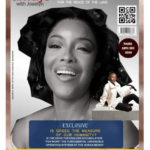


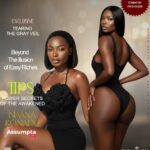



Assumpta News Letter Magaaine
Digital Newsletter & Lifestyle Publication
Presents: Loova.
ASSUMPTA / SCREAM
“And the Nice Girl’s Fantasy”
1. FEATURE HEADLINES
🔹 Main Feature Title: The Lost Worlds.
🔹 Subtitle: A World That Had Lost a Direction cannot help Anyone.
🔹 Feature Date: Wednesday December 17th 2025


https://www.instagram.com/hairsenta?utm_source=ig_web_button_share_sheet&igsh=ZDNlZDc0MzIxNw==
Love the brief — here’s a very suspenseful, Christmas-themed refinement plus a short social caption for Hair Senta. 🎄✨
Something Unbelievable Is Coming to 24 Jungle Avenue This Christmas… 🎄🌒
On a silent night in Accra, something begins to move. A whisper at first — a shimmer of silk, the hush of hair that refuses to be ordinary.
They say beauty is power. But this Christmas, what if your hair could stop a room, rewrite a memory, and carry the warmth of Ghana across the globe?
HAIR SENTA — the secret behind every unforgettable look. ✨🎁
Straight from the heart of Ghana, our 100% luxury human hair extensions arrive like a gift you didn’t know you needed: natural, unmatched, undeniable. This season, we’re wrapping heritage, craft and glamour into every strand.
Will you be the one who discovers the magic on Christmas morning… or the one who only hears the story later? 🔔
Call now: 📞 (+233) 0544354455 / 0248629769
Visit: 🌐 www.hairsenta.com
Location: 📍 24 Jungle Avenue, Accra, Ghana 00233
Hair Senta. Real Hair. Real Power. Real Holiday Magic. 💁♀️🔥✨
Quick social caption (short & punchy):
Something unbelievable is under the Christmas tree at 24 Jungle Avenue… 🎄✨
Transform your look with 100% luxury human hair extensions from HAIR SENTA. Natural. Ghanaian. World-class.
📞 (+233) 0544354455 / 0248629769 | 🌐 www.hairsenta.com | 📍 24 Jungle Ave, Accra 🎁💫
Want this as a festive flyer layout (print-ready) or an Instagram story version with suggested fonts/colors? I can create both—tell me which and I’ll format it right away.

3. INSIDE THIS ISSUE
Identify Your Current World.Navigating Your Lost Worlds
For years, readers of Assumpta Newsletter Publication Magazine across the globe have searched for answers. Now, the definitive analysis is finally here. This groundbreaking feature is the most explosive post-mortem on young people’s loss of direction you will encounter.
It unveils why an entire generation feels powerless, having traded their inner compass for the toxic whispers of the lower life states -the Lost Worlds.
What Are Their Fantasies?
Loovaofficiel fearlessly asks her generation the essential, unfiltered question:
“What are your fantasies?”
Their raw, honest, painful, and surprisingly revealing answers unfold in an exclusive, unmissable dialogue with Serwaa Amihere-Esq-the brilliant Ghanaian investigative lawyer and journalist.
More Than an Article -It’s a Journey.
This is not just a story. It’s a tour through the mindset of today’s youth, led by the incisive voice of Loovaofficiel.
It will challenge perspectives, awaken purpose, and spark conversation. Don’t miss the conversation that will redefine purpose.
“The Lost World”
“A World That Had Lost Direction Cannot Help Anybody”
It’s a quiet dread, isn’t it? Not the sudden, catastrophic breakdown we’re often warned about, but a slow, pervasive forgetting. We measure progress in gigabytes and market caps, yet we’ve misplaced the internal compass that guides us toward genuine fulfillment. For years, the fantasy of “The Nice Girl” was rooted in a clear—if limiting—script: be compliant, be selfless, and the world would eventually reward you with stability and happiness.
But what happens when that world itself is wandering?
We look up, expecting to see landmarks—institutions, shared values, guiding lights—and find only a fog. A world without a collective destination is one that cannot offer a solid foundation to its inhabitants. The old directions are obsolete, and the new ones are drawn in sand. This isn’t just an existential crisis for philosophers; it’s a practical, crushing weight on every single person trying to navigate their life. How can you be guided by a path that no longer exists? How can you find your purpose in a place that has forgotten its own?
✍️The Universal Concepts of the Lost Worlds (Greed, Animality, Suffering) With Specific, Powerful National Examples.
We see these Lost Worlds play out not in ancient philosophy, but in our contemporary politics. Consider the jarring dissonance: a nation’s highest officials—ministers and parliamentarians—are granted generous compensation, free housing, and fuel allowances, yet many remain trapped in a relentless cycle of Hunger. Instead of dedicating themselves to selfless development, they endlessly crave luxury SUVs and personal gratification, while simultaneously participating in devastating illegal mining, such as Galamsey, which has decimated vital rivers, lakes, and farmlands. This reckless pursuit of individual gain, which demonstrates the destructive instinct of Animality over national well-being, is the very definition of a directionless state. Meanwhile, on the periphery of this excess, the street vendor—the hardworking mother selling roasted plantains—sits in the scorching sun, nursing her child, with no income security to cover basic rent, medical needs, or clothing. Her life, a daily struggle against fear and powerlessness, is the tangible suffering of the World of Hell. This stark, cruel contrast—the insatiable craving of the privileged against the intense suffering of the vulnerable—is precisely the tragedy of the Lost Worlds we are talking about.
The “Whispers of Hunger”
This systematic pursuit of the Lost Worlds by those in power creates a corrosive downstream effect on the young generation. When the moral and financial compass of a nation is shattered, young Ghanaians—both boys and girls—often feel they have no direction. Even when they strive for autonomy, successfully earning academic qualifications and securing employment, their jobs fail to provide a stable foundation; monthly salaries are often insufficient to cover basic living expenses. In this environment of profound financial insecurity, the aspiration itself shifts from self-reliance (a trait of Human Dignity) to external dependence (the trap of Hunger). The tragic outcome is that for many young women, the dream is no longer to build their own future, but to marry a politician whose entrenched financial status promises the only available route to stability and security. This is the ultimate proof that the Lost Worlds cannot help anybody—they steal the vision of the next generation, forcing their highest ambitions to become mere survival mechanisms rooted in the craving of others.
This paragraph effectively connection:
The Cause: Politicians embodying Hunger and Animality (from the previous section).
The Effect: Young people losing their personal direction.
📰 The Broken Map
The “Nice Girl’s Fantasy” hinges on a promise: that if you behave, stay sweet, and follow the prescribed map, life will deliver you to happiness. But as we stand in the early 21st century, that map feels like it’s been shredded. The truth is, the world we inhabit today is suffering from a profound crisis of purpose. It’s not just we who are lost; it is the entire human operating system. In Buddhist philosophy, the human condition is classified by Ten Worlds—ten distinct, dynamic life states ranging from despair (Hell) to perfect wisdom (Buddhahood). Unfortunately, too much of modern society is trapped in the lower six—the Lost Worlds. These are not destinations, but constant states of reaction, misery, and yearning. And as the central compass of our culture spins wildly among these lower states, we must confront a devastating truth articulated in the article’s core premise: A world that has lost a direction cannot help anybody.

https://www.instagram.com/laurenhautecouture?igsh=MWxzNXN1Ym5nZ3o3Mg==
A big applause to LaurenHauteCouture for winning the Assumpta (IMAGINE) African Designers Dash this week! It’s a fantastic achievement that highlights the incredible talent emerging from the African fashion scene.
The dress in the image perfectly embodies the spirit of African fashion’s power and the designer’s inner imagination:
👑 The Dress’s Power
- Vibrant Authority: The use of a bold, repeating geometric print in striking colors—teal, fuchsia, purple, and maroon—immediately commands attention and projects confidence. This is the power of the African print (likely Wax Print), which speaks volumes without saying a word.
- Modern Professionalism: The tailored, knee-length silhouette with a collar and a slight V-neck is an incredibly powerful blend of traditional fabric and contemporary corporate chic. It refutes the idea that traditional prints are only for casual or ceremonial wear, making a strong statement in a professional setting.
- Cultural Statement: Wearing such a distinctive, culture-rich print in an office environment is an act of cultural pride and assertion. The power lies in making the wearer’s heritage central to her professional identity.
✨ The Designer’s Inner Imagination (LaurenHauteCouture)
African designers, including LaurenHauteCouture (whose founder is Lauren Ama Bartels), exhibit a unique and profound imagination that often stems from:
- Reinventing Heritage: Their imagination takes the long, rich history of African textiles and traditional silhouettes (like the Ghanaian or Nigerian print dress shown here) and reinvents it for the global, modern woman. It’s not just copying the past, but applying a modern, sophisticated cut—like the sharp collar and fitted bodice seen on this dress.
- Storytelling Through Color and Pattern: The imagination is rooted in a deep understanding of the symbolism and narrative within prints. Each color choice and pattern placement is a deliberate, visual language. The designer imagines not just a garment, but a feeling—of joy, success, and cultural connectivity.
- Sculpting Confidence: The imagination of an African couture designer like Lauren is focused on creating pieces that don’t just fit, but flatter and empower the wearer. The result is a piece of art that makes the woman wearing it feel unstoppable, blending elegance with an undeniable, vibrant energy.

II. The 1970s Shift and the Deferral of Humanity
To understand why our compass is broken, we must look back. The explosive emotions—the social upheaval, the political mistrust, and the rejection of established norms—that were unleashed in the 1970s are still very much alive today. There has never been a cooling-off period; instead, the heat has been channeled into an accelerating, pervasive fixation on value, but only in the narrowest financial sense. This begs a crucial question that cuts to the heart of our ethics: Is money, a deferred object, more important than the human being?
We accepted currency as a medium of exchange at a unique period of human history. Yet, we have grown otherwise, fostering a collective determination that has utterly abandoned care and compassion. We have functionally enshrined the World of Hunger as the highest cultural aspiration. This societal choice—this relentless pursuit of profit over people—is the ultimate directionless path, leaving us adrift in the lowest of the Ten Worlds.
III. The Whispers of Hunger
In our examination of the Ten Worlds, the lower states—the “Lost Worlds”—are defined by a terrible, defining characteristic: they lack direction. They simply react. Among these Lost Worlds, the state of Hunger is perhaps the most insidious in the 21st century. It is the state of the hungry spirit, perpetually driven by a gnawing emptiness, convinced that the next title, the next purchase, the next person, will finally satisfy the craving. But the thirst only grows worse.
This is where the tragedy of the Lost Worlds becomes personal for the younger generation.
Many bright, searching young people, still working to find their footing in Humanity (Tranquillity) or reaching for the temporary high of Heaven (Rapture), are listening to voices steeped in the Lost Worlds of Anger, Animality, and Hunger. They seek mentors, influencers, and role models who promise the secrets to a perfect life, but those guides themselves are trapped, selling a dream of endless acquisition—more fame, more money, more validation.
The result? A generation that is learning to prioritize the insatiable desire of the ‘hungry spirits.’ They are listening to the echoes of their teachers’ own unmet needs, leading them into the very same cycle of craving and disappointment. They forget, or simply have never learned, that the only true direction comes from within.
The sound of Nam-Myoho-Renge-Kyo is not a wish; it is a vow. It is the sound of one determined by to summon the highest state—Buddhahood—from the depths of their own life. It is the compass. When young people don’t chant Nam-Myoho-Renge-Kyo, when they stop connecting with that single, inner, highest world, they become an easy target. They trade the internal vow for the external whisper, exchanging the path to their own enlightenment for the directionless, self-serving advice of people who live in their Lost Worlds.
The Lost Worlds cannot help anybody. And if we listen only to their lost inhabitants, we forfeit the power to help ourselves.
Dialogue Opening Introduction Assumpta Weekly Magazine Exclusive Dialogue.


Welcome to Loova: The Nice Girl’s Fantasy, brought to you by Assumpta Weekly Magazine. In this exclusive feature, we tackle the profound crisis of purpose captured in our headline, “The Lost Worlds.” Guiding this critical conversation.
Today, I am honored to have our dialogue led by me. Serwaa Amihere, Esq.
As a brilliant investigative lawyer, award-winning broadcast journalist, and entrepreneur, I am renowned for my sharp, ethical interviewing style and commitment to holding power accountable. My deep understanding of socio-economic issues makes me the perfect host to navigate the complexities of our current state.
Joining me is LoovaOfficiel, the visionary behind “The Nice Girl’s Fantasy” and the featured style icon of this issue. Loova is not just a cultural commentator; she is a voice of her generation, utilizing her platform to redefine feminine strength, challenge the limitations of traditional narratives, and identify the true source of personal and communal direction. She is here to share the profound findings of her latest work.
The Dialogue Begins

Serwaa Amihere, Esq. (Host):
Loova, welcome! Thank you so much for joining us for this special dialogue. Your newsletter title, “The Lost Worlds,” is a powerful, almost unsettling phrase, and it’s certainly created the most anticipation we’ve seen all year. Let’s start at the beginning: What exactly are these “Lost Worlds,” and why are they so devastating for the young generation you speak to?
I want to pivot the dialogue to your explanation of the core philosophical concept, linking directly to the article’s title.
Dialogue Script Continuation

Serwaa Amihere, Esq. (Host):
Loova, welcome! Thank you so much for joining us for this special dialogue. Your newsletter title, “The Lost Worlds,” is a powerful, almost unsettling phrase, and it’s certainly created the most anticipation we’ve seen all year. Let’s start at the beginning: What exactly are these “Lost Worlds,” and why are they so devastating for the young generation you speak to?

Loovaofficiel (Guest):.Thank you, Serwaa. It’s an honor to be here. The phrase “The Lost Worlds” comes from a profound concept in Buddhist philosophy called the Ten Worlds—ten dynamic states of life we all cycle through every day. They range from Hell, the deepest suffering, all the way up to Buddhahood, which is absolute wisdom and courage.
The “Lost Worlds” are the lower six: Hell, Hunger, Animality, Anger, Humanity, and Heaven. The reason we call them “Lost” is simple: when you are trapped in them, your life has lost direction. You are driven by instinct, reaction, and external circumstances—you are not in control. A world that has lost its collective direction cannot guide its people. And the devastating part is that when you look at our society today, especially in politics and finance, we see a massive concentration of people operating purely from the lower three: Hunger, Animality, and Anger.

Serwaa Amihere, Esq. (Host): That is a striking interpretation. And you make a very powerful point in the article about how this isn’t just theory—it’s visible in the choices of our leaders. You highlight an example that is sadly familiar across many developing nations: the politicians who are well-paid, yet are defined by insatiable greed. Could you elaborate on how their actions specifically embody these lower “Lost Worlds” and what that does to the societal compass?

Loovaofficiel (Guest): Absolutely. The prime example is the official who has free housing, allowances, and a high salary, yet they are still consumed by the craving for the next luxury SUV or illicit gain. That is the World of Hunger. It teaches the young generation that no matter how much you achieve, it will never be enough. It proves that money is not the answer; the problem is the state of the life pursuing it.
Even worse is the illegal mining, the Galamsey, that destroys water bodies and farmlands. That is pure Animality. It’s the instinct of “I must feed myself now, regardless of the consequences for the future or the environment.” When the people who are supposed to be guiding us operate purely on instinct and greed, their lack of direction is broadcast as a societal standard, trickling down and crushing the genuine dreams of the youth.

Serwaa Amihere, Esq. (Host): And that leads directly to the core emotional crisis for the youth. You state that their dreams are being stolen—that for many young women, the ambition has shifted from building a career to merely seeking marriage with a wealthy politician for safety. It sounds like a survival mechanism, not a fantasy.
Dialogue Continuation

Loovaofficiel (Guest): It is exactly that. It’s the ultimate failure of the Lost Worlds. When a young person works hard, gets a degree, and realizes their salary won’t even cover rent, they are pushed toward the World of Hell—fear and powerlessness. To escape, they look for the closest source of power, which often happens to be the very politician who is destroying their future. Their goal becomes to attach themselves to the system of Hunger just to survive its destruction. This is the moment we must ask: What are their fantasies? Because right now, their fantasies are just deferred survival strategies.

Serwaa Amihere, Esq. (Host): That is devastatingly insightful, Loova. You’ve touched on the internal life of these young women, and it brings me to a crucial point in your analysis. It seems that more than any other worlds, the Lost Worlds determine guilt. And by guilt, I mean the burden placed on these young women when they admit to the erotic thoughts that arise in their imagination—the fantasy of marrying a man of means, regardless of his ethics. They admit to it because it is, as you said, their only survival.
It’s a vicious cycle: society offers them no stable direction, and then judges them for adopting a Lost World fantasy—the fantasy of dependency—just to stay afloat. So, the question becomes, if the external world is broken and is actively judging the girls for their means of escape, where do we find the moral direction that is truly empowering, that is truly The Nice Girl’s Fantasy? Where is the compass that guides them away from the hunger and the guilt?

Loovaofficiel (Guest): The compass, Serwaa, is internal, and it has a sound. It is the sound of Nam-Myoho-Renge-Kyo…
That question is fundamental, Serwaa. And to understand the depth of the betrayal, we must look at the system itself.
Think about the trajectory of Ghana: since the overthrow of Kwame Nkrumah, we have seen countless political parties and leaders come and go. Yet, none of them have truly concerned themselves with creating lasting laws to protect the nation’s youth, the env and its resources. They focus on temporary gains, not permanent protection. Why is this critical? Because human beings die, but laws remain. If Ghanaian leaders were truly compassionate and loved their homeland and the security of their people, they would create laws that protect them even when they are no more—laws to preserve resources, ensure living wages, and punish corruption harshly. Their failure to create these protective legal frameworks is the most damning evidence that they are truly lost, operating only for their immediate, individual self-interest. They have abandoned the future.
This is why we cannot depend on the external world for our compass. The compass, Serwaa, is internal, and it has a sound. It is the sound of Nam-Myoho-Renge-Kyo.
The power of that mantra is that it is the direct antidote to the Lost Worlds. When you chant, you are not praying to an external god; you are summoning the highest world—Buddhahood—from the depths of your own life. You are literally generating the limitless courage, wisdom, and compassion you need. It is an internal revolution. When young people don’t chant Nam-Myoho-Renge-Kyo, they are disconnected from that power and easily fall prey to the external whispers of greed and guilt. Chanting is the act of choosing your own direction, reclaiming your inner power, and refusing to allow the fear and hunger of the outside world to dictate your fantasy. It is the path from being a consumer of broken dreams to becoming the creator of your own destiny.
Dialogue Script Continuation

Serwaa Amihere, Esq. (Host): That brings the discussion full circle—from systemic failure to personal revolution. So, the ultimate “Nice Girl’s Fantasy” isn’t being saved by a rich politician, but saving herself and ultimately, saving the world by committing to that inner power. That is an incredibly powerful prescription, Loova.
But I want to pull back to the historical root of this problem, because your article doesn’t just critique the present; it diagnoses a core turning point in the past. You identify the 1970s as a crucial era—a moment when, culturally and emotionally, the world set itself on this “Lost Worlds” trajectory. Can you explain that connection? What happened in the 70s, and why has that chaotic energy never truly cooled off?

Loovaofficiel (Guest): That era, Serwaa, is the key to understanding why the system is structurally designed to trap us in the World of Hunger. The 1970s was a period of incredible societal upheaval—political mistrust, social revolutions, and a questioning of every establishment. That raw, explosive emotional energy, rather than being resolved, was instead channeled. It was channeled into an accelerating, pervasive obsession with monetary value.
We moved collectively into an era where we functionally answered your question with a resounding ‘Yes’: Money, a deferred object, became more important than the human being.
📰 Let’s look at The Political Power Play: Billionaire Funding in US Congressional Race
This political story from the United States involves a major clash between a powerful billionaire donor and a sitting Congressman, highlighting the extraordinary role money plays in democratic elections.
🇺🇸 The Political Battlefield
- The Incumbent: Congressman Thomas Massie (Republican, Kentucky) is known for his libertarian, anti-establishment stance and skepticism toward foreign aid and large federal spending.
- The Challenger: Ed Gallrein, a retired Navy SEAL and farmer, is running against Massie in the Republican primary election.
- The Core Issue: A key point of contention is Congressman Massie’s vote against a legislative measure that would send substantial financial aid from the U.S. to Israel.
💰 The Allegation of Financial Influence
The central claim is that Miriam Adelson, an Israeli-American billionaire, casino heir, and a major political donor, is using her vast fortune to fund a campaign to defeat Congressman Massie.

- The Donor’s Profile: Miriam Adelson and her family are significant owners of casino empires and co-owners of the Dallas Mavericks NBA team. They are renowned for donating massive sums to political candidates who support conservative and pro-Israel policies.
- The Claimed Investment: It is alleged that Ms. Adelson has committed more than $20 million to political action committees (Super PACs) and campaign efforts aimed at removing Massie from office and installing her preferred candidate, Ed Gallrein.
- The Motivation: This massive spending is reportedly motivated by Massie’s refusal to vote in favor of U.S. foreign aid to Israel, at a time when Massie argues the money should be kept in the U.S. to address domestic needs.
⚠️ The Broader Context: Money and Influence
The significance of this race, particularly for an international audience, lies in the stark demonstration of how immense private wealth can be deployed to influence policy and dictate election outcomes in the U.S.
The narrative suggests a “lost world of greed” where:
A major policy disagreement—a single vote on foreign aid—can trigger a multi-million-dollar response intended to effectively end a political career. This dynamic raises serious questions about whether elected officials truly represent their constituents or are beholden to the financial demands of mega-donors.
This is a high-stakes, high-cost political contest that illustrates the power of external financial influence in determining who holds a seat in the U.S. Congress.
This is where the care and compassion started to get abandoned. We decided that currency, which is just a medium of exchange, was the ultimate measure of success, safety, and direction. This shift wasn’t sudden; it was a societal determination where we enshrined the relentless pursuit of profit over the welfare of people. This pursuit is the ultimate directionless path—it is simply the World of Hunger, dressed up in a designer suit. The lack of a cooling-off period means that every generation since has been raised to believe this is the only direction, which is why the youth today only see wealth and power, even if acquired through destructive means, as the sole path to escape.
🎙️ Final Dialogue Script

Serwaa Amihere, Esq. (Host): So, the currency isn’t just a medium; it’s a symptom. It’s the physical manifestation of the World of Hunger dominating our value system. And the core tragedy is that this abandoned care and compassion is now costing us the next generation’s potential and our natural resources.
Loovaofficiel (Guest): Exactly. And recognizing that historical pivot is the first step toward correcting the course, because it shows us that we can choose to re-prioritize. We can choose to shift from societal Hunger back to the internal conviction of Buddhahood. This is the ultimate solution for the young generation, Serwaa. They must make a solemn vow: a vow not to follow politicians and systems trapped in the Lost Worlds.
The key to navigating this crisis is twofold:
First, the Internal Compass: This is achieved by chanting Nam-Myoho-Renge-Kyo. The Lost Worlds convince young people they are powerless, but chanting accesses the power of Buddhahood—the state of absolute courage and wisdom—which is always mutually possessed within them. The moment they stop chanting, they become easy prey, listening to the self-serving advice of those stuck in greed and fear instead of their own inner compass.

Second, The Practice: Supplementing this inner vow with SGI activities (Soka Gakkai International) offers a community built on the Bodhisattva ideal—a shared mission of helping others achieve happiness. This practical advice—Identify your world, Prioritize chanting, Filter negative influences, Choose care over currency, and Embrace the Bodhisattva vow—is how they refuse the directionless path.
The great hope is that no one is permanently lost. That power of mutual possession means you can access Buddhahood anytime. The mission for this generation is clear: refuse the directionless path and become the guiding light. It is time for them to create the fantasy they deserve, built on their own strength, not on the broken promises of others.

Serwaa Amihere, Esq. (Host): Loova, that is a powerful and necessary call to action—a demand for an internal revolution in the face of external chaos. The ultimate “Nice Girl’s Fantasy” is self-determination, powered by conviction, not compensation. Thank you for this absolutely indispensable dialogue. You have not just defined the problem of national corruption and personal despair, but provided the framework for the solution.
This has been a profound tour through the crisis of purpose, and a vital conversation about where we, and our youth, must find our true direction. We urge all our readers to dive into the full feature. The magazine is available now.
Dialogue Closing:

Serwaa Amihere, Esq. (Host): You have been listening to @LoovaOfficiel in dialogue with me, Serwaa Amihere, Esq., for this exclusive feature from Assumpta Weekly Magazine’s Loova: The Nice Girl’s Fantasy. The article that launched this discussion—and the movement it inspires—is titled, simply, The Lost Worlds. Don’t miss it.
SGI-Our Shared Humanity.


https://www.instagram.com/babies_and_todds_day_care?igsh=MWs0ZHlsbjcxNXEyZg==:
🌟 Welcome to Babies & Toddlers Daycare — Windhoek’s Home of Joy, Learning & Growth! 🌟
Looking for a safe, loving, and stimulating environment for your little one?
At Babies & Toddlers Daycare & Preschool, we provide more than childcare — we build the foundation for future leaders, creators, and dreamers.
📍 Located in the heart of Windhoek
✨ Why Parents Trust Us:
- 🧸 Warm and nurturing environment
- 📚 Early learning through play and structured programs
- 👫 Social development through sharing and teamwork
- 🎨 Daily creative and sensory activities
- 🛡️ Supervised by trained and caring educators
“The Daycare’s dreams, hopes and expectations for Africa are reflected in the shining model of our children,”
— Ms. Assumpta Gahutu, Principal & Co-Founder of Assumpta Newsletter Publication Magazine
📞 Enroll Now!
Call / WhatsApp: +264 81 673 7599
🌐 Visit: www.babiestodds.com
📸 Follow us on Instagram: @alinajosef_ (and join our growing family!)
Babies & Toddlers Daycare
Where every child is loved. Every talent is nurtured. Every smile is celebrated. 🥰!


https://www.instagram.com/officeandcobysa?igsh=dmxucTZ2a2t1eDBn
💼✨ Office & Co. by SA — Redefining Corporate Elegance ✨💼
For the ambitious, powerful, and upwardly mobile woman, your wardrobe should speak before you do.
Officeandcobysa is a premium Ghanaian Ready-To-Wear (RTW) fashion brand specializing in cutting-edge corporate wear designed to command respect and exude confidence.
👗 From Boardroom to Business Brunch — We’ve Got You Covered.
- Tailored dresses & suits
- High-end office essentials
- Statement pieces for real go-getters
🌍 WE SHIP WORLDWIDE — Because Style Has No Borders.
🛒 Shop Now: www.officeandcobysa.com.gh/
📸 Follow the movement: @officeandcobysa (optional if they have IG)
Dress like the leader you are.
Office & Co. by SA — Wear Your Ambition.


https://www.instagram.com/attoandoh?igsh=MTJqNjZzYmZyaTc3Mg==
Perfect — here’s a refined and elevated advertisement for ATTOANDOH, now featuring Joselyn Dumas as the embodiment of Ghanaian elegance and pride. The tone is poetic, luxurious, and culturally resonant:
ATTOANDOH — The Art of Power and Poise
In the heart of Accra, where artistry meets ancestry,
stands a house that does not follow trends — it creates heritage.
ATTOANDOH, the Menswear Couture House at Adinkra Heights, Cantonments,
crafts garments that speak the language of power, precision, and pride.
Now, the story unfolds in a new dimension —
as Joselyn Dumas graces our creations,
bringing her timeless Made-in-Ghana elegance to the world.
She wears ATTOANDOH not as fabric,
but as philosophy — the fusion of feminine strength and Ghanaian soul.
Every cut is a signature.
Every silhouette, a celebration of identity.
Every thread, a bridge between legacy and tomorrow.
By Appointment Only.
Because distinction is never mass-produced — it is crafted.
Step into the house where power wears linen,
and elegance wears ATTOANDOH.


https://www.instagram.com/laurenhautecouture?igsh=MWxzNXN1Ym5nZ3o3Mg==
A big applause to LaurenHauteCouture for winning the Assumpta (IMAGINE) African Designers Dash this week! It’s a fantastic achievement that highlights the incredible talent emerging from the African fashion scene.
The dress in the image perfectly embodies the spirit of African fashion’s power and the designer’s inner imagination:
👑 The Dress’s Power
- Vibrant Authority: The use of a bold, repeating geometric print in striking colors—teal, fuchsia, purple, and maroon—immediately commands attention and projects confidence. This is the power of the African print (likely Wax Print), which speaks volumes without saying a word.
- Modern Professionalism: The tailored, knee-length silhouette with a collar and a slight V-neck is an incredibly powerful blend of traditional fabric and contemporary corporate chic. It refutes the idea that traditional prints are only for casual or ceremonial wear, making a strong statement in a professional setting.
- Cultural Statement: Wearing such a distinctive, culture-rich print in an office environment is an act of cultural pride and assertion. The power lies in making the wearer’s heritage central to her professional identity.
✨ The Designer’s Inner Imagination (LaurenHauteCouture)
African designers, including LaurenHauteCouture (whose founder is Lauren Ama Bartels), exhibit a unique and profound imagination that often stems from:
- Reinventing Heritage: Their imagination takes the long, rich history of African textiles and traditional silhouettes (like the Ghanaian or Nigerian print dress shown here) and reinvents it for the global, modern woman. It’s not just copying the past, but applying a modern, sophisticated cut—like the sharp collar and fitted bodice seen on this dress.
- Storytelling Through Color and Pattern: The imagination is rooted in a deep understanding of the symbolism and narrative within prints. Each color choice and pattern placement is a deliberate, visual language. The designer imagines not just a garment, but a feeling—of joy, success, and cultural connectivity.
- Sculpting Confidence: The imagination of an African couture designer like Lauren is focused on creating pieces that don’t just fit, but flatter and empower the wearer. The result is a piece of art that makes the woman wearing it feel unstoppable, blending elegance with an undeniable, vibrant energy.


https://www.instagram.com/goba_kente?igsh=d2Vwd2E2M2VtcTZq


https://www.instagram.com/ankaralooks?igsh=MTI1NWYycmU2Njkxcw==


https://www.instagram.com/oh_my_hairr?igsh=MThqbDNneDZzcTF3cw==


https://www.instagram.com/florabydeltapapermill?igsh=MTJtajJjcm9kemZmeA==


https://www.instagram.com/_sankofanaturalspices?igsh=MXFnb3ppd3dydWN1eg==


https://www.instagram.com/delish_bakerygh?igsh=MW5ic2c0NnR5cHBwZQ==


https://www.instagram.com/flourishheights?igsh=cTExenQ3bnptZGgx
https://www.instagram.com/valerieagyeman?igsh=dHh1NTE0YnNqODY0


https://www.instagram.com/minata_koko_boutique?igsh=a3JhaXpkc2NiMXVk
| Element | Description |
|---|---|
| Main Image | A high-quality, close- |
| Headline | HAUSA KOKO & KOSE: The World’s Next Favorite Breakfast Duo (Bold, eye-catching font) |
| Sub-Headline | Discover the warmth of Minata Koko Boutique’s traditional Ghanaian porridge, Oblayo, Ekugbemi, and more! |
| Feature Box | MUST-TRY COMBO: 79 Hausa Koko, Oblayo, Ekugbemi with Boflot, Kose, Bread. |
| Color Scheme | Warm and inviting: Deep orange and rich brown (for Koko/Kose) against a clean, light cream or soft yellow background. |
| Bottom Banner | Small text or logo: “Your Global Breakfast Solution” |
🚨 Coming Soon: A Question That Changes Everything… 🚨
🤔 Is Greed the Measure of Our Humanity?
Get ready for an exclusive newsletter feature that dives straight into the core of human nature — stripping away our assumptions about success, survival, and the endless pursuit of “more.”
📅 Thursday, December 18th, 2025
Prepare yourself for a dialogue ignited by one of the most astonishing questions ever asked in a classroom:
“Is the drive for endless accumulation — for more — the fundamental, undeniable operating system of the human being?”
This piercing question was posed by the brilliant young student Jewel Girl (Abena Oforiwaa) to her mentor, the celebrated Ms. Joselyn Dumas — and it forms the foundation of this unforgettable issue.
✨ A question that:
- 💔 Rends the heart
- 🧠 Thrills the mind
- ⚡ Pricks the conscience
- 🔍 Exposes the reality of the greed we carry
🎭 The Unmissable Dialogue: Fantasies Revealed
This profound exchange opens the door to a raw, honest, and surprisingly revealing investigative conversation led by the brilliant lawyer and journalist Serwaa Amihere, Esq.
Serwaa sits with Ms. Joselyn Dumas and Jewel Girl to explore one deeply personal, disarming question:
💭 “What are your fantasies?”
Their answers peel back the layers — revealing: 🔥 Ambition
😨 Fear
💰 Greed
🌱 Hope
❤️ Desire
Together, they expose the forces shaping the mindset of today’s generation and its leaders.
🌍 More Than an Article — It’s a Journey
This is not merely a story.
It is a tour through the psychology of modern leadership, narrated with the piercing insight of Jewel Girl.
📖 Read it.
💥 Feel it.
⚠️ Brace yourself.
This feature will:
- 🧩 Challenge your perspective
- 🔔 Awaken your sense of purpose
- 🗣️ Ignite critical conversations about our society’s direction
🗓️ Save the Date
📍 Thursday, December 18th, 2025
📩 Not subscribed yet?
Sign up now so you don’t miss this landmark publication.
⏳ November 25