








Presents– Owusuwaa Weekly Health Newsletter
Featuring-OHEMA Weekly
Article Title: Social Construct – The Nutritional Gold of Hausa Koko:
Content : The Power of Millet and Spices.
📅 MARK YOUR CALENDAR
🌍 Worldwide Release Date: Friday, December 19th, 2025
📖 Read Instantly, Anywhere: assumptgh.live/
HAIR SENTA ADVERTISEMENT



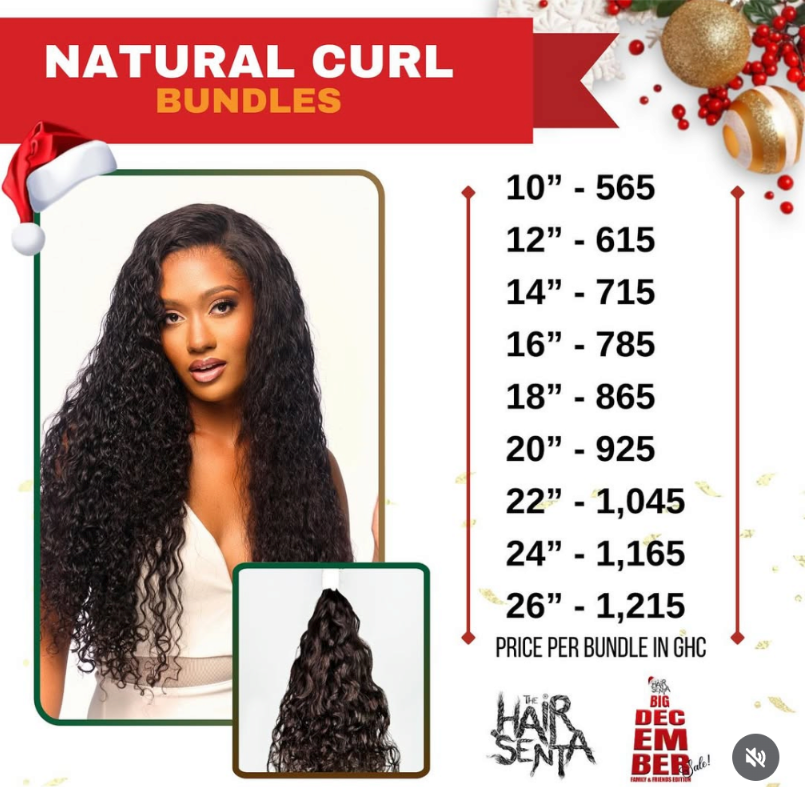
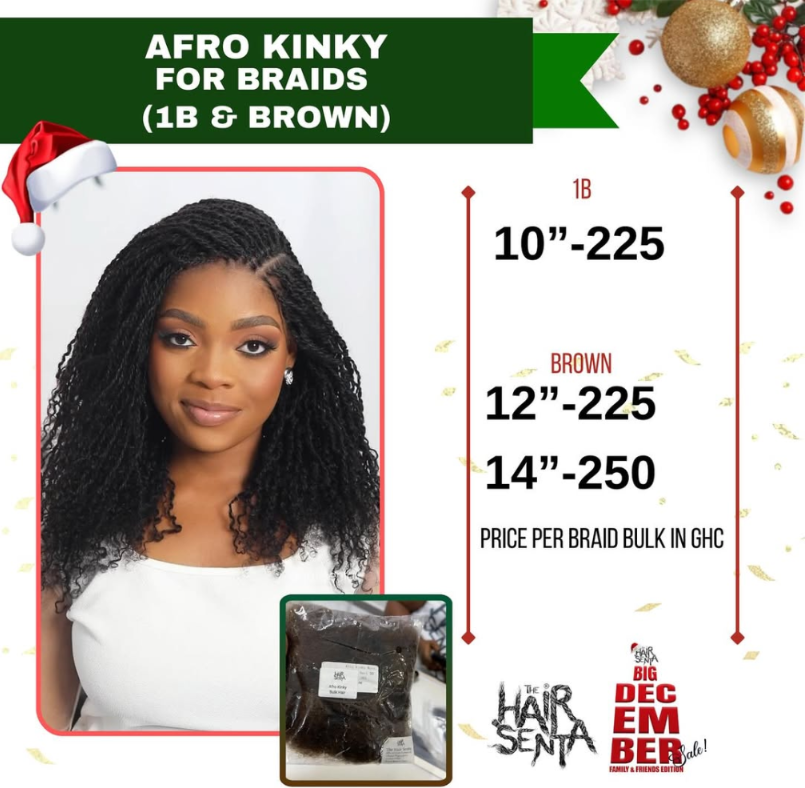



https://www.instagram.com/hairsenta?utm_source=ig_web_button_share_sheet&igsh=ZDNlZDc0MzIxNw==
🎄✨ Hair Senta – Where Beautiful Hair Meets Beautiful Conversations ✨🎄
This festive season, Hair Senta invites you to unwrap more than just beautiful hair — unwrap an experience. From meaningful conversations to expert guidance, every interaction is crafted to deliver the finest human hair extensions from Ghana, while empowering you with the knowledge to care for, style, and cherish your hair with confidence.
From your first “hello” to your final purchase, we listen, educate, and guide you every step of the way. Whether you’re treating yourself for the holidays or gifting someone special, our team ensures you leave feeling confident, radiant, and celebration-ready.
💇🏾♀️ Why Choose Hair Senta This Christmas?
✨ Trademarked, trusted, and internationally recognized
✨ Premium human hair extensions shipped from Ghana to the world
✨ Personalized, educational, and uplifting client experience
🎁 This Christmas, give the gift of confidence, beauty, and care — because nothing shines brighter than well-loved hair.
📍 Visit us: 24 Jungle Avenue, Accra, Ghana 00233
🌍 Shop online: www.hairsenta.com
📞 Call: (+233) 0544354455 / 0248629769
📱 Follow us on Instagram: @hairsenta
Hair Senta — Because great hair is always in season. 🎄✨
Article Focus
The article, “Social Construct – The Nutritional Gold of Hausa Koko: The Power of Millet and Spices,” has a twofold mission:
1. Challenging a Social Construct
To confront and dismantle the widespread tendency to undervalue indigenous African foods, such as Hausa Koko, in favor of imported and highly processed alternatives that are often nutritionally inferior. The article calls for a re-evaluation, re-education, and celebration of local cuisine, positioning traditional foods not as symbols of poverty, but as reservoirs of wisdom, culture, and health. 🌍✨
2. Highlighting Nutritional Science
To scientifically establish Hausa Koko as a nutritional powerhouse by examining:
- The rich mineral and vitamin profile of millet (Iron, Magnesium, B-Vitamins),
- The anti-inflammatory and antioxidant properties of its traditional spice blend,
- And the enhanced bioavailability and gut-health benefits resulting from natural fermentation. 🧪🌾
In Essence
The article seeks to restore dignity to indigenous food systems, using scientific validation to promote Indigenous Food Pride and Health Sovereignty, while affirming Hausa Koko as both a cultural treasure and a modern nutritional solution.
🥣 Why Hausa Koko Should Become Our New Dietary Staple
Here are seven compelling reasons—rooted in science, culture, and sovereignty—why Hausa Koko deserves a central place in our daily diet:
1. Superior Nutritional Density 🌾
Hausa Koko, made primarily from millet, delivers essential nutrients often lacking in modern diets:
- Iron for healthy blood and energy
- Magnesium for nerve, muscle, and heart function
- B-Vitamins for metabolism and brain health
Unlike refined cereals, millet retains its whole-grain integrity, offering sustained nourishment rather than empty calories.
2. Natural Fermentation = Better Digestion 🧬
The traditional fermentation process:
- Enhances nutrient bioavailability
- Reduces anti-nutrients like phytates
- Supports gut microbiome health
- Improves digestion for children, elders, and those with sensitive stomachs
Fermentation turns Hausa Koko into a living food, not just a meal.
3. Anti-Inflammatory & Antioxidant Power 🌶️
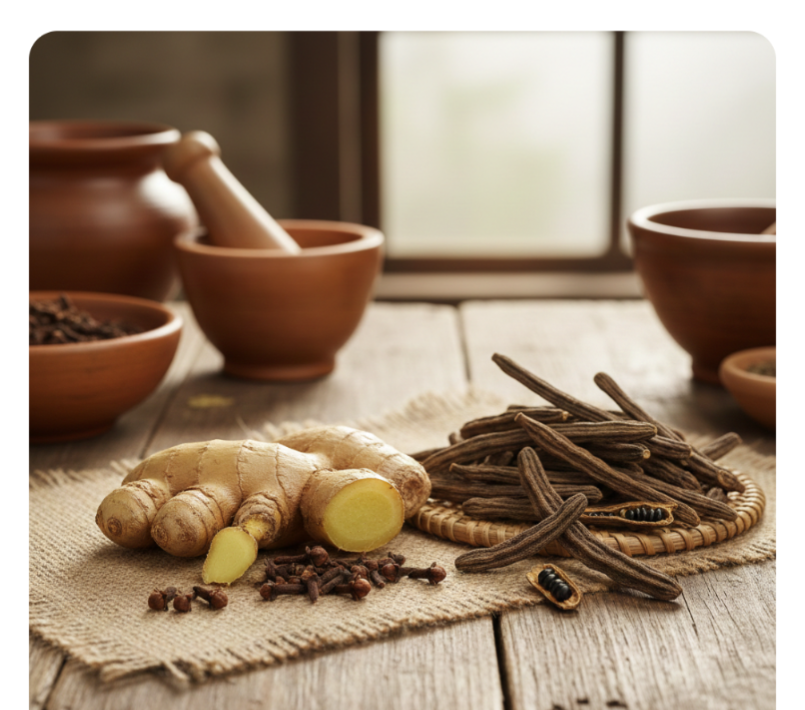
Its spice blend (ginger, cloves, pepper, grains of selim) provides:
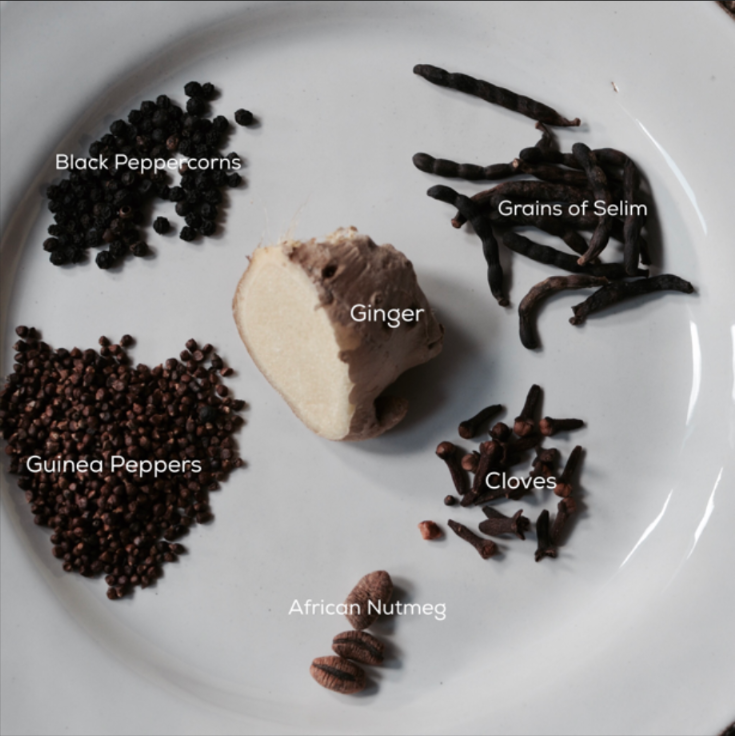
- Natural anti-inflammatory compounds
- Strong antioxidant protection
- Immune-boosting and circulation-enhancing effects
This makes Hausa Koko a preventive food, not merely a comfort food.
4. Affordable Nutrition for the Masses 💰
Hausa Koko delivers high-quality nutrition at low cost, especially when compared to imported breakfast cereals and supplements.
- Locally sourced
- No expensive processing
- Accessible to all income levels
It is proof that good health does not need to be imported.
5. Supports Indigenous Food Systems & Farmers 🌍
Choosing Hausa Koko:
- Strengthens local agriculture
- Reduces dependency on imported grains
- Preserves indigenous knowledge systems
It is an act of economic empowerment and cultural continuity.
6. Climate-Resilient & Sustainable 🌱
Millet thrives in harsh climates with minimal water:
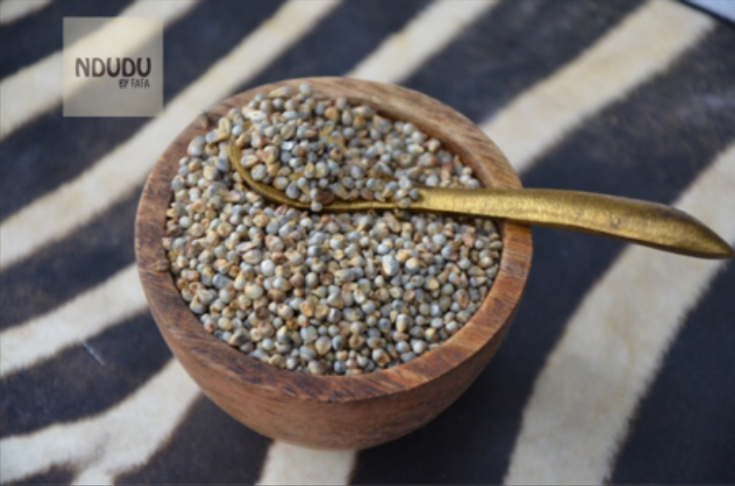
- Resistant to drought
- Low environmental footprint
- Ideal for a warming world
Hausa Koko aligns nutrition with environmental survival.
7. Cultural Identity & Health Sovereignty ✊🏾
Making Hausa Koko a staple is a declaration that:
- African foods are complete, intelligent, and sufficient
- Health solutions can come from within our own traditions
- Nutrition is not just biological—it is political and cultural
In Summary
Hausa Koko is nutrient-dense, fermented, affordable, medicinal, sustainable, and culturally grounded. Making it a dietary staple is not nostalgia—it is a strategic return to wisdom. 🥣🔥
🎤 SPOTLIGHT EVENT: EXCLUSIVE GLOBAL CONVERSATION
Forging Health as a Universal Right
Join two exceptional Ghanaian women as they explore:
- the hidden truths behind what Ghanaians eat
- how food choices shape community well-being
- the future of health equity in Africa and beyond
🌟 Featuring

Berla Mundi : In Unmissable dialogue bringing intelligence, humor, and sharp insight to this urgent discussion. Ghana’s outstanding broadcast journalist Berla Mundi a renowned broadcast journalist and founder of B. You by Berla Mundi, empowering young African women worldwide sits down with Gwen Addo, entrepreneur, wellness coach, beauty advocate, author of Direction, certified wellness educator, and co-founder of Owusuwaa Weekly.

Founder of Hair Senta, HIBS–Africa, and TLS — The Leading Senta to unpack the article’s findings and chart a path forward for Ghana. Gwen is more than a strategist — she is a movement-builder.
She champions communities where health, beauty, and wellness are rights, not luxuries.
Her Mission
- Empower everyday people with practical wellness tools
- Inspire young minds to build a healthier future
- Redefine business as a community hub of trust, connection, and transformation
“Cultural exchange is at the heart of this vision. It creates ripples of connection that unite hearts.”
– Gwen Addo
Together, Berla and Gwen unpack the powerful connection between daily food choices, national health, and collective well-being.
SOCIAL CONSTRUCT–The Nutritional Gold of Hausa Koko: The Power of Millet and Spices
For generations, Hausa Koko has been our morning anchor—warm, familiar, sustaining. Yet today, a troubling question confronts us: have we become blind to its immense nutritional wealth while relentlessly chasing costly, imported “health” trends?
In this Health Magazine, we peel back the layers of cultural conditioning and economic influence that have taught us to undervalue the powerful resources grown in our own soil, while elevating foreign alternatives as superior.
What’s in Our Bowl?
Beyond the Creaminess — Discover the Gold
This deep dive is more than a health article; it is a call to national consciousness.
Through scientific validation, we reveal why the humble bowl of Hausa Koko outperforms many imported breakfast cereals, focusing on:
Millet’s Secret Weapon
An in-depth examination of millet’s staggering levels of iron, magnesium, and B-vitamins—essential nutrients critical for energy production, immune strength, brain function, and combating widespread nutritional deficiencies.
The Spice Arsenal
How ginger, cloves, and hwentia (grains of selim) transform Hausa Koko into a potent anti-inflammatory, antioxidant, and gut-friendly functional food, rooted in indigenous nutritional wisdom.
The Fermentation Advantage
A look into ancient African food science—fermentation—and how it enhances nutrient bioavailability, improves digestion, and maximizes absorption in ways modern processing often destroys.
A Critical Look at National Consciousness
This article confronts an uncomfortable truth: Ghana possesses some of the world’s richest natural resources, yet our economy and public health systems often serve interests that have historically exploited us.
“Where on earth are we not educated about the things that sustain our lives, and are instead misled into exploitation—
because our leaders themselves do not recognize the depth of their own construct?”
We expose the critical disconnect between our abundance and the persistent failure to harness it for health sovereignty, economic independence, and national dignity.
Essence
This is not nostalgia.
This is science, culture, and resistance in a bowl.
Hausa Koko is not a poor man’s food—it is nutritional gold.
The question is no longer what do we eat?
It is who decides what we value.:
Introduction: Reclaiming Our Plate
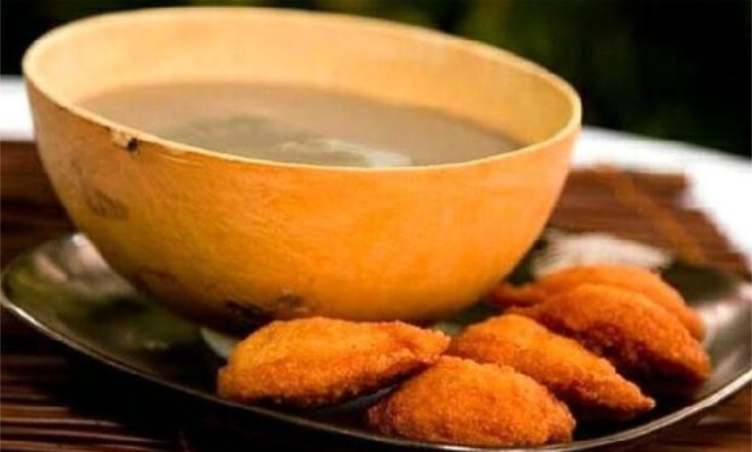
Every morning, across communities in Ghana, the comforting, spicy aroma of Hausa Koko fills the air. This beloved millet porridge is a foundational staple, yet its nutritional magnificence is often taken for granted—a classic reflection of how society has conditioned us to seek value in imported foods rather than in the gold found in our own backyard.
It is time to dismantle the social construct that undervalues African ingredients. Hausa Koko is not merely a quick breakfast; it is a meticulously crafted nutritional powerhouse. To understand its true value, we must explore the science behind its core components: millet and its traditional spice blend.
II. The Core: Millet – Africa’s Ancient Supergrain
At the heart of Koko lies Pearl Millet (Pennisetum glaucum), a highly resilient, drought-resistant grain perfectly adapted to our climate. Unlike many refined, foreign cereals stripped of their nutrients, millet is consumed as a whole grain, delivering a superior and more complete nutritional profile.
A. Micronutrient Powerhouse
Millet plays a critical role in combating common dietary deficiencies, particularly:
The Dialogue: Owusuwaa Weekly Health Newsletter Special


Berla-Mundi: (Looking directly into the camera with a warm, commanding smile) Hello, Ghana! And a very warm welcme to our viewers and readers joining us from every corner of the globe. Whether you are sipping your morning coffee in London, heading to work in New York, or right here at home in the heart of Accra, we are glad to have your company.

I am Berla-Mundi, and today, we are diving deep into a conversation that sits at the intersection of our health, our identity, and our economy. Joining me in the studio is a woman whose name is synonymous with integrity, business strategy, and unapologetic African excellence. She is an author, an entrepreneur, and a visionary who understands the “layers” that define our current society. Gwen Addo, it is an absolute pleasure to have you here for this special edition of the Owusuwaa Weekly Health Newsletter Magazine. Welcome!

Gwen-Addo: (Smiling gracefully) Thank you, Berla. It’s an honor to be here. This is a conversation long overdue.

Berla-Mundi: It truly is. Our focus today is centered on an article that is already stirring the pot—quite literally. The title is: “Social Construct – The Nutritional Gold of Hausa Koko: The Power of Millet and Spices.”
Now, Gwen, before we get into the “nutritional gold,” I want to ground us in a reality that often goes unspoken. When we talk about Hausa Koko, we talk about the finished product in the bowl. But as I prepared for this, I realized there is startlingly little concrete information available about the actual humans behind the grain—the farmers in the northern stretches of Ghana who plant the millet and the spices that sustain us.
It makes me wonder: what truly motivates a farmer to stick with millet—a crop often treated as an “orphan” by the system—when the support isn’t there? And my real question for you as we open this up is this: Does the Ghana government really care for these farmers as deeply as those farmers care for our health? Or are they just another invisible layer in a construct designed to keep us looking outward while our internal treasures are neglected?

Gwen-Addo: ( thoughtfully) Berla, you’ve hit the nail on the head right from the start. That question exposes the very “social construct” we are talking about. Those farmers are the backbone of our survival, yet they are often the most marginalized…
Part 1: The Continued Dialogue
Let’s be brutally honest. If the government cared for the millet farmer with the same intensity they use to secure loans for imported rice and sugar, Ghana would be a global health hub by now.
The motivation for these farmers isn’t a “government incentive” or a “subsidy”—it is heritage and survival. They plant millet because it is resilient, just like they are. But while they are planting “Nutritional Gold,” our leadership is distracted by the “Social Construct” of modernization. We spend nearly $2 billion annually importing food—much of it refined and linked to the rise of lifestyle diseases—while the very people growing the cure for our nutritional deficiencies are left to use hoes and cutlasses in the sun.
This isn’t just a lack of policy; it’s a lack of consciousness. When our leaders don’t recognize the value of what is indigenous, they effectively participate in the continued exploitation of our people. They’ve been conditioned to believe that “progress” comes in a shipping container from overseas, rather than from a farm in the Upper East Region. It is a form of self-sabotage that keeps us economically and physically dependent on the very systems that once enslaved us.
Berla-Mundi: (Nodding) It’s a harsh truth. It’s as if we are being fed a “poverty mindset” while sitting on a gold mine of health.
Part 2: Newsletter Section – “The Invisibility of the Millet Farmer”
The Invisibility of the Millet Farmer: Guardians of a Treasure They Cannot Afford
In the vast, sun-drenched fields of Northern Ghana, a silent hero works. They are the guardians of Pearl Millet—the “Ancient African Supergrain.” While the world now rushes to label millet a “superfood,” the Ghanaian farmer has known this for centuries.
However, these farmers exist in a state of forced invisibility.
- The Mechanization Gap: While industrial farms for export crops receive tractors and technology, the millet farmer often relies on the same tools used by their ancestors.
- The “Orphan Crop” Syndrome: Because millet doesn’t have the same “glamour” as cocoa or the import-heavy profile of rice, it receives a fraction of government research and financial support.
- The Irony of Health: These farmers grow the very grain that can cure Ghana’s iron and magnesium deficiencies, yet they remain among the most economically vulnerable.
We must ask ourselves: Why is the person providing our nation’s “Nutritional Gold” the least valued in our economic hierarchy? This invisibility is a deliberate layer of the social construct. By ignoring the farmer, we ignore the foundation of our own health sovereignty.
Part 3: Data Table – The Disparity of Investment.
This table illustrates the gap between what we should value and what the current “construct” actually values
| Feature | Imported Rice (The Construct) | Indigenous Millet (The Gold) |
| National Cost | ~$2 Billion USD in annual imports | Low cost, locally grown, saves forex |
| Government Focus | High (Subsidies, Import clearing, Market focus) | Low (Labelled as an “Orphan Crop”) |
| Climate Resilience | Low (Requires heavy water/irrigation) | High (Drought-resistant, thrives in heat) |
| Nutritional Profile | Often refined, high Glycemic Index | Whole grain, Iron & Magnesium rich |
| Research Funding | High (Focus on yield for mass market) | Low (Minimal focus on processing/packaging) |
| Consumer Perception | “Aspirational” / Modern | “Traditional” / Local (The Construct) |
| Economic Impact | Enriches foreign exporters | Empowers local Northern farmers |
Part 4: The Call to Action – Reclaim Your Sovereignty
📢 A Call to Action: Vote With Your Cedi
The “Social Construct” only survives if we continue to buy into it. Every time you choose an imported, processed cereal over locally grown millet, you are inadvertently supporting the invisibility of our farmers and the exploitation of our economy.
Today, we challenge you to make a conscious shift:
- Buy Local Brands: Seek out packaged Hausa Koko flour or fermented millet dough produced by Ghanaian entrepreneurs. Look for brands that source directly from farmers in the North.
- Promote the “Gold”: Share the nutritional benefits of millet with your children and peers. Teach the next generation that “modernity” is not found in a foreign box, but in the health and resilience of our own soil.
- Demand Better Policy: Use your voice to ask why our agricultural support systems aren’t prioritizing these “Supergrains.”
By supporting local millet, you aren’t just buying food; you are investing in a healthier Ghana and a stronger, more independent economy.
Part 5: The Owusuwaa Health Tip
💡 Health Tip: Mastering the Fermentation for Peak Nutrition
To get the most “Gold” out of your Hausa Koko, you must respect the science of fermentation. This is what unlocks the iron and magnesium your body craves.
- The 48-Hour Rule: If you are making your dough from scratch, allow it to ferment for at least 24 to 48 hours at room temperature. This is the “sweet spot” where lactic acid bacteria break down the phytic acid—the “anti-nutrient” that prevents your body from absorbing the millet’s minerals.
- The Sour Sign: That distinctive tangy/sour smell isn’t just for flavor; it’s a biological signal that the nutrients are now bioavailable (ready for your body to use!).
- Don’t Overboil: When adding your paste to boiling water, stir quickly and remove from high heat as soon as it thickens. Excessive boiling after the porridge has formed can degrade some of the delicate B-vitamins.
- The Spice Synergy: Always add your ginger and cloves during the fermentation or early in the cooking process. The heat helps release the essential oils (like gingerol) that provide anti-inflammatory benefits.
Final Newsletter Wrap-Up
Berla-Mundi: Gwen, this has been an eye-opening session. We’ve moved from the bowl to the farm, and from the farm to the floor of Parliament.

Gwen-Addo: Exactly, Berla. Because health is political, and what we eat defines who we are.
Berla-Mundi: To our readers, thank you for joining us for this edition of the Owusuwaa Weekly Health Newsletter Magazine. Remember, your health is your greatest wealth, but only if you recognize the gold right in front of you.
See you next Friday! Stay healthy, stay conscious.


https://www.instagram.com/gwen_addo?utm_source=ig_web_button_share_sheet&igsh=ZDNlZDc0MzIxNw==
SGI-Our share Humanity


https://www.instagram.com/babies_and_todds_day_care?igsh=MWs0ZHlsbjcxNXEyZg==


https://www.instagram.com/laurenhautecouture?igsh=MWxzNXN1Ym5nZ3o3Mg==


https://www.instagram.com/officeandcobysa?igsh=dmxucTZ2a2t1eDBn


https://www.instagram.com/ankaralooks?igsh=MTI1NWYycmU2Njkxcw==


https://www.instagram.com/goba_kente?igsh=d2Vwd2E2M2VtcTZq


https://www.instagram.com/attoandoh?igsh=MTJqNjZzYmZyaTc3Mg==


https://www.instagram.com/oh_my_hairr?igsh=MThqbDNneDZzcTF3cw==


https://www.instagram.com/minata_koko_boutique?igsh=a3JhaXpkc2NiMXVk


https://www.instagram.com/_sankofanaturalspices?igsh=MXFnb3ppd3dydWN1eg==


https://www.instagram.com/florabydeltapapermill?igsh=MTJtajJjcm9kemZmeA==
https://www.instagram.com/florakidsgh?igsh=bXMxbHZ2Z2k1bWZx


https://www.instagram.com/delish_bakerygh?igsh=MW5ic2c0NnR5cHBwZQ==



https://www.instagram.com/flourishheights?igsh=cTExenQ3bnptZGgx
https://www.instagram.com/valerieagyeman?igsh=dHh1NTE0YnNqODY0
