


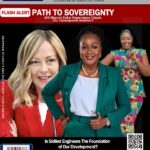

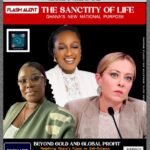


Liberator — Weekly Newsletter Special Edition
Flash Alert Main Headline :
THE URANIUM QUESTION
Can Namibia Lead Africa to True Power — From Exploitation to Empowerment
Feature Story
President Netumbo Nandi-Ndaitwah
“My ambition is to lead, not to follow”
Never Forgetting Africa’s History of Invasion
ADVERTISEMENT


https://www.instagram.com/hairsenta?igsh=MXAzOThhNGZ0Nm15dQ==
✨ Hair Senta — Where Luxury Begins at Your Roots! ✨
Looking for top–quality, 100% human hair extensions?
We’ve got you covered — straight from Ghana to the world!
🛍️ Shopping & Retail | Trademarked Company
📦 Worldwide Shipping | Authentic Human Hair Only
📍 Visit us: 24 Jungle Avenue, Accra, Ghana (00233)
🌐 Shop online: www.hairsenta.com
📞 Call/WhatsApp: (+233) 0544 354 455 / 0248 629 769
Join the Hair Senta Family — trusted by stylists, influencers & women who own their crown 👑
Follow us today and experience the beauty of premium hair! #HairSenta
Section Highlight
Journalism of Neglected Topics
Leading Not Following: Namibia’s Path to African Self-Determination
Profiles
- The Lawyer
- Assumpta News

President Netumbo Nandi-Ndaitwah declares: “My ambition is to lead, not to follow.” Dive into The Uranium Question and explore Namibia’s path to leadership, sovereignty, and Africa’s future. Joining the conversation:

Dzigbordi Kwaku-Dosoo – Global Keynote Speaker & CHPCT™ Coach, trusted by 500k

Frema Adunyame – Brilliant Broadcast Journalist & TV Presenter.

Jewel Girl aka Abena Oforiwaa : Sharing unique perspectives As SGI President lkeda reminds us: “Nobody can match those who are determined to put down roots and build their lives in a place of their choosing. Nobody can bully them even if they try. In the places around them, flowers of courage, compassion, wisdom, prosperity, and happiness never fail to bloom in full.”
Don’t Miss This Transformational Release!
🗓️ Monday, August 18th, 2025
📥 Exclusively in the “Liberator” Edition
💌 Share → Join the movement shaping the global future — from Africa to the world.
Don’t miss this powerful dialogue shaping Africa’s future! Coming on Monday.
Overview
This Special Edition of Liberator zeroes in on one of the most pressing issues shaping Africa’s future — the Uranium Question, and Namibia’s pivotal role in shifting the continent from a history of resource exploitation to one of empowerment.
Featuring insights from President Netumbo Nandi-Ndaitwah, who reaffirms her ambition “to lead, not to follow,” this issue challenges us to confront Africa’s legacy of invasion and interference, while exploring new frontiers of self-determination and true power.
We spotlight Namibia’s evolving geopolitical stance, its legal minds, women leaders, and bold voices championing “journalism of neglected topics.” Through conversations and commentary, Liberator asks:
Can Namibia lead Africa’s path to sovereignty in natural resources — and redefine what leadership looks like for a liberated continent?
Africa, Uranium, and the Future of Resource Sovereignty.
I have often pondered the mysterious power of Africa’s land. Africans who travel abroad witness how advanced nations have largely overcome obstacles to development. They have opened new frontiers, harnessing technology, resources, and innovation — yet much of the land they have exploited for minerals and natural resources has been left as a wasteland, controlled and profited from by these advanced nations.

At this point, the global system seems determined to keep Namibia and other African countries in subservient roles, despite holding some of the world’s most strategic resources. Uranium, in particular, has long been recognized as a source of geopolitical power. Beyond its use in generating electricity through nuclear power plants, uranium fuels research reactors for cancer treatment and diagnostics. When enriched, it becomes even more consequential. Because of its strategic nature, the Nuclear Suppliers Group (NSG) was created in 1974 to regulate the export of nuclear materials, technology, and equipment.
Today, the NSG has 48 member countries, who control both decision-making and distribution of nuclear-related exports. Yet, despite supplying much of the world’s uranium, Namibia — the world’s third-largest producer — has no seat at this table. Out of 195 countries globally, 144 have no significant links to nuclear production, yet many of them are represented in the very structures that determine how this resource is managed. Shockingly, over 85% of NSG members do not even possess uranium deposits. This raises a fundamental question: is this structure designed to deliberately exclude African uranium suppliers from gaining geopolitical influence?
Looking ahead to the International Atomic Energy Agency (IAEA) Conference in Vienna this September, Namibia — and the African continent at large — still has an opportunity to raise its voice. Both African leaders and Western counterparts have made mistakes in the past. African governments, in particular, have often failed to recognize that if we continue exporting raw resources without building our own capacity, we will one day be left with nothing but empty mines and lost opportunities.
Africa is rich not only in uranium, but also in gold, silver, copper, zinc, nickel, and many other minerals essential for industry, technology, and national resilience. These resources strengthen economic independence and self-protection, yet their full potential remains unrealized because the continent has historically ceded control over its wealth.
Even as African societies develop, the survival and prosperity of the continent will remain incomplete if we continue to surrender the natural resources that sustain our lives without asserting control, adding value, and shaping our own destiny.
This is a pivotal moment. African leaders must now decide whether they want to lead as equal partners on the world stage, or continue following patterns that keep the continent dependent and disempowered. The choice is clear: lead now, or remain followers forever.
Dzigbordi Kwaku-Dosoo:
Inanimate Objects and Civilization.

Every inanimate object affects human life in some way. We are dependent on some such as water. We need stone and rock not only for the foundations of our houses, but also because of their relationship to water. We too often take these elements for granted, failing to realize how essential they are for our lives.
In cases when there is too much water, for example, or when there is a shortage of water, we face serious hardships. We have noted previously that civilization began in places where people could obtain water in sufficient quantity and of good quality.

But the quantity and quality of water depends on the nature of the ground, so we can see that rocks and other minerals, and the distribution of specific types of rocks, have an intimate connection with our lives.
They influence our culture as well. It was the discovery of certain metals and their uses that initiated new epochs in human history, the Stone Age, the Iron Age, etc.
Observations of nature reveal that there is a sort of cooperation and communal existence among living things which are at the same time competing for their own survival. This explains the fact that most living things are armed naturally in various ways which provide protection for them. For example, some life forms enclose themselves in a hard mineral shell.
Observing this makes us realize what fragile, weak animals we human beings are. We have teeth and nails, but compared to the teeth and nails of other carnivorous animals, ours are useless. We do not have any natural means of protection and self-preservation. But we have found minerals, and these minerals and skill in using them provide us with the primary means for our survival.
The discovery of minerals aided human beings first, by enabling us to expand and improve our food supply, and second, by greatly strengthening our self-protective capability which can be cited.
Fragments of ancient stoneware, such as arrow-heads and other stone weapons have been found among ancient remains of human habitation, revealing how our ancestors protected themselves and came to dominate other animals in the hard struggle for existence. In later strata, the appearance of copper and other metals gives evidence of ever-greater mastery over their environment upon the part of humans.
The invention of ceramics must without doubt be considered of equal importance to the discovery of metal in extending the means of human survival and the growth of culture, though not adding measur ably to the stock of weapons for combating enemies, ceramics proved highly useful in daily life as tableware and other utensils.
It was the discovery of iron which led to a major advance in the human struggle for survival. Why? Because iron is safe and practical for domestic use as in tableware, unlike copper, for example, and it was also the most effective material which had yet been found for making weapons.
Furthermore, iron is easy to cast and process, compared to copper. With the later discovery of coal, the importance of iron increased. Today, iron and coal have become important elements in the life of all progressive nations.
Jewel Girl : Alaska Was Once Russian Territory — So Why Did They Sell It?
History tells us that Alaska used to belong to Russia. In 1867, however, Russia sold it to the United States for $7.2 million — roughly equivalent to $150 million today. But what led to such a surprising decision?
In those days, Alaska was valued not for oil or gold (which were discovered later), but for sea otters. Their pelts were warm, waterproof, and luxurious — and they were in high demand on the global fur market. Sea otters were the main reason the Russians first expanded into Alaska. As trade posts were established, so too were Orthodox churches, many of which still stand today.
By the mid-19th century, however, rampant hunting had severely reduced the sea otter population. Without fur, Alaska’s trade value dropped sharply, and maintaining these remote settlements became economically draining for Russia.

At the same time, Russia viewed the United States as a useful ally agppainst Britain. By handing Alaska over to a friendly power, they hoped to strengthen that relationship. Tsar Alexander II also needed money to develop Russia’s internal regions and no longer saw value in holding a distant, expensive colony.
Many Americans at the time thought buying Alaska was absurd. To them it was a frozen wasteland — nicknamed “Seward’s Icebox” after the U.S. Secretary of State who negotiated the purchase. It took considerable effort to convince Congress to approve the deal.
Yet history has shown how significant the purchase would become — not only in terms of Russian and American relations, but also in teaching us about human movements, trade, and the exploitation of natural resources.
A Lesson for Africa:
There is an important message here for Ghana and the African continent as a whole. The sea otters of Alaska — once abundant and seen as an endless economic resource — eventually disappeared. Likewise, Africa’s minerals and natural resources might seem limitless today, but they too can be exhausted.
If we continue selling our raw resources without planning for sustainability and future generations, the land may one day be left barren. Just as Alaska’s fur trade collapsed when the otters were gone, so too could Africa suffer if we do not protect and wisely manage what we have today.
Commerce and Spirituality;

Today’s merchants — those exploiting Namibia’s uranium and Africa’s many other natural resources — often appear to have a clear advantage in terms of knowledge and opportunity.
They live in cities where people, goods, and ideas converge. They travel frequently, meet diverse individuals, and encounter various cultures. Exposure to such environments expands their knowledge far beyond what is possible for someone who remains in one place. Through constant bargaining, they become sharp, perceptive, flexible, and outwardly optimistic — pioneers in global commerce.
Yet there is a hidden weakness beneath this surface brilliance.
Their knowledge and emotions are often driven by a single goal: profit. Many of them do not approach life from a place of deeper reflection or logic. Instead of understanding principles, they prefer to memorize past successes and copy them, hoping for similar results — without questioning the consequences.
This focus on profit alone blinds them to the interconnectedness of all life. In Alaska, merchants hunted sea otters purely for commercial gain. When the otters sensed their survival was threatened, they disappeared, and the economic foundation crumbled.
Intent matters. When our intentions are shallow or selfish, even our material success becomes temporary. Negative motives eventually manifest as poverty, instability, and misery in society — as we can see happening in parts of Ghana today. People begin to leave the country. Natural resources become depleted. The land itself suffers.
Tsar Alexander II sold Alaska because his intent was not to nurture the land or its creatures, but to make quick profit. He never thought to protect the otters or build an economy around preserving and multiplying them.
The Lesson for Us
If we wish to create a prosperous and lasting future for Ghana and Africa as a whole, we must align commerce with spiritual intent. We must treat every part of our land — its people, its animals, and its resources — with dignity and wisdom. When our intentions are pure, prosperity will naturally follow and endure.
The Liberator — Weekly Newsletter (Special Edition)
Flash Alert
Main Headline: THE URANIUM QUESTION — Can Namibia Lead Africa to True Power? From Exploitation to Empowerment
Feature Story: President Netumbo Nandi-Ndaitwah — “My ambition is to lead, not to follow”
Section Highlight: Journalism of Neglected Topics — Leading Not Following: Namibia’s Path to African Self-Determination
Profiles: The Lawyer • Assumpta News
DZIGBORDI KWAKU-DOSOO (Host):
Greetings, global community, and a warm Akwaaba from Accra, Ghana! I am Dzigbordi Kwaku-Dosoo — global keynote speaker, Certified High Performance Coach (CHPCT™), and mentor to over half a million change-makers worldwide. With decades of dedication to human development, entrepreneurship, and women’s leadership across Africa and the Diaspora, I am delighted to welcome you to The Liberator — Weekly Newsletter Special Edition, where bold conversations ignite transformation.
Today, we focus our lens on southern Africa for a powerful new headline: “THE URANIUM QUESTION: Can Namibia Lead Africa to True Power — From Exploitation to Empowerment?” We reflect on history not as a memory, but as a mirror. From Alaska’s sea otters to Africa’s gold, oil, and uranium — the deeper question remains: Are we selling our future, or securing it?
Joining me for this inspired dialogue are two phenomenal Ghanaian voices helping shape Africa’s next narrative:

- Frema Adunyame — one of Ghana’s most brilliant broadcast journalists and TV presenters. Frema is a respected storyteller who has spent years giving voice to the under-reported issues shaping our continent.
Jewel Girl, known in private life as Abena Oforiwaa, a remarkable young thought-leader bringing fresh, fearless perspectives from Africa’s rising generation. Ladies, welcome to The Liberator. As SGI President Ikeda reminds us: “Nobody can match those who are determined to put down roots and build their lives in a place of their choosing… In the places around them, flowers of courage, compassion, wisdom, prosperity, and happiness never fail to bloom in full.” Let’s plant those flowers today.:

FREMA ADUNYAME:
Thank you so much, Dzigbordi. It’s always an honour to be in conversation with sharp minds committed to Africa’s awakening. When we look at Namibia today — possessing some of the world’s richest uranium deposits — we have to ask ourselves: are we witnessing a new dawn of African leadership, or another quiet replay of resource exploitation by external powers?
As a journalist, what strikes me is how often the most critical topics — who controls our minerals, where the profits go, and how our people benefit — remain neglected in the mainstream news cycle. Namibia’s first female presidential candidate, Netumbo Nandi-Ndaitwah, boldly declares, “My ambition is to lead, not to follow.” That statement alone is a call to Africa not just to own her resources — but to own her voice. Because if we don’t tell our story, someone else will sell it.
JEWEL GIRL (ABENA OFORIWA A):
Yes, Auntie Frema, you make such a powerful point. And as part of the younger generation, I feel the urgency even more. When I read about Alaska’s sea otters disappearing because people were only chasing profit, it sounded exactly like what is happening in parts of Africa today. If we keep digging and selling uranium, gold, lithium — without thinking about future generations — one day, like the otters, the resources too will be gone.
For us young people, the real question is: what kind of Africa will we inherit? One where we are forced to migrate and search for greener pastures? Or one where we actually stay, build, innovate, and flourish right here at home? I believe intent matters — if our intention is only money, the land feels it and eventually rejects us. But if our intention is to prosper with the land, then Africa will bloom for all of us.
DZIGBORDI KWAKU-DOSOO:
Inspiring perspectives from both of you. This is the very energy we need to move from extraction to elevation — from exploitation to empowerment.
Let’s go deeper. Frema, how do you think African leaders and media can shift the narrative around resources like uranium — from seeing them as “commodities to export” toward “instruments of continental transformation”?
And Jewel Girl, from the youth angle — what practical steps do you believe our generation must take to protect our national treasures while still advancing economically?
FREMA ADUNYAME:
Thank you, Dzigbordi. I believe the first shift must be mental. As long as our leaders and journalists treat uranium, gold, or oil as quick economic wins instead of long-term nation-building tools, we remain stuck in a colonial mindset.
Media must move beyond headlines like “Namibia signs billion-dollar deal,” and ask:
- Who owns the processing plants?
- Are we refining locally?
- How many Namibians sit on the decision-making table?
- Where is the value-addition chain located — here or abroad?
It is time African journalism practices what I call “investigative patriotism” — not reporting just for scandal, but reporting for sovereignty. When citizens start demanding transparency, leaders will begin to negotiate differently. That’s how storytelling becomes statecraft.
JEWEL GIRL (ABENA OFORIWA A):
Exactly! And from the youth side, we can’t just complain — we must prepare.
First, we need to educate ourselves — not just in politics, but in science, technology, clean energy — so that when opportunities in uranium or lithium processing arrive, we are not sidelined because we lack the skills.
Second, we must promote African innovation hubs. Why should our uranium be shipped off raw to power someone else’s technology when we too could be developing next-gen nuclear medicine or clean-energy batteries right here?
Finally, mindset. Young people must believe that greatness is possible right where we are. If we keep saying “nothing works in Africa”, we are already defeated. But when we say “we are the ones to make it work”, suddenly power begins to shift.
DZIGBORDI KWAKU-DOSOO:
Powerful! So, our vision must be generational, our journalism must be courageous, and our leadership must become transformational — not transactional.
As we close this edition of The Liberator, I leave you with this charge: Africa does not need sympathy — Africa needs strategy. Let’s return to President Netumbo Nandi-Ndaitwah’s bold declaration: “My ambition is to lead, not to follow.”
The question now is — will we allow her ambition to become Africa’s reality? Or will history repeat itself?
PARAGRAPH 1 – Article Title: “Never Forgetting Africa’s History of Invasion”
DZIGBORDI:
Let’s begin with the power of this headline: “Never Forgetting Africa’s History of Invasion.” This is more than nostalgia — it is a call to vigilance. Frema, how important is active remembrance to our current liberation struggle?

FREMA:
Extremely important. History is not behind us — it is around us. If we don’t recall how invasion stripped Africa of power, people, and pride… we risk repeating it through modern forms of control — economic, cultural, and political.
JEWEL GIRL:
Exactly, Frema. Invasions today don’t always come by ship or gun. They come in contracts, dependencies, and narratives. Remembering our history is the only way to arm ourselves intellectually and politically.
PARAGRAPH 2 – African Stream Flash Alert: President Netumbo Nandi-Ndaitwah
DZIGBORDI:
That takes us into the African Stream Flash Alert, spotlighting Namibia’s President Netumbo Nandi-Ndaitwah and her bold proclamation — “My ambition is to lead, not to follow.” Abena, what does this declaration signal to you?
JEWEL GIRL:
It signals a continental awakening. For far too long, African leaders have played catch-up. What President Nandi-Ndaitwah is saying is transformational: Africa must set its OWN agenda — not trail behind global superpowers.
FREMA:
And the boldness is infectious. It’s not just about Namibia; it’s symbolic of an emerging African posture — unapologetic, uncompromised, and forward-facing.
PARAGRAPH 3 – The Uranium Question: Can Namibia lead Africa to True Power?
DZIGBORDI:
Now, to “The Uranium Question” — can Namibia truly power Africa’s future by leading the charge with its natural resources?
FREMA:
This is the heart of the matter. Namibia holds some of the world’s richest uranium deposits. But ownership of the resource doesn’t equal control. The question is: Can Namibia harness it for African interest instead of allowing external forces to siphon the benefit?
JEWEL GIRL:
Exactly, Frema. True power is not in having the resource — it’s in controlling the value chain. Mining, processing, pricing, and distribution. If Namibia can do that and inspire collaboration across the continent — then yes, it can guide Africa into an era where we are no longer raw-material suppliers but global power brokers.
DZIGBORDI:
And that pivots us to a shifting narrative — from exploitation to empowerment.
PARAGRAPH 4 – From Exploitation To Empowerment
Historically, we’ve seen Africa’s wealth exploited for centuries. Today, we hear more about empowerment. Abena, in practical terms, what does empowerment look like?
JEWEL GIRL:
Empowerment means structural change. It’s African lawyers writing the contracts, African scientists running the labs, African leaders negotiating from a place of strength — and African communities actually benefiting. No more breadcrumbs; we want the whole loaf — because it’s baked from our soil.

FREMA:
Beautifully said. Empowerment also demands that the African citizen is informed — so when leaders rise to challenge global systems, the people rise with them, not against them.
PARAGRAPH 5 – The Lawyer: Leading Not Following – Namibia’s Path to African Self-Determination
DZIGBORDI:
This brings in The Lawyer — the legal minds behind sovereignty. The tagline says: “Leading Not Following: Namibia’s Path to African Self-Determination.” How important is legal infrastructure in this movement?
FREMA:
It’s everything! Without legal muscle — international law, trade law, mineral rights law — Africa will continue to be bullied. Namibia is laying the groundwork by tightening ownership laws and strengthening internal policy so external entities cannot dictate terms.
JEWEL GIRL:
And once you control the law, you control your destiny. Because then “leadership” is not rhetoric — it becomes policy-backed power.
PARAGRAPH 6 – Feature Story & Section Highlight: Journalism of Neglected Topics
DZIGBORDI:
As we conclude, let’s reflect on why journalism like Liberator matters. Our section highlight is “Journalism of Neglected Topics”. Frema, why must we continue telling these stories?
FREMA:
Because mainstream media rarely shows Africa leading — they show us bleeding. We must narrate our own breakthroughs, ambitions, and bold experiments. That’s how we rewrite perception and inspire action.
JEWEL GIRL:
And that’s why platforms like Liberator are not just media — they’re ammunition. Because in this war for Africa’s future, information is power.
DZIGBORDI:
Well said. Africa, the time is now — not to follow, but to LEAD. Thank you, Frema Adunyame. Thank you, Jewel Girl. And to our listeners: Never forget our past, for it is the torch lighting our future. As we deepen this conversation on leadership and self-determination, Jewel Girl, I know you’ve recently been reflecting on the words of SGI President Daisaku Ikeda. How do his philosophies speak to this African moment?
JEWEL GIRL (ABENA OFORIWA A):
Indeed, Dzigbordi. President Ikeda offers a powerful reminder to us as Africans. He says: “Nobody can match those who are determined to put down roots and build their lives in a place of their choosing. Nobody can bully them even if they try. In the places around them, flowers of courage, compassion, wisdom, prosperity, and happiness never fail to bloom in full.”
This touches the very core of what we’re discussing. Africa must put down her own roots — economically, culturally, politically. When we anchor ourselves, we cannot be uprooted or bullied — no matter the external pressure.
FREMA:
That’s so moving, Abena. It suggests that true power isn’t just about resistance — it’s about rootedness. Deciding that this is our land, our destiny — and we are here to stay.
JEWEL GIRL:
Exactly, Frema. And when we do that, then — like Ikeda says — the flowers bloom: courage in leadership, compassion in community, wisdom in strategy, prosperity in resources, and yes, happiness in the everyday lives of our people. That is nation-building.
DZIGBORDI:
So perhaps the new definition of pan-African leadership is not only who shouts the loudest abroad, but who plants the deepest roots at home.
JEWEL GIRL:
Well said! What Namibia is doing — what leaders like President Netumbo are signaling — is not bravado, it’s root planting. And when those roots take hold across the continent? Africa becomes immovable, unshakeable, undefeatable.
FREMA (smiling):
And that is when nobody can “bully” us — even if they try, let’s carry the dialogue forward into a visionary close, looking toward Africa in the year 2030.
DZIGBORDI:
Let’s cast our eyes forward. Imagine it is the year 2030. Africa has embraced its roots, its history, its power. Jewel Girl — paint us that picture.
JEWEL GIRL (ABENA OFORIWA A):
In 2030, Africa is not waiting outside anyone’s door begging for entry — we own the room. From Windhoek to Accra, from Kigali to Dakar, we see African-controlled industries — uranium, cocoa, lithium, fashion, cinema — exporting not just raw materials, but finished products stamped “Proudly African.”
FREMA:
Our universities are filled with brilliant young minds who are not dreaming of escaping the continent, but dreaming of building on it. African languages flow confidently in tech labs; our music scores global blockbusters; our innovations fix local problems that the world then copies.
JEWEL GIRL:
Politically, we are firmly rooted in self-determination. As SGI President Ikeda says — nobody can bully us even if they try, because we know who we are, we know whose shoulders we stand on, and we have rooted ourselves deeply. Around us bloom the flowers of wisdom, courage and prosperity.
DZIGBORDI (smiling):
And perhaps the biggest shift — our children no longer ask, “Who will save Africa?” They ask: “What part will I play in leading Africa?”
FREMA:
That’s the future. And it begins with choices we make today — about leadership, resource control, and narrative ownership.
JEWEL GIRL:
Exactly. Africa must not follow. Africa must LEAD — from a place of rooted strength, blooming beauty, and unstoppable purpose.
DZIGBORDI:
To all listening: Plant your roots. Know your power. Protect your history. And bloom wildly — wherever you are across our magnificent continent.
Until next time — this has been Liberator — Special Edition. From myself, Frema Adunyame, and the indomitable Jewel Girl… Africa arise and lead!
Thank you for staying with us, Liberators. Before we deepen the conversation, here’s a quick Overview for our international audience:
This Special Edition of Liberator zeroes in on one of the most pressing issues shaping Africa’s future — the Uranium Question, and Namibia’s pivotal role in shifting the continent from a history of resource exploitation to one of empowerment.
Featuring insights from President Netumbo Nandi-Ndaitwah — who boldly reaffirms her ambition “to lead, not to follow” — this issue confronts Africa’s legacy of invasion and interference while navigating new pathways for sovereignty.
We ask a provocative question:
Can Namibia lead Africa’s path to resource independence — and redefine what leadership looks like for a liberated continent?
Frema, based on this extraordinary backdrop — Namibia supplying uranium yet having no seat at the “nuclear decision-making table” — is Africa still trapped in a neo-colonial loop?
FREMA ADUNYAME:
Dzigbordi, tragically the answer is often yes. Namibia is the world’s third-largest uranium producer, yet over 85% of Nuclear Suppliers Group members don’t even have uranium deposits. So you begin to wonder — who designed this system, and for whose benefit?
Namibia may supply the fuel, but the power — the true power — still sits somewhere in Paris, London, Washington, Brussels. Until Africa insists on building capacity for value-addition, policy influence, and technological mastery, we will remain exporters of raw wealth and importers of poverty. That is the uncomfortable truth.
JEWEL GIRL (ABENA OFORIWA A):
And that is why the youth are restless! We are no longer satisfied with speeches. We want a seat at the table or we will build our own table. If Namibia can’t influence nuclear policy, yet owns the uranium — then what is sovereignty?
Personally, I don’t just want us to dig the uranium. I want to see young Namibians and Ghanaians involved in nuclear medicine research, robotics powered by uranium batteries, African-led green energy innovations, so that by the time we reach 2050, people will say: Africa didn’t just sell minerals — Africa sold solutions.
DZIGBORDI KWAKU-DOSOO:
Visionary words, Abena. It’s clear — the next chapter is not simply about controlling resources, but controlling the narrative, technology, and destiny attached to those resources.
Frema, before we wrap, let me ask you this: What must Namibia — and by extension Ghana and the rest of Africa — do right now to turn this “Uranium Question” into a launchpad for continental leadership?
FREMA ADUNYAME:
First, Namibia must negotiate differently. No more contracts that remove uranium from African soil without a parallel investment in local processing, research partnerships, and skills transfer. Secondly, Africa must speak with one voice at global platforms like the IAEA in Vienna. A fragmented continent is easy to silence — a united Africa becomes impossible to ignore.
Finally, there must be a continental doctrine that says: no strategic mineral leaves Africa without a clear pathway to value-addition and continental benefit. That is how you turn resources into real power.
JEWEL GIRL (ABENA OFORIWA A):
And we the youth must be ready to receive that power. We need to study science, engineering, technology, journalism, law — everything required to manage the future. If Namibia leads, Ghana leads, Niger leads, South Africa leads — then the whole continent starts glowing. We cannot wait for permission. This is our moment.
Dzigbordi Kwaku-Dosoo: Now, let’s explore the fascinating ways inanimate objects—and resources—shape human civilization. Let’s start big: water, stones, metals… they’ve all defined survival, culture, even power.
Frema Adunyame: Absolutely, Dzigbordi. Think about it—our ancestors didn’t just stumble onto survival. They observed nature, found materials, and innovated. Stone weapons, iron tools, ceramics… each discovery shifted how humans lived and interacted with the world.
Dzigbordi Kwaku-Dosoo: And yet, despite all this reliance, we often take these gifts for granted. Which makes me think: history is full of lessons on what happens when we fail to care for our resources. Jewel Girl, I hear you have a story about Alaska that illustrates this beautifully?
Jewel Girl: Oh yes! It’s a classic example. Did you know Alaska was once Russian territory? In 1867, Russia sold it to the United States for $7.2 million—roughly $150 million today. At the time, Alaska’s main value wasn’t oil or gold, but sea otters—their pelts were luxurious and in high demand globally.
Dzigbordi Kwaku-Dosoo: Sea otters? That seems… unexpected.
Jewel Girl: [Laughs] Exactly! Russia expanded into Alaska for the fur trade. But by the mid-19th century, overhunting had decimated the sea otter population. Without fur, the settlements became economically draining. Tsar Alexander II needed money, saw little value in the land, and sold it to the U.S.
Frema Adunyame: Wow. So the Russians prioritized immediate profit over sustainability, and the consequences were immediate.
Jewel Girl: Exactly. And here’s the lesson for us in Africa and Ghana: minerals and natural resources might seem endless today, but they are not. If we keep exploiting them without planning for future generations, we risk the same collapse.
Dzigbordi Kwaku-Dosoo: It’s striking, isn’t it? Whether it’s iron, water, or otter pelts, our survival—and prosperity—depends not just on what we have, but how we use it.
Frema Adunyame: And on purpose. Many merchants today are sharp, experienced, and globally connected—but if their focus is profit alone, they risk repeating history.
Jewel Girl: Exactly! In Alaska, the intent was shallow—just quick gain. The otters vanished, and the economic foundation crumbled. In Ghana and Africa, if we align commerce with purpose and care, prosperity can be lasting.
Dzigbordi Kwaku-Dosoo: So, what you’re saying is that wisdom in resource use—not just possession—is what builds civilization. That’s powerful.
Frema Adunyame: Yes! It’s about understanding the interconnectedness of people, animals, and land. Ignore that, and even a land rich in resources can face collapse.
Jewel Girl: Alaska’s story is a warning, but also a guide. Treat resources—and life itself—with respect and foresight. Profit alone without reflection leads to temporary gain and long-term loss.
Dzigbordi Kwaku-Dosoo: Beautifully said. Civilization is a delicate balance between capability, care, and intention. If we embrace that balance, we thrive; if not… history has plenty of cautionary tales.
Thank you, Frema and Jewel Girl, for such an insightful discussion. And thank you, listeners, for joining us. Remember: resources aren’t just commodities—they’re the foundation of our survival and culture. Use them wisely!
Powerful closing thoughts from both of you!
To everyone reading this Special Edition of The Liberator: history is watching us. Namibia’s uranium is not just a mineral — it is a mirror reflecting Africa’s choices. Will we continue letting others define our value? Or will we rise, lead, and finally transform our God-given resources into engines of empowerment?
As President Netumbo Nandi-Ndaitwah declares, “My ambition is to lead, not to follow.”The Liberator asks: Africa — will you follow, or will you finally lead?
SGI-Our Shared Humanity.


https://www.instagram.com/babies_and_todds_day_care?igsh=MWs0ZHlsbjcxNXEyZg==
✨ Babies & Toddlers Daycare – Where Little Smiles Shine Bright! ✨
Give your child the perfect start in a warm, loving and secure environment ❤️
We offer a safe, affordable Day Care in the heart of Windhoek, crafted with care for babies and toddlers.
🧠 Grow | 📘 Learn | 🤝 Share | 🎨 Create
Because every bright smile tells a story of happiness, confidence and love — and that’s the magic we nurture every day.
📍 Windhoek, Namibia
📞 +264 81 673 7599
🌐 www.babiestodds.com
Trusted by parents. Loved by kids.
Enroll your little one today! 👶🌈


https://www.instagram.com/delish_bakerygh?igsh=MW5ic2c0NnR5cHBwZQ==


https://www.instagram.com/flourishheights?igsh=cTExenQ3bnptZGgx
https://www.instagram.com/valerieagyeman?igsh=dHh1NTE0YnNqODY0


https://www.instagram.com/nutritioncafe_?igsh=MWhubGJwMWFlN3BlYg==


https://www.instagram.com/ambiancebytalata?igsh=b2R2cTQ5bG9kYXM5


https://www.instagram.com/ankaralooks?igsh=MTI1NWYycmU2Njkxcw==


https://www.instagram.com/laurenhautecouture?igsh=MWxzNXN1Ym5nZ3o3Mg==


https://www.instagram.com/officeandcobysa?igsh=dmxucTZ2a2t1eDBn


https://www.instagram.com/goba_kente?igsh=d2Vwd2E2M2VtcTZq


https://www.instagram.com/oh_my_hairr?igsh=MThqbDNneDZzcTF3cw==


https://www.instagram.com/serwaaamihere?igsh=N216N3hzeTE3eHho


