





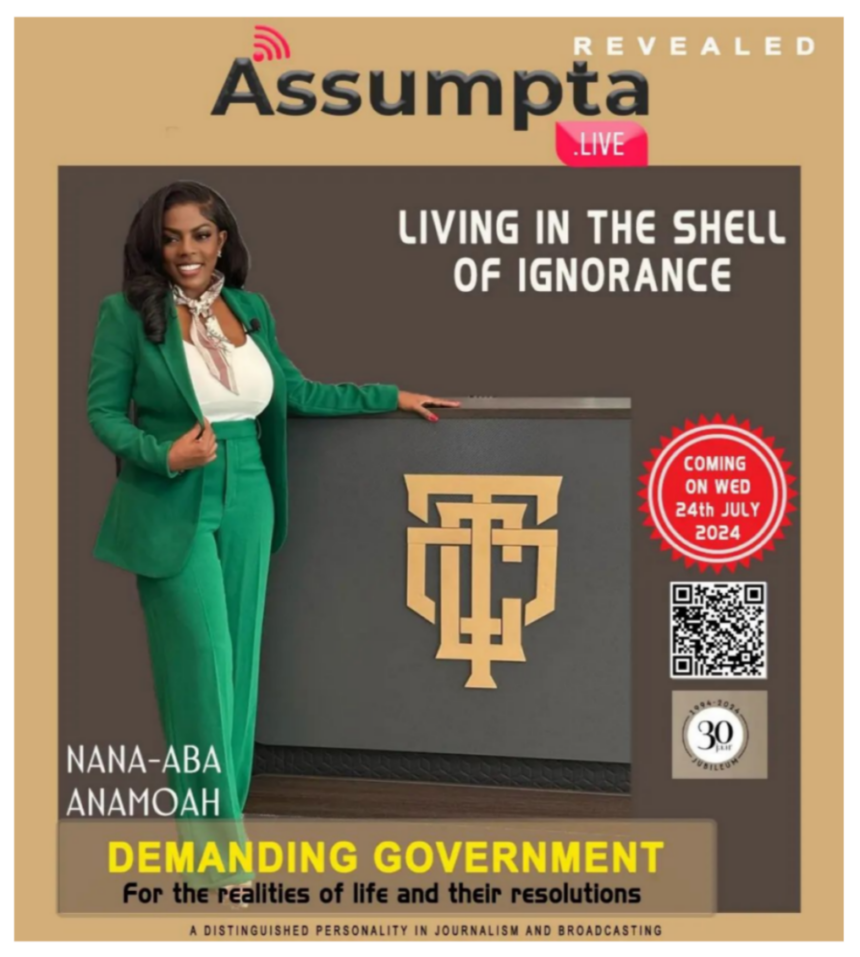
Content: Demanding government for the realities of life and their resolutions;
Last updated: 2024/07/24 at 14:34 pm
Assumpta GH TU
Revealed: Newsletter features Nana Aba Anamoah; A distinguished personality in Journalism and broadcasting.
Coming on Wednesday 24th July 2024



https://www.instagram.com/hairsenta?igsh=MXAzOThhNGZ0Nm15dQ==
Discover the beauty of luxurious hair with Hair Senta! Our premium human hair extensions offer unmatched quality and natural look, giving you the voluminous, stunning hair you’ve always dreamed of. Easy to apply and maintain, Hair Senta extensions blend seamlessly with your own hair, enhancing your style effortlessly. Elevate your beauty—choose Hair Senta today!

In the contemporary world, where information is abundant and accessible, it is paradoxical that many still live within a shell of ignorance. This ignorance, often self-imposed or perpetuated by external forces, hinders progress and fosters a society disconnected from the realities that shape our existence. The essence of this problem lies in a lack of transparency and accountability from our governments, which are tasked with addressing the pressing issues of our time.
The Illusion of Awareness
Despite the proliferation of digital media and the 24/7 news cycle, many individuals remain woefully unaware of the critical issues that affect their lives. This is not merely a personal failing but a consequence of systematic obfuscation and selective disclosure by those in power. Governments, whether democratic or authoritarian, have mastered the art of controlling narratives to maintain their grip on power. They often present a curated version of reality, highlighting successes while downplaying or ignoring significant challenges.
The Demand for Transparency
To break free from the shell of ignorance, a concerted demand for transparency is imperative. Citizens must insist on comprehensive and unfiltered access to information about governmental actions and policies. This includes:

- Nana Aba Anamoah
- Detailed Reporting on Public Spending: Governments should provide clear and accessible accounts of how public funds are allocated and spent, allowing citizens to see where their taxes go and to hold officials accountable for any mismanagement or corruption.
- Open Data on Social Issues: Data on unemployment, healthcare, education, and other critical sectors should be readily available and regularly updated. This transparency will enable citizens and independent organizations to assess the effectiveness of government initiatives and advocate for necessary changes.
- Transparent Decision-Making Processes: Governments should be open about their decision-making processes, including the rationale behind significant policy decisions. This openness will foster a more informed public discourse and prevent the spread of misinformation.
Confronting the Realities of Life
Understanding the realities of life requires confronting uncomfortable truths. For instance, the growing inequality in many societies, the looming threats of climate change, and the persistent issues of racial and social injustice cannot be ignored. Governments must not only acknowledge these realities but also actively work towards their resolution.
Resolutions through Accountability
Demanding transparency is the first step, but it must be coupled with accountability. Governments should be held responsible for their actions through robust legal frameworks and active civic engagement. Mechanisms such as independent oversight bodies, free press, and active civil society organizations play a crucial role in ensuring that governments do not evade their responsibilities.
The Role of the Citizenry
Citizens themselves must be proactive in seeking information and engaging in the democratic process. This includes participating in elections, attending public meetings, and staying informed about policy debates. By doing so, they can contribute to a more transparent and accountable governance system.
Conclusion
Living in the shell of ignorance is no longer an option in our interconnected world. The demand for transparency and accountability from our governments is not just about acquiring information but about empowering citizens to make informed decisions and hold their leaders accountable. Only by dismantling this shell can we hope to address the complex realities of life and work towards sustainable resolutions. As we push for a more transparent and accountable government, we pave the way for a more informed, engaged, and equitable society

Living in The Shell of Ignorance
In a world where information flows freely, living in ignorance is a self-imposed prison. The demand for transparency from our governments is not just a request but a necessity for an informed society. We must confront the realities of life head-on, seeking resolutions through open dialogue and accountability. Only by breaking free from the shell of ignorance can we aspire to a future built on knowledge and understanding.
Dialogue Between Nana Aba Anamoah and Tsasi


Nana Aba Anamoah: Good morning, Tsasi. It’s a pleasure to have you here. Tsasi: Good morning, Nana Aba. Thank you for having me. It’s an honour to be here.
Nana Aba Anamoah: The pleasure is mine. Let’s dive straight into our discussion. Are you saying all our leaders are ignorant?

Tsasi: Well, before I answer that question, I would say it depends on what that means to you. If being ignorant means a conscious internal and intentional meanness to overlook the reality of misery and poverty around us, or if it means that Ghanaian leaders have intentionally internalised a dislike ideology to not develop the nation, then my answer is yes.

Nana Aba Anamoah: You are saying that Ghanaian leaders move through changing governments with an internalised, intentionally ignorant ideology that benefits them within the system of inequality, poverty and misery?

Tsasi: Yes.

Nana Aba Anamoah: Why is it okay to generalise about the leaders? Many Ghanaians believe we can’t say that all our leaders have internalised anything like an intentionally ignorant ideology to leave the country in misery, poverty and undeveloped.

Tsasi: First of all, I’m a very observant person and am quite comfortable generalising about a group of leaders and describing patterns that are observable and can be well-documented.

Nana Aba Anamoah: Can you provide some of the documentation or evidence that supports your observations?
Tsasi: Certainly. Let’s look at a few examples:
Public Funds Mismanagement: Numerous reports from the Auditor General’s office highlight significant misappropriation and embezzlement of public funds across different administrations. These are not isolated incidents but recurring issues pointing to a pattern of financial mismanagement.
- Poor Infrastructure Development: Despite numerous promises and allocations, many regions in Ghana still lack basic infrastructure like roads, hospitals, and schools. The stark disparity between urban and rural development indicates a selective approach that benefits certain areas and groups over others. that protects its own.
- Education and Healthcare: Both sectors suffer from chronic underfunding and mismanagement. The Free SHS policy, while a positive step, has faced numerous challenges, including overcrowded classrooms and inadequate resources. Healthcare facilities often lack essential supplies and personnel, reflecting a disregard for public welfare.
- Policy Inconsistencies: Frequent changes in policies with each new government disrupt continuity and development. For example, projects initiated by one administration are often abandoned or altered by the next, leading to wastage and inefficiency.
These examples illustrate a broader trend where the leaders’ actions, or inactions, contribute to systemic inequality and public misery. It’s not just about individual failings but a collective pattern that suggests an ingrained ideology of self-interest and neglect.

Nana Aba Anamoah: Tsasi, those are compelling points and well-documented examples. However, isn’t it possible that some of these issues stem from systemic challenges and not just intentional ignorance or neglect by the leaders? Could there be structural or institutional factors at play that make it difficult for any leader, regardless of their intentions, to bring about significant change? Additionally, what do you propose as solutions to overcome these deeply entrenched issues?

Tsasi: Before I propose a solution, let’s first look at Kwame Nkrumah’s early developments as a leader, which reflect a vision and commitment not tainted by intentional ignorance.

Nana Aba Anamoah: I’m listening. What do you have in mind?

Tsasi: For instance, before 1958, Kwame Nkrumah’s government established Ghana Airways with an investment of 400,000 British pounds in partnership with British Airways. This was a significant move in establishing Ghana’s presence in global aviation and promoting national pride.

In 1964, Nkrumah’s government also completed the Accra-Tema Motorway, a major infrastructure project that was a cornerstone of Ghana’s development. Today, while Britain boasts over 10 motorways, Ghana still relies on the one built during Nkrumah’s tenure.
To continue, Kwame Nkrumah’s government also established new townships with affordable housing for workers. These estate houses were replicated in various parts of Ghana, demonstrating a commitment to widespread, well-planned urban development.
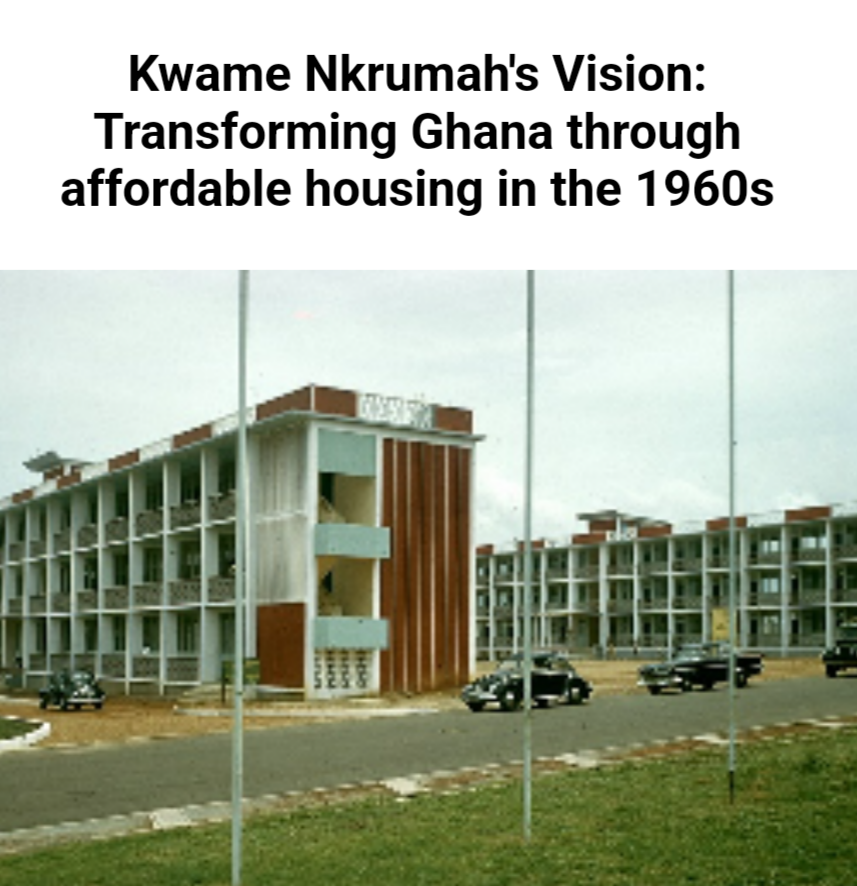
For instance, in Accra, we had Labone Estates, Kanda Estates, Osu Ringway Estates, Kaneshie Estates, and the Airport Residential Area. Kumasi also benefited with the development of Patase, Kwadaso, Buokrom, as well as North and South Suntreso. These projects were meticulously planned and executed by the State Housing Corporation of Ghana.
These examples highlight the ambition and capability of early leadership in driving progress without the constraints of intentional ignorance.

Nana Aba Anamoah: That’s an impressive legacy of urban development. How do you think these historical achievements compare with the current state of housing and urban planning in Ghana?

Tsasi: These achievements highlight a proactive approach to urban planning and housing, addressing the needs of workers and their families while fostering national development. Comparing this to the current state, there are significant lessons to be learned:
- Sustainability of Urban Planning: The comprehensive planning of Nkrumah’s era set a high standard. Modern efforts should aim to replicate such thorough planning, ensuring that housing projects meet both present and future needs.
- Affordable Housing Initiatives: The establishment of affordable housing across various regions was pivotal. Today’s leaders should prioritize similar initiatives to address current housing shortages and provide quality, affordable options for all citizens.
- Replication and Expansion: The successful replication of estate models across different regions demonstrated scalability. This approach should be considered for new developments to ensure that successful models are not confined to a single area.
- Government Involvement: The role of the State Housing Corporation in managing these projects underscores the importance of a dedicated body for housing development. Strengthening such institutions today could enhance the effectiveness and reach of housing initiatives.
By reflecting on these accomplishments, we can draw valuable insights for tackling contemporary challenges in housing and urban development, striving to achieve similar successes with the current and future leadership.
Nana Aba Anamoah: Those are notable achievements indeed. What are your thoughts on how these historical examples can inform current leadership and development strategies?
Tsasi: They illustrate that visionary leadership can have a profound and lasting impact. To emulate such successes today, our current and future leaders should:
- Prioritize Visionary Projects: Invest in transformative projects that address long-term needs and foster national growth, rather than focusing on short-term gains.
- Build Partnerships: Form strategic partnerships both domestically and internationally to leverage expertise and resources, as seen with the Ghana Airways venture.
- Ensure Sustainable Development: Implement infrastructure projects and policies that are sustainable and adaptable to future needs, avoiding the pitfalls of neglect and short-sightedness.
- Promote Accountability: Cultivate a culture of accountability and transparency to prevent the erosion of progress through mismanagement or corruption.
By learning from past successes and avoiding the mistakes that led to current challenges, Ghana can build on its legacy of innovation and development.
Living in the Shell of Ignorance

Nana Aba Anamoah: Tsasi, your insights on Kwame Nkrumah’s developments are quite revealing. They underscore a period of visionary leadership that profoundly impacted Ghana’s urban and infrastructural landscape. As we reflect on these achievements, it becomes clear that the contrast with today’s challenges calls for a critical examination of our current leaders and their approach to governance.
Tsasi: Exactly. By studying Kwame Nkrumah’s thinking and understanding the successes of his past leadership and acknowledging the current shortcomings, we can better advocate for a government that truly addresses the realities of life.
Nana Aba Anamoah: Indeed. In closing, the narrative of “Living in the Shell of Ignorance” encapsulates a pressing issue: the intentional internalization of ignorant ideology by some leaders, which perpetuates misery and poverty. It is crucial to demand a government that not only acknowledges these realities but actively works towards effective resolutions. Only through such rigorous engagement and accountability can we hope to break free from this shell and foster a future of equitable development and prosperity.
Thank you, Tsasi, for this thought-provoking discussion. Your perspective adds valuable depth to our understanding of these issues.
Tsasi: Thank you, Nana Aba. It’s been a pleasure discussing these important topics with you.