




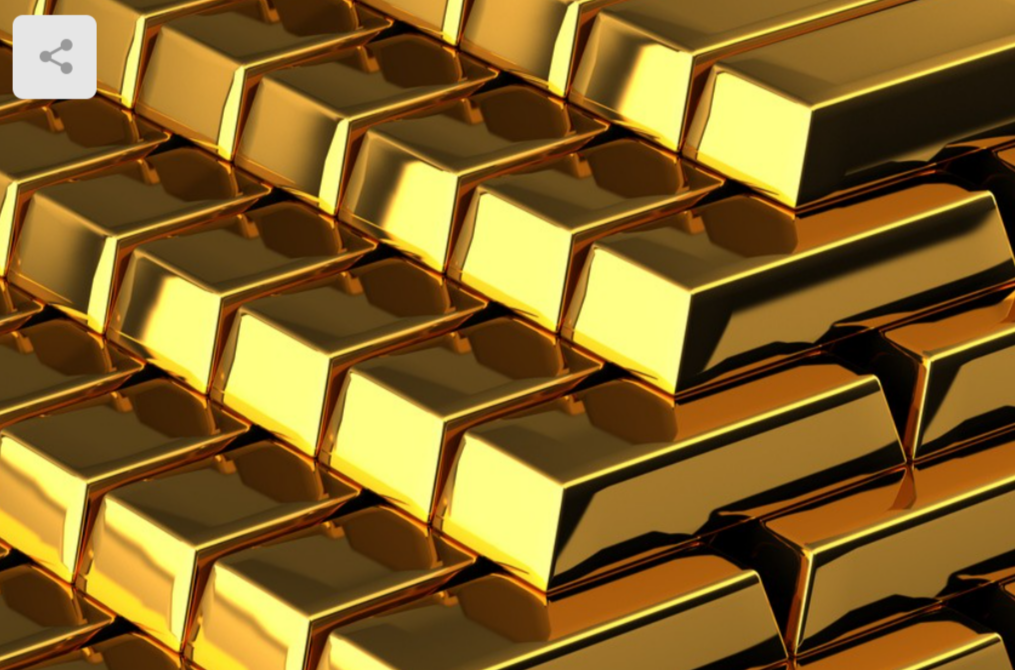
With world commodity prices soaring, gold remains the largest source of funding for the militias in the Congo.
The sentry, an investigative hub that tracks dirty money in African conflicts, said that staggering quantities of gold from conflict-affected Sudan, South Sudan, the Central African Republic (CAR) and the Democratic Republic of Congo (DRC) are being smuggled into neighbouring countries for re-export in order to enrich armed groups responsible for mass atrocities.
Only when love is directed towards all Africans and based on respect for the dignity of life can we manifest good thought.
To help Ghana find it way to economic stability, Ghana’s President Nana Akufo-Addo has decided to flip the switch on the capitalist price cap on its oil, by only accepting Gold for all state transactions. Ghana will see the price of Gold skyrocketing.

President Nana Akufo-Addo’s decision to link gold for oil could bring Gold back as a settlement medium?
I will describe it as: “The end of the Bretton Woods System (1972–81). The Bretton Woods system is a set of unified rules and policies that provided the framework necessary to create fixed international currency exchange rates.
Essentially, the agreement called for the newly created IMF to determine the fixed rate of exchange for currencies around the world.
The system dissolved between 1968 and 1973. In August 1971, U.S. President Richard Nixon announced the “temporary” suspension of the dollar’s convertibility into gold. While the dollar had struggled throughout most of the 1960s within the parity established at Bretton Woods, this crisis marked the breakdown of the system. An attempt to revive the fixed exchange rates failed, and by March 1973 the major currencies began to float against each other.
Since the collapse of the Bretton Woods system, IMF members have been free to choose any form of exchange arrangement they wish (except pegging their currency to gold): allowing the currency to float freely, pegging it to another currency or a basket of currencies, adopting the currency of another country, participating in a currency bloc, or forming part of a monetary union.

The Bottom line is, while gold has fascinated humankind for 5,000 years, it hasn’t always been the basis of the monetary system. A true international gold standard existed for less than 50 years from 1871 to 1914.
Though a lesser form of the gold standard continued until 1971, its death had started centuries before with the introduction of paper money, a more flexible instrument for our complex financial world.
Today, the price of gold is determined by the demand for the metal, and although it is no longer used as a standard, it still serves an important function. Gold is a major financial asset for countries and central banks. It is also used by the banks as a way to hedge against loans made to their government and as an indicator of economic health.
UNDER A FREE-MARKET SYSTEM, GOLD SHOULD BE VIEWED AS A CURRENCY LIKE THE EURO, YEN, or U.S. DOLLAR.
Under a free-market system, gold should be viewed as a currency like the euro, yen, or U.S. dollar. Gold has a long-standing relationship with the U.S. dollar, and, over the long term, gold will generally have an inverse relationship. With instability in the market, it is common to hear talk of creating another gold standard, but it is not a flawless system.
Viewing gold as a currency and trading it as such can mitigate risks compared with paper currency and the economy, but there must be an awareness that gold is forward-looking. If one waits until disaster strikes, it may not provide an advantage if it has already moved to a price that reflects a slumping economy.

A path of value creation in an age of crisis requires well-tempered self discipline. I agree more with the points you have just made.
The idea of the capitalist price cap on oil was just a business and it allowed in many parts of the world to practise it and it has provided poverty and miserable life in Africa and many parts of the world.
“Commitment” is another name for Ghana’s president Nana Akufo-Addo, with his original idea setting Ghana on a cause that is designed to lead Ghana to become Africa’s leader as Nkrumah planned to set Ghana out of poverty and set the standard to which Ghana will lead Africa in technology and industrialization.
Now what is important is, the NDC should also stay on the same plan to enable Ghana to get to the same destination with the NPP.

President Nana Akufo-Addo has a very complete strategy to get Ghana to become Africa’s leader which includes: Economic investment, supporting investment in education systems that invest in technology.
The growing strength of these ideas is deeply indebted to the thinking of Kwame Nkrumah and the Ghanaians as well.
You are right. And those ideas are all related to the next generation of Ghanians, who also have the right to depend on the government.

You have made this point very well and explained the strength of president Nana Akufo Addo in a clear way.
( Safeguard Against NDC )
In Ghana, like many countries where administration controls extend into an increasing number of social areas, there must be a concern about the danger of NDC.
Though NDC is fundamentally the father of democracy in Ghana, indeed it wears a mask of democracy, we must be watchful.
Historically it is a party with the founder who arose without announcing itself.
The National Democratic Congress (NDC) is a social democratic political party in Ghana, founded by Jerry Rawlings, who was Head of State of Ghana from 1981 to 1993 and the President of Ghana from 1993 to 2001.
Following the formation of the Provisional National Defence Council (PNDC), which ruled Ghana following the military coup d’état on 31 December 1981, there was pressure from the international community to restore democracy.
The NDC was formed as the ruling party ahead of elections in 1992, in which Rawlings was elected president, and in 1996 Rawlings was re-elected as the NDC candidate. Rawlings’ second term ended in 2001.
So modern history proves that the true nature of NDC is never apparent from the outset; therefore, it is essential to spy out its traits before it has the chance.
The voice of Ghanians is and will increasingly be a strong voice in Africa. This is the mandate received from citizens and that we intend to carry forward over the next 50 years