



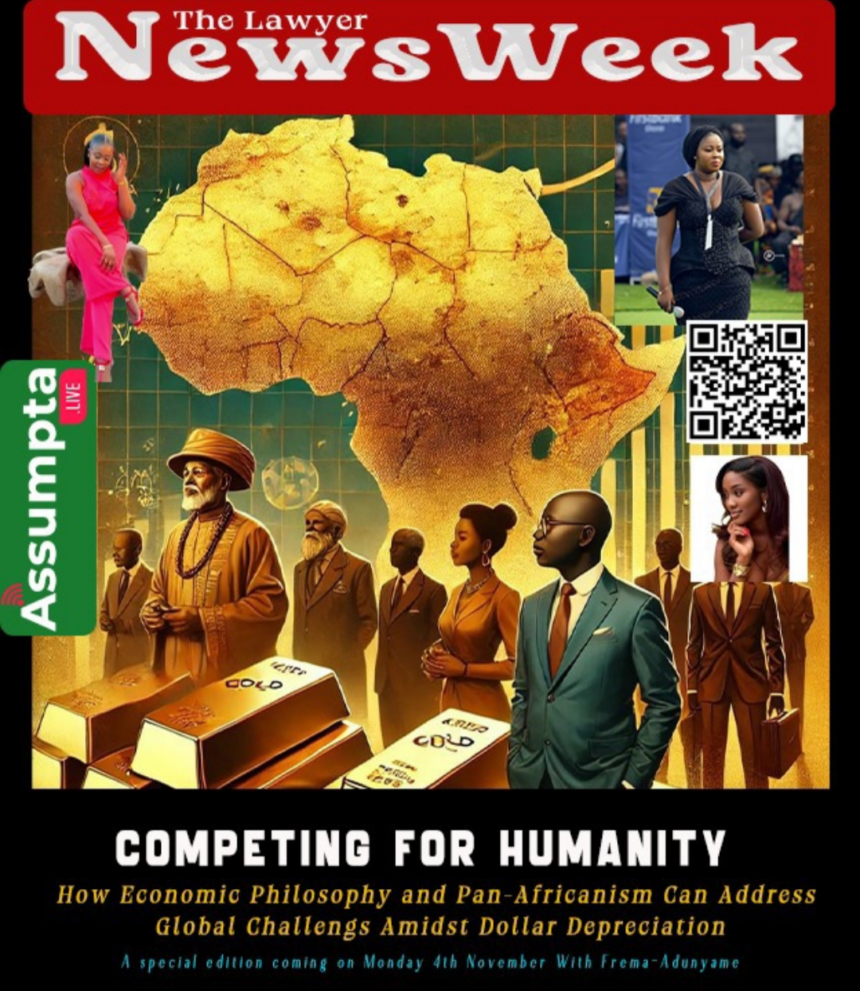
Assumpta Weekly Magazine Presents
Special Edition: Newsweek – “The Lawyer”
Join Asssumpta-Gahutu, CEO of Assumpta Publications and Principal of Babies and Toddlers, and Frema Adumyame, one of Ghana’s premier broadcast journalists, for an exclusive feature article:
Article Title : “Competing for Humanity”
This in-depth piece explores how economic philosophy and pan-Africanism can transformative respond to today’s global crises, especially the dollar depreciation affecting economies worldwide. It also explains how African-led perspectives can drive solutions for shared, sustainable progress.
Special Feature: Journalism of Neglected Topics
Premiering Monday, November 4th, 2024 /Catch it online at assumptagh.live / African Stream: International News Highlights

https://www.instagram.com/hairsenta?igsh=MXAzOThhNGZ0Nm15dQ==
Transform Your Look with Hair Senta’s Premium Human Hair Extensions!
Looking to add volume, length, or a splash of color? Hair Senta specializes in top-quality, 100% human hair extensions that blend seamlessly for a natural, stunning look. Perfect for anyone who wants to elevate their style, our extensions are hand-selected and professionally applied by our expert stylists for flawless results.
Why Choose Hair Senta Extensions?
100% Human Hair: Our extensions are made from high-quality, ethically sourced human hair, ensuring a natural look and feel.
Custom Blending: We match the color, length, and texture to your natural hair, giving you the perfect fit every time.
Multiple Styles: Choose from clip-ins, tape-ins, wefts, fusion, and more to suit your lifestyle and desired look.
Long-Lasting Quality: With proper care, our extensions are durable and retain their beauty for months.
Our Extension Services:
Volume Boost: Add body and fullness to fine or thinning hair.
Length & Layers: Get the long, flowing hair you’ve always wanted, styled to perfection.
Pops of Color: Experiment with highlights, lowlights, or ombre without any chemical processing.
Special Occasion Styles: Extensions for weddings, events, or everyday glam – your options are endless.
Limited Time Offer : Special Deal: 15% off your first extension application!
Let us help you achieve the hair of your dreams. Visit Hair Senta today for a consultation, and see why so many choose us for gorgeous, natural-looking extensions.
Call Us at (+233) 0544354455/0248629769/visit www.hairsenta.com/ ) to Book Your Appointment! ]



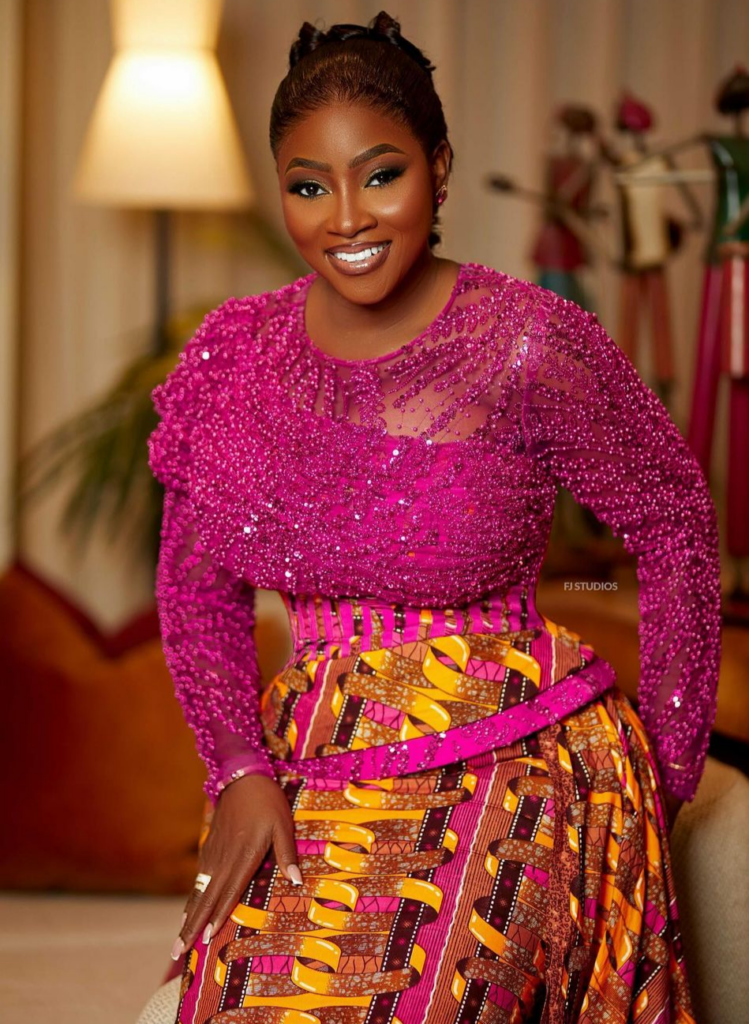
Experience Elegance with Lauren Houte Couture
Step into a world of timeless elegance and luxury fashion with Lauren Houte Couture – where sophistication meets modern style. Each piece is meticulously crafted with the highest quality materials, celebrating the beauty and individuality of every woman. From custom gowns to exquisite ready-to-wear collections, Lauren Houte Couture is your destination for unforgettable style.
Why Choose Lauren HouteCouture?
Custom-Made Perfection: Our pieces are designed with precision and tailored to fit you flawlessly, so you feel confident and radiant.
Luxury Fabrics & Details: Only the finest materials and embellishments are used, adding an element of timeless beauty to every piece.
Exclusive Designs: We bring unique, couture designs that you won’t find anywhere else, ensuring you stand out on every occasion.
Personalized Service: Our team is dedicated to providing an exceptional experience, helping you find or create the look that truly reflects you.
Discover Our Collections:
Bridal Couture: Dream gowns for your special day, designed to capture hearts and memories.
Evening & Event Wear: Stunning dresses that make a statement, perfect for galas, celebrations, and unforgettable nights out.
Ready-to-Wear Collection: Elegant, sophisticated designs for every day or any occasion.
Limited-Time Offer
Exclusive Offer: Book a consultation today and enjoy a special introductory discount on custom orders!
Indulge in the luxury of bespoke fashion. Visit Lauren Houte Couture to discover the beauty of finely crafted couture and experience fashion that celebrates you.
[Schedule Your Appointment or Shop Online at (@laurenhautecouture.


Frema-Adunyame
Now, let’s explore the critical conversations in our latest issue, focusing on the challenges and opportunities amidst a shifting global economic landscape. Discover why economic philosophy and pan-Africanism are vital in addressing global challenges as currencies fluctuate and get a fresh perspective on Global Challenges Amidst Dollar Depreciation..Don’t miss this essential read!
Introduction:
As the world faces mounting economic challenges—from inflation and currency volatility to widening wealth gaps—the question arises: who is leading the charge to reshape our global systems for the betterment of all? In this special feature, we explore how Economic Philosophy and Pan-Africanism are more than just ideas; they’re practical tools for resilience and renewal, especially in the wake of dollar depreciation impacting markets and lives worldwide.
Guided by the insights of visionary leaders like Assumpta-Gahutu, principal of Babies and Toddlers and CEO of Assumpta Publications, we delve into how Africa, with its rich history and deep-rooted philosophies, is uniquely positioned to offer transformative responses to today’s pressing issues. Through a Pan-African lens, we examine how Africa’s values of solidarity, self-reliance, and unity can inspire a new path forward—one that doesn’t merely compete in the global arena, but redefines what it means to uplift humanity as a whole.
As nations across the world grapple with economic instability and social unrest, could a Pan-African approach provide a sustainable framework to tackle these urgent challenges? The answer may lie in Africa’s enduring philosophies and economic vision for a just and interconnected world.
Overview:
In every corner of the world, conflict remains constant—nations struggle not only with one another but also face internal clashes between classes, cultures, and economic interests. Developed nations have historically sought to dominate less-developed countries while emerging nations have fought to protect themselves from the economic influence of global superpowers. Where once countries built monetary strength to enhance economic dominance, today this strength has become a foundation for economic warfare, with nations wielding their currency power both as a shield and as a strategic tool in international competition.
In the past, monetary influence was largely sustained by oil-backed currencies, particularly the dollar, which has long been central to global trade and economic leverage. Yet today, amidst rising inflation, currency volatility, and deepening economic inequality, this system is increasingly vulnerable. As global economies feel the strain, a pressing question arises: who will lead the necessary transformation to create a fairer and more resilient global economy?
In this special feature, we examine how Economic Philosophy and Pan-Africanism could serve as resilient and transformative frameworks, offering Africa’s unique perspectives on solidarity and self-reliance as solutions to current global issues. As the dollar weakens, Africa’s philosophical heritage presents a powerful alternative vision for building a balanced economic future.
Central to this discussion is a critical question: can the Pan-African vision guide nations toward individual and social progress through cooperative and moral influence, rather than replicating a single oil-backed currency model that imposes its dominance worldwide? Or perhaps a Pan-African approach can offer a sustainable path forward to address these challenges, crafting a more just and interconnected world. The answers may lie within Africa’s enduring philosophies and economic vision for a new, equitable global landscape.
Title: “Competing for Humanity”
Content: How Economic Philosophy of Pan-Africanism Can Address Global Challenges Amidst Dollar Depreciation
[Scene: A bright and professional studio setting. Frema Adunyame, an accomplished journalist and broadcaster, sits across from Miss Asssumpta-Gahutu, CEO of Assumpta Publications and Principal of Babies and Toddlers, both prepared for an in-depth conversation.]


Frema Adunyame: Asssumpta-Gahutu
Good afternoon, Miss Assumpta-Gahutu. It’s a pleasure to have you here. Thank you for joining us for this discussion. As the CEO of Assumpta Publications and the Principal of Babies and Toddlers, you bring a unique perspective to today’s conversation on economic philosophy and Pan-Africanism. I’m excited to explore how these ideas intersect with the global economic challenges we’re facing.

Miss Asssumpta-Gahutu:
Good afternoon, Frema. Thank you so much for having me. It’s an honour to be here and to discuss topics that have such relevance today, especially as we look at how the world is shifting in terms of economic power and resilience. I’m truly passionate about Pan-Africanism and the role it can play in creating a more balanced and humane global economy.

Frema Adunyame:
Thank you, Assumpta. Let’s dive right in. The title of our feature, “Competing for Humanity,” suggests a shift in perspective—from competition purely for dominance to competition that also considers human welfare. As you know, in every corner of the world, there’s conflict and tension between nations, classes, and cultures. Historically, powerful nations have often sought to control or influence less-developed ones. But we’re seeing a growing recognition of Pan-Africanism as a necessary and reasonable economic philosophy for achieving both individual and social goals. Why do you think this shift is happening now?

Miss Asssumpta-Gahutu:
That’s a great question, Frema. I think the world is starting to understand that the traditional, dominance-based models aren’t working for everyone. With inflation, currency volatility, and widening wealth gaps, more countries—especially those that have experienced the effects of economic exploitation—are turning to philosophies like Pan-Africanism that emphasise solidarity and self-reliance. Pan-Africanism isn’t just about Africa; it’s about recognizing that we are interconnected and that economic power should uplift humanity, not just serve the interests of a few.

Frema Adunyame:
And that’s an inspiring vision, one that seems to move beyond the competitive, oil-backed dollar model that has defined the global economy for so long. Can you talk about how Pan-Africanism changes the way nations approach economic resilience?
Miss Asssumpta-Gahutu:
Certainly, Frema. Pan-Africanism offers a shift from dependency to empowerment. Instead of relying on external systems like the dollar—whose strength is backed by oil and can be vulnerable to fluctuations—Pan-Africanism encourages countries to strengthen their regional economies, building resilience from within. This approach values local resources, regional alliances, and sustainable trade. It’s about economic self-sufficiency, but it also supports a moral, humanitarian framework where economic progress is shared among nations, not dominated by one currency or one power.
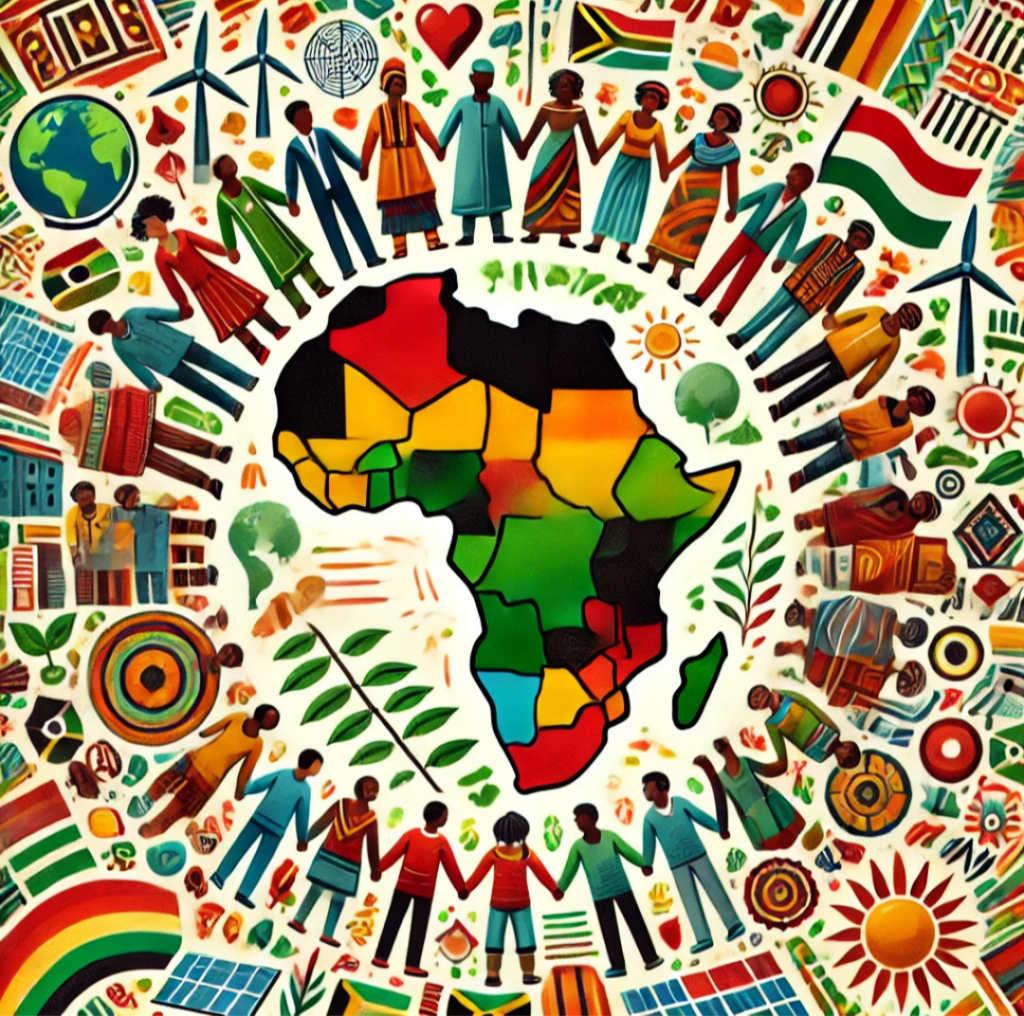
illustration symbolizing Pan-Africanism, depicting unity and empowerment among diverse African peoples. The image captures the essence of collaboration and strength in diversity.

Frema Adunyame:
Miss Assumpta-Gahutu, could you elaborate on this idea: “Pan-Africanism offers a shift from dependency to empowerment. Instead of relying on external systems like the dollar—whose strength is backed by oil and can be vulnerable to fluctuations—Pan-Africanism encourages countries to strengthen their regional economies, building resilience from within. This approach values local resources, regional alliances, and sustainable trade. It’s about economic self-sufficiency, but it also supports a moral, humanitarian framework where economic progress is shared among nations, not dominated by one currency or one power.”

Miss Asssumpta Gahutu
“Pan-Africanism provides a transformative shift from dependency on external powers to genuine economic empowerment and self-reliance. In a world where many economies remain tied to the dollar—a currency that derives much of its strength from oil and is susceptible to global market fluctuations—Pan-Africanism urges African nations to redirect their focus inward.
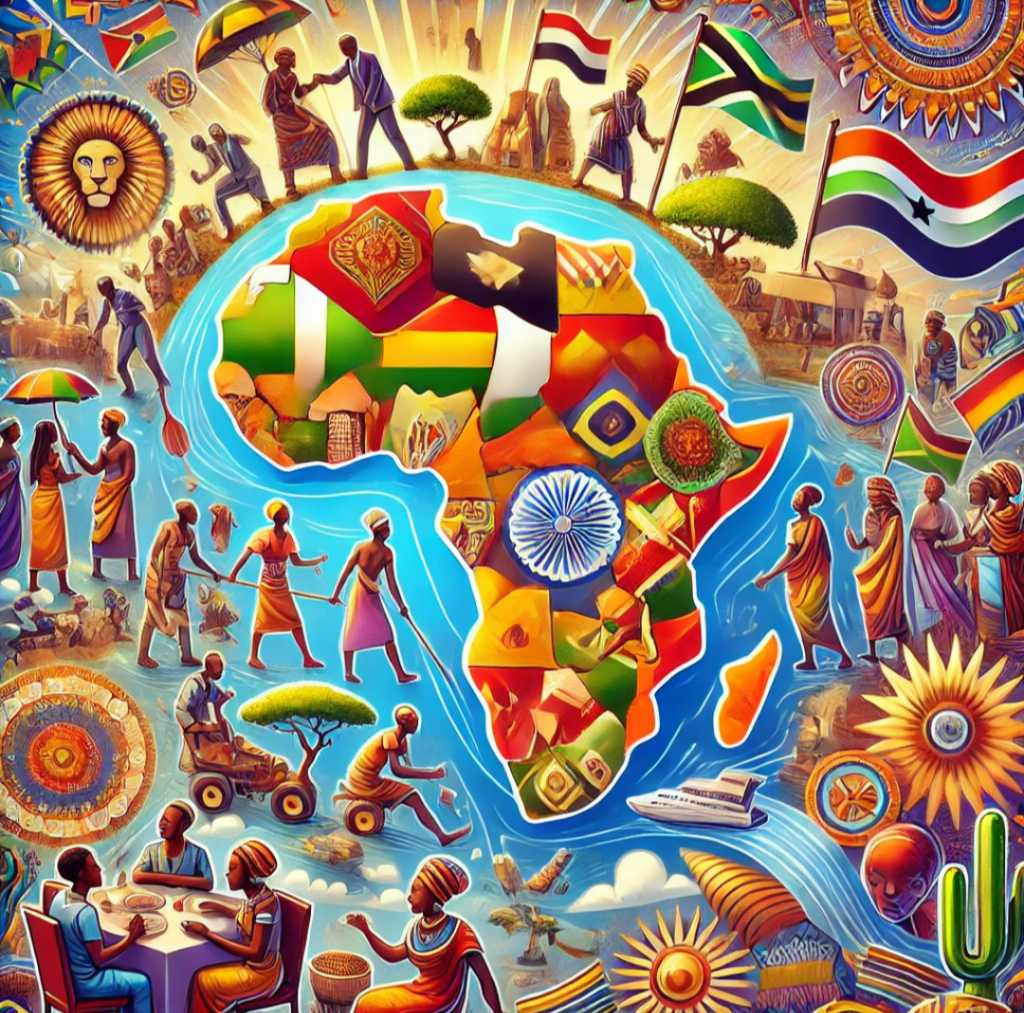
The illustration representing Pan-Africanism, capturing themes of empowerment, self-reliance, and cultural pride. The vibrant colors and symbols reflect the spirit of unity and cooperation among African nations and peoples.
By fostering local industries, cultivating natural resources, and forming strong regional partnerships, Pan-Africanism promotes the development of robust, interconnected economies that are resilient to external pressures. This approach prioritizes sustainable trade and mutual support among African nations, creating an economic system where each country can thrive without relying heavily on foreign currencies or interests.
Rather than seeking economic dominance, Pan-Africanism emphasises economic self-sufficiency in a way that is also morally rooted. It envisions an economic framework where growth is shared equitably among nations, promoting mutual prosperity and resilience. This model challenges the traditional structure where a single currency or a single power holds disproportionate influence over global trade. Instead, it supports a more balanced, humanitarian approach to economic progress, one that respects the unique resources and capacities of each nation and fosters regional stability and development. This vision for economic empowerment not only builds individual nation-states but also encourages a cooperative, interconnected African economy that is better equipped to withstand global economic shifts.”
Frema Adunyame:
It seems unrealistic to me why America has never applied such an approach to the countries around its borders.
Miss Asssumpta-Gahutu:
That’s a great point, Frema. It does raise the question of why a powerful nation like the United States hasn’t chosen to support a model of mutual empowerment with its neighbouring countries. Historically, America has pursued policies that prioritise its economic dominance and security. This approach often involves maintaining control over trade agreements and economic policies with its neighbours, aiming to protect the strength of the dollar and secure its interests in the global economy.
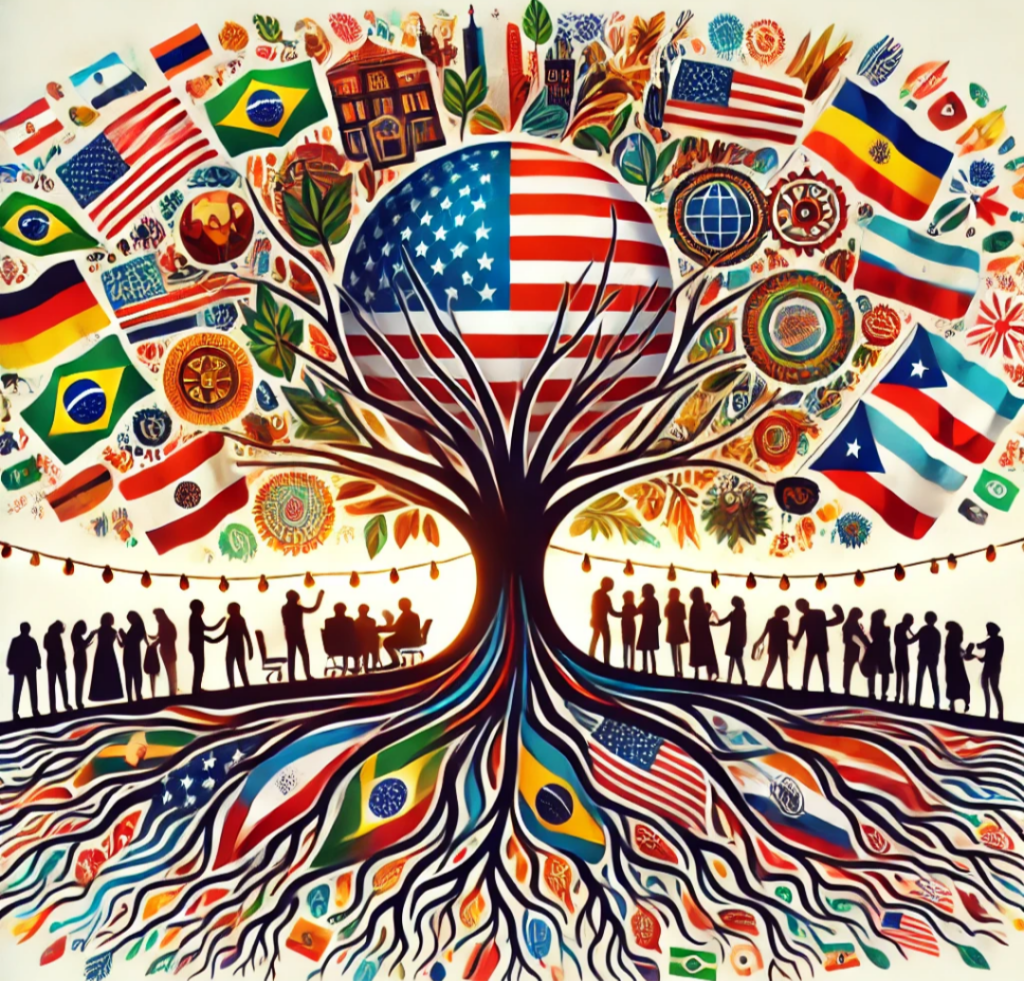
illustration representing mutual empowerment between the United States and its neighboring countries, focusing on Latin America. The image captures the themes of unity and collaboration across borders.
The U.S. has generally relied on a model of influence that doesn’t encourage economic self-sufficiency in nearby nations to the same extent that a Pan-Africanist approach would. Instead, the focus has often been on creating economic dependency—on the dollar, on American markets, or certain American policies. This can make other economies in the region more vulnerable to American economic shifts rather than resilient on their terms.

Frema Adunyame:
That’s interesting, Assumpta. It sounds as if by prioritising control over cooperation, America has avoided empowering neighbouring countries too much, perhaps out of fear that a more balanced regional economy could challenge its influence.

Miss Assumpta-Gahutu:
Exactly, Frema. If neighbouring countries developed strong, independent economies, it could reduce America’s leverage. This model contrasts sharply with Pan-Africanism, which seeks to build a cooperative system where all countries in a region can thrive together. Pan-Africanism encourages regional strength and resilience, creating a more balanced and stable economic environment. Instead of competing to hold power over others, it’s about lifting everyone.
So, while America’s approach has fostered economic dependency, Pan-Africanism seeks to foster economic interdependence and mutual growth. That’s what makes it unique and, in my view, a true humanitarian philosophy that prioritises the well-being of the entire region, not just a single powerful player.

Frema Adunyame:
It sounds like Pan-Africanism offers an alternative model that could inspire any region experiencing the pressures of a single currency dependency. But realistically, do you believe Pan-African economic philosophy can influence global systems that are so rooted in dollar dependency?

Miss Assumpta-Gahutu:
I believe it can, Frema. The dollar’s influence is strong, but recent global economic shifts show its vulnerabilities. With rising inflation and economic inequality, people are questioning whether the current system truly serves their interests. The Pan-African model doesn’t rely on competition for control; it promotes equitable growth, shared resources, and sustainable economic practices. It’s not just about Africa; it offers a blueprint for any nation or region that wants to build a resilient, cooperative economy.
Frema Adunyame:
Assumpta, I love the idea of a model based on equity and cooperation rather than control. In this sense, would you say that Pan-Africanism is more than an economic philosophy—that it’s also a humanitarian vision?
Miss Assumpta-Gahutu:
Yes, exactly. Pan-Africanism is a philosophy that values the potential of every individual and every nation. It’s about moral influence rather than economic force, about inspiring countries to grow in ways that uplift all of society. Pan-Africanism encourages nations to find their strengths and to work together, not to dominate but to empower. It’s a vision that’s inherently humanitarian, aiming for a world where economic and social goals are aligned, not in conflict.
Frema Adunyame:
That’s a powerful message. So, with the global economy under strain, the question becomes, can Pan-Africanism be the framework that leads us toward a more humane, interconnected world? How do you see this philosophy addressing the urgent challenges of today—like inflation, inequality, and social unrest?

Miss Assumpta-Gahutu:
I truly believe it can, Frema. Today’s challenges require more than just short-term fixes. They call for a system that’s adaptable, sustainable, and just. Pan-Africanism’s emphasis on unity, moral influence, and resilience offers that system. By shifting from a model that’s purely competitive to one that’s cooperative and humanitarian, we’re redefining what it means to succeed in a global economy. Pan-Africanism doesn’t just adapt to challenges; it reimagines them as opportunities for shared progress. And in that lies the potential for a truly interconnected and humane global landscape.

Frema Adunyame:
Assumpta, thank you for this inspiring conversation. Your insights on Pan-Africanism remind us that economic philosophy can indeed reflect humanitarian values and lead to meaningful, positive change. I hope our readers will be inspired to think about how these principles can contribute to a fairer, more resilient world.

Miss Assumpta-Gahutu:
Thank you, Frema. It’s been a pleasure. I’m hopeful that by having these discussions, we’re helping to shape a vision of an economy that values humanity as much as it values growth.