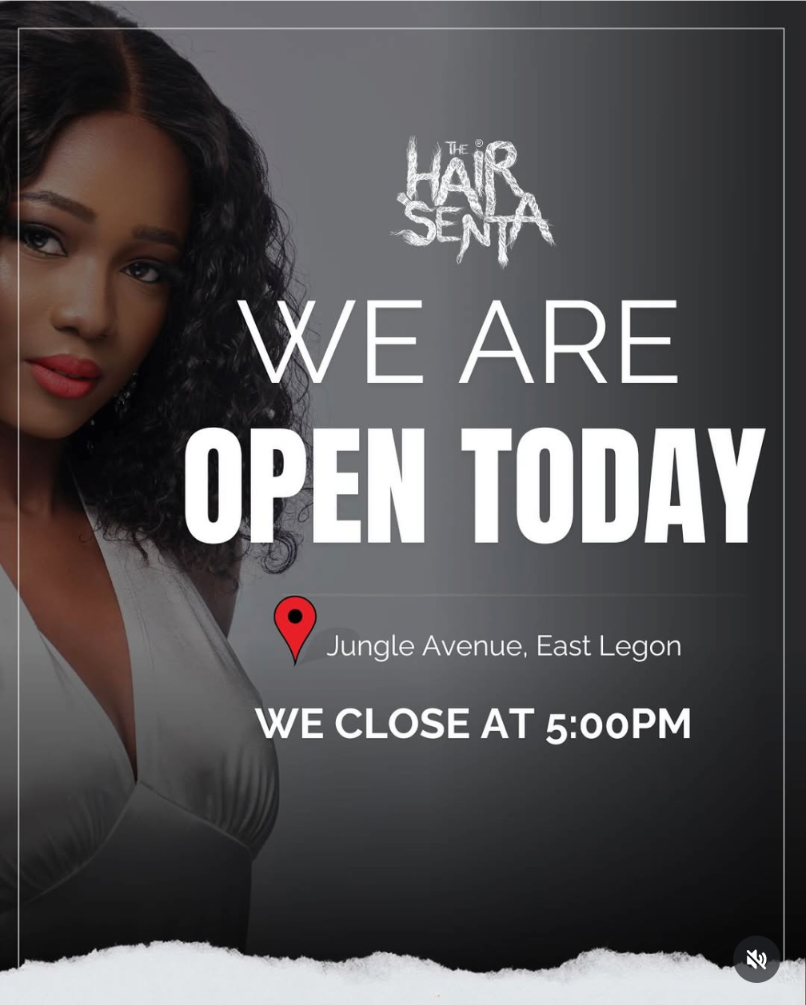
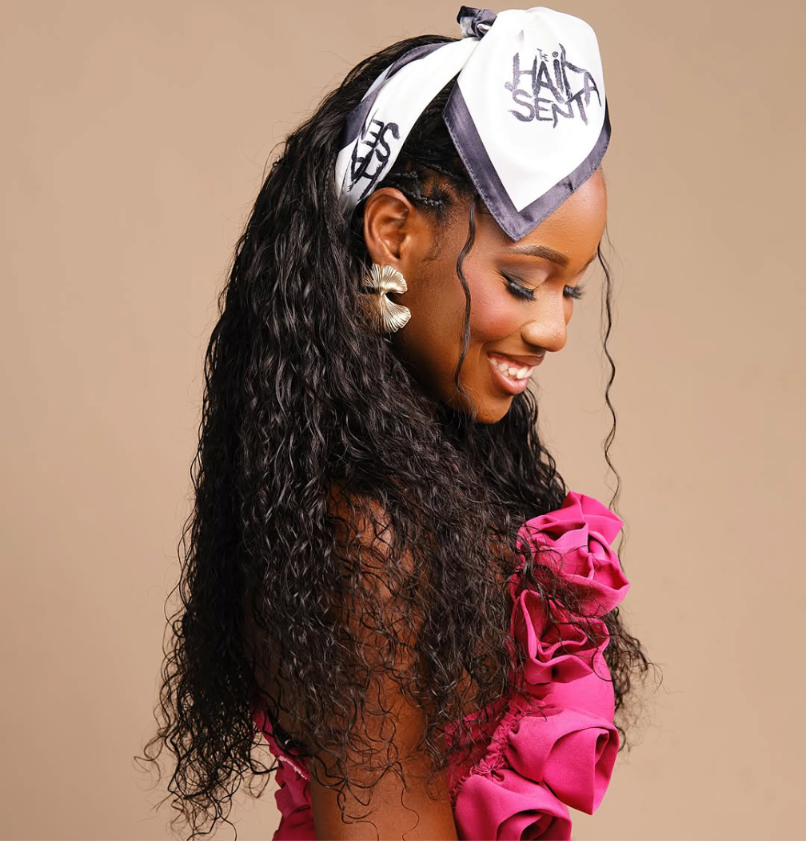
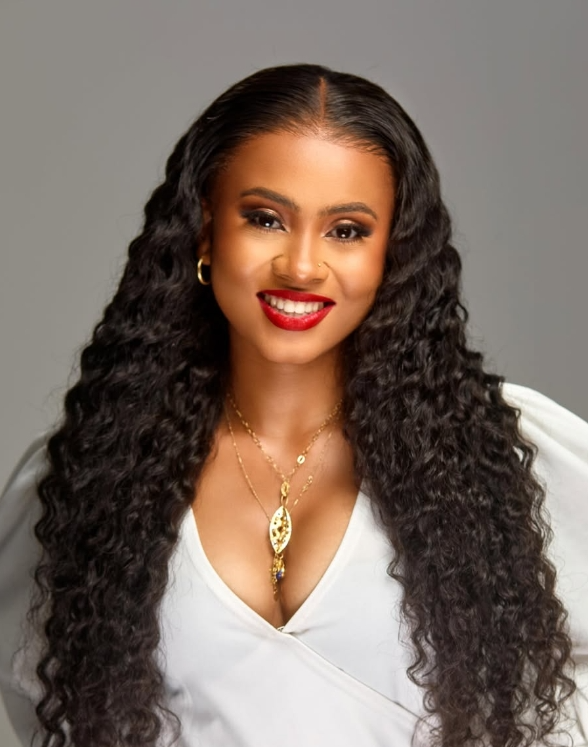
Get the “Hair Senta” glow! 🇬🇭 Shipping the world’s best Human Hair Extensions from Accra to your doorstep. It’s not just a purchase; it’s an experience in luxury and a boost in self-belief.
A continent rich in resources and ambition remains constrained by the absence of a coherent, unified economic vision.
🌍 Featured Global Voices & Insights
⭐ Akosua Owusuwaa
Entrepreneur, Value Theory Advocate & Founder, Hair Senta
Akosua Owusuwaa stands at the forefront of dignity-based economics—a modern framework that asserts human worth, not statistics, as the true foundation of sustainable development. Through her work, she redefines economic success as a measure of human upliftment rather than abstract growth indicators.
Her philosophy is grounded in three core pillars:
Agency: Empowering individuals to own their economic choices.
Dignity: Building business models that respect human worth.
Shared Prosperity: Ensuring growth benefits the collective, not just the elite.
She challenges traditional development models, urging leaders to rethink systems that prioritize cold metrics over actual people.
💬 “Success that harms others is not value — it is anti-value.”
⭐ Dzigbordi Kwaku-Dosoo
Global Leadership Architect & Human Skills Visionary
Dzigbordi Kwaku-Dosoo is an internationally recognized entrepreneur, executive coach, and media personality whose work focuses on human transformation in a technology-driven world.
Through DCG Consulting Group and Allure Africa, alongside a career that includes foundational experience on Wall Street, she has cultivated leadership models centered on:
Emotional mastery as a prerequisite for institutional leadership.
Confidence and self-awareness to drive authentic governance.
Human-centered performance metrics that value sustainable effort.
Her philosophy emphasizes that in an age of rapid automation, human capability and soft power become the ultimate, decisive advantages.
💬 “The future will not belong to those with the best tools, but those with the strongest humanity.”
⭐ Frema Adunyame
Media Leader, Journalist & Valedictorian
Frema Adunyame is a distinguished Ghanaian broadcaster and Head of Events & Partnerships at Citi FM/TV and Channel One TV. Her career spans prime-time journalism, editorial leadership, and cultural programming, making her a prominent voice in shaping modern media narratives.
Her recent recognition as valedictorian at the University of Ghana underscores her deep commitment to excellence, communication, and nation-building. She represents a new generation of media leadership that bridges information and structural transformation.
💬 “Great leadership sparks not just hope, but a generational shift in vision and values.”
⭐ Giorgia Meloni
Global Leadership Strategist & Advocate for Institutional Stability
Giorgia Meloni is a prominent political leader whose policy approach reflects a growing global focus on strategic engagement with Africa, particularly through initiatives such as the Mattei Plan.
Her broader framework emphasizes three pillars of engagement:
🔹 Societal Stability: Exploring how nations preserve internal social cohesion amid profound economic and technological disruption.
🔹 Institutional Strategy: Advancing international policies that explicitly link external economic development with long-term structural resilience.
🔹 Human-Centered Policy: Promoting governance models that anchor raw economic growth within broader social stability.
Her engagement reflects a larger global trend: external actors are increasingly developing structured, long-term, and highly coordinated approaches to Africa’s development trajectory.
Editorial Theme Reflection
This edition examines a central paradox shaping the continent:
Africa is not short of external interest, investment, or strategic attention. What remains insufficient is internal coherence.
From global partnerships to continental ambitions, the critical question persists:
Is Africa defining its own future—or adapting to frameworks designed elsewhere?
📖 Inside This Issue
The Legacy of Extraction: Its modern economic implications and persistence.
Nkrumah’s Enduring Question: Revisiting what the African economy is actually for.
External Strategies vs. Internal Vision: Analyzing foreign policies like the Mattei Plan.
A Roadmap for Renewal: Practical steps toward genuine Pan-African sovereignty.
Africa’s Institutional Crisis: A Failure of Vision, Not Potential
African institutions are facing a fundamental crisis—not because the continent lacks resources or technical expertise, but because it has failed to build and sustain institutions guided by a coherent Pan-African political vision.
At the heart of this crisis lies a contradiction. African leaders often proclaim “African solutions to African problems,” yet policy choices and development strategies continue to rely heavily on external actors—from Europe to the Gulf. This dependence reflects not just an economic gap, but an ideological vacuum: the absence of a shared continental vision capable of driving self-reliant development.
The Food Paradox: Abundance Without Security
Nowhere is this contradiction clearer than in agriculture.
Africa possesses roughly 60% of the world’s uncultivated arable land [1], yet remains heavily dependent on food imports. In recent years, the continent has imported between $50 billion and nearly $100 billion worth of food annually [2][3]. At the same time, experts estimate that transforming Africa’s agrifood systems requires roughly $70–77 billion in annual investment [4].
This paradox reflects deep structural problems:
Colonial Legacies: Agricultural systems are still shaped by colonial export models rather than domestic food security.
Infrastructure Deficits: Chronic underinvestment in infrastructure, irrigation, and storage persists [2].
Value Chain Gaps: Low productivity and weak value chains hamper growth.
Market Fragmentation: Fragmented regional markets lead to limited intra-African trade.
Institutional Trust: Fewer than half of Africans trust key state institutions such as parliaments, courts, and presidents [6].
Downward Trend: Trust has steadily declined across all major institutions since 2011 [6].
Sentiment & Perception Metrics
Percentage
Source
Dissatisfied with democracy in practice
60%
[7]
Perceive political leaders as corrupt
40%
[8]
Believe military intervention can be justified when leaders abuse power
56%
[7]
This context helps explain why some young Africans appear to support military takeovers. It is not necessarily a rejection of democracy itself, but a rejection of a version of democracy that has failed to deliver inclusion, accountability, and opportunity.
A Crisis of Alignment
What emerges is not a single failure, but a system of disconnections:
Between political institutions and citizens
Between production and consumption systems
Between national economies and continental integration goals
Between democratic ideals and lived realities
This misalignment has created fertile ground for instability, populism, and anti-establishment movements.
Conclusion
Africa’s challenge is not primarily one of capacity, but of coherence. Without a unifying political vision rooted in Pan-African principles—self-reliance, accountability, and shared prosperity—technical solutions will continue to produce limited and uneven results.
Until African institutions are reimagined to reflect the aspirations and realities of their people, the continent will continue to oscillate between fragile democratic systems and disruptive political reactions.
The question Nkrumah asked decades ago still stands unanswered—and until it is answered decisively, Africa’s future will remain constrained by the unfinished business of its past.
This was not merely economic policy—it was political strategy. Industrialization, for Nkrumah, was the pathway to true sovereignty. But that vision was interrupted by internal challenges, external pressures, and ultimately his overthrow in 1966. In many African countries that followed, industrial strategies were abandoned, reversed, or inconsistently applied.
The consequences remain highly visible today.
A Continent Out of Alignment
Africa now faces a series of interconnected contradictions that fuel a deeper structural crisis:
Trade: The continent exports raw materials but imports finished goods.
Agriculture: It possesses vast arable land yet imports billions of dollars in food.
Geopolitics: It proclaims “African solutions” yet depends heavily on external actors.
Governance: It maintains formal democratic systems alongside declining public trust.
The Youth at the Center of the Crisis
This structural misalignment is most evident in the lives of young Africans. Africa is the youngest continent in the world, with a rapidly growing youth population expected to shape the global workforce in the coming decades [7]. Yet millions face severely restricted opportunities:
Youth Labor & Development Metrics
Current Estimates
Source
Average Youth Unemployment Rate (higher in specific nations)
9% – 11%
[8]
Not in Employment, Education, or Training (NEET)
22%
[9]
Employed Youth in Insecure, Low-Quality Jobs
72%
[9]
Behind these numbers lies a profound reality: an entire generation is growing up disconnected from the promises of independence. Just as in Nkrumah’s time, grave threats hang over the future—not in the form of formal colonial rule, but in economic exclusion, institutional mistrust, and political disillusionment.
From Disillusionment to Instability
When systems fail to deliver, people lose faith. Across parts of the continent, young citizens increasingly question whether current political and economic models can meet their aspirations.
In some cases, this frustration has translated into support for anti-establishment movements or even military interventions. This trend occurs not from a inherent desire for authoritarian rule, but from a profound dissatisfaction with systems that appear unresponsive, static, and unequal.
It is not a rejection of democracy itself. It is a rejection of a system that promises inclusion but delivers inequality.
Revisiting Nkrumah: A Vision for Renewal
If Africa is to move forward, it must return—not nostalgically, but strategically—to the core principles that Nkrumah articulated. His ideas offer practical, modern direction through five key structural shifts:
1. Build Economies for Transformation, Not Extraction
African economies must shift from exporting raw materials to adding value domestically.
Invest deeply in industrialization and agro-processing.
Develop integrated regional value chains.
Aggressively support local manufacturing and technology sectors.
The Essence:Produce what you consume, and export what you transform.
2. Deepen Pan-African Integration
Nkrumah envisioned a united Africa with a shared economic destiny. Today, initiatives such as the African Continental Free Trade Area (AfCFTA) and the Pan-African Payment and Settlement System (PAPSS) provide a modern pathway toward:
Trading in local currencies to reduce external currency dependency.
Lowering cross-border transaction costs.
Expanding intra-African trade networks.
3. Reclaim Economic Sovereignty
Nkrumah warned of neo-colonialism—where political independence coexists with economic dependence. To counter this, institutions must:
Reduce reliance on external financing models that distort local development priorities.
Strengthen domestic resource mobilization and tax administration.
Tighten the alignment of economic policy with continental interests over external ones.
4. Invest in Youth as the Foundation of Development
Intentionally create stable jobs within high-productivity sectors.
Modernize and align educational curricula with actual market needs.
Provide robust structural support for entrepreneurship and innovation.
5. Rebuild Trust Through Accountability
Finally, state institutions must regain domestic legitimacy:
Enforce rigorous transparency and anti-corruption measures.
Strengthen democratic accountability mechanisms.
Consistently deliver high-quality public services. Trust is built through performance.
Conclusion: An Unanswered Question
Kwame Nkrumah’s question still stands: What is the purpose of the African economy?
Until that question is answered clearly through policy, institutions, and execution, Africa will remain caught between immense potential and persistent underperformance.
The continent does not lack resources, talent, or ideas. What it has lacked is alignment—a coherent vision capable of transforming latent potential into shared reality. The future of the continent depends on whether its leaders can finally answer Nkrumah’s question, not in words, but in collective action.
Africa’s Unanswered Question: What Is the Economy For?
By Frema Adunyame
Kwame Nkrumah, Ghana’s first president and one of the foremost architects of African independence, posed a question that still hangs over the continent’s development trajectory: what is the purpose of the African economy?
For Nkrumah, the answer was clear. Economic systems, he argued, should serve citizens—advancing prosperity, enabling self-reliance and consolidating political sovereignty. Independence, in his view, would remain incomplete without economic transformation.
Yet, more than six decades later, much of Africa continues to operate within a framework that echoes the very structures independence sought to overturn.
A Legacy of Extraction
Colonial economies in Africa were designed primarily for extraction. Production systems were structured to export raw materials—agricultural commodities and minerals—to global markets, while relying on imports for finished goods.
Infrastructure reinforced this pattern, linking resource-rich hinterlands to coastal ports rather than integrating domestic or regional markets.
The Persistence of Extraction:
Although political authority transferred after independence, this economic logic has proved remarkably persistent. Many African economies remain heavily dependent on commodity exports, leaving them vulnerable to external shocks and limiting opportunities for industrialisation.
The result is a pattern of growth that is uneven and externally oriented—one that has struggled to generate sufficient employment or broad-based prosperity.
The Interrupted Project of Transformation
Nkrumah recognised these constraints early. In Ghana, he pursued a strategy of state-led industrialisation, combining infrastructure investment with efforts to build domestic manufacturing capacity. The ambition was not merely to increase output, but to alter the structure of the economy itself.
Similar ambitions appeared elsewhere on the continent in the post-independence period. But over time, these strategies were disrupted:
Fiscal pressures and structural adjustments
Governance challenges and institutional shifts
External intervention and changing global economic dynamics
In many cases, industrial policy gave way to liberalisation without a corresponding expansion of productive capacity. The structural transformation Nkrumah envisaged remains incomplete.
A Continent Out of Alignment
Today, that unfinished transition is reflected in a series of persistent contradictions:
Trade: Africa exports raw materials while importing higher-value goods.
Agriculture: It possesses significant agricultural potential yet remains a net food importer.
Geopolitics: It advocates “African solutions” but often relies on external financing, expertise and policy frameworks.
Governance: Political systems have formal democratic structures, yet public trust remains fragile.
These are not isolated issues. They point to a deeper problem: a misalignment between political ambition, economic organisation and social expectations.
External Strategies, Internal Uncertainty
This tension is further illustrated by the growing number of external initiatives aimed at shaping Africa’s development path. Italy’s recently promoted Mattei Plan, for instance, seeks to deepen engagement across energy, infrastructure, agriculture and migration. Similar long-term strategies are evident in the policies of the European Union, Gulf states and China.
Whether such initiatives are seen as pragmatic partnerships or as extensions of influence, their significance lies in what they reveal: External actors are articulating increasingly coherent strategies towards Africa.
The question is whether Africa is doing the same.
A continent of more than a billion people, endowed with extensive natural resources and a rapidly expanding labour force, should not derive its direction primarily from outside frameworks. Yet in practice, continental coordination often lags behind external engagement. The issue is less about the presence of partners than about the absence of a sufficiently unified internal vision.
The Generational Dimension
The consequences of this misalignment are particularly evident among Africa’s youth. Demographically, the continent is defined by its young population. Economically, however, it remains constrained in its capacity to absorb new entrants into productive employment.
Job Creation: Employment growth has not kept pace with rapid population expansion.
Productivity: Much of the labour force remains concentrated in low-productivity sectors.
Industrial Caps: Opportunities in manufacturing and higher-value services remain structurally limited.
This gap between expectations and outcomes has broader political implications. Where economic systems fail to deliver, confidence in institutions can erode. In some contexts, this has translated into increased support for anti-establishment movements or alternative forms of governance—not necessarily out of ideological preference, but as an expression of profound frustration.
What is being questioned is not democracy itself, but its effectiveness.
Returning to First Principles
Against this backdrop, Nkrumah’s question takes on renewed relevance. If Africa is to move beyond its current trajectory, it will need to address not only technical constraints but also foundational questions of purpose and direction. Five key priorities follow:
1. Focus on Structural Transformation
Economic policy will need to focus more decisively on industrial development. This implies moving beyond commodity dependence towards value addition, domestic processing and localized regional value chains.
2. Deepen Continental Integration
Initiatives such as the African Continental Free Trade Area (AfCFTA) offer a powerful framework for expanding intra-African trade. However, their ultimate effectiveness will depend heavily on implementation—particularly in reducing non-tariff barriers and improving cross-border infrastructure connectivity.
3. Reclaim Economic Sovereignty
This does not imply autarky or disengagement from global markets, but rather a more strategic approach to external partnerships—one intentionally aligned with domestic and regional priorities over foreign interests.
4. Harmonize Human Capital and Opportunity
Investment in education, skills, and human capital must be explicitly matched with structural opportunity. Education systems, local labour markets, and active industrial policies need to be closely aligned.
5. Rebuild Institutional Credibility
Economic reform is unlikely to succeed without deep improvements in governance, accountability, transparency, and everyday public service delivery. Institutional trust is built through performance.
Conclusion: An Unfinished Question
Africa’s development challenges are often framed in terms of capacity. But capacity, while important, is only part of the equation. Direction matters equally.
Nkrumah’s central question remains unanswered: what is the African economy ultimately for?
Until a clear and shared answer emerges—reflected in policy choices, institutional design and regional cooperation—the continent will continue to face a disconnect between potential and performance. The issue is not whether Africa can engage with the global economy. It is how it does so—and on whose terms.
The answer to that question will shape not only Africa’s future, but its place in the world.
…while continuing to depend heavily on external actors—from Europe to the Gulf—for long-term economic and policy direction.
🌍 A Crisis of Vision and Disconnection (With Evidence)
An International Dialogue on Africa’s Development Challenges
🎙️ Moderator
Media Leader, Journalist & Head of Events & Partnerships, Citi FM/TV & Channel One TV
🟦 Opening Remarks
Frema Adunyame:
Good day to our distinguished international readers across Africa and around the world. On behalf of IOsagyefo newsletter Magazine, I warmly welcome you to this special dialogue examining one of the most pressing questions confronting Africa in the twenty-first century:
Is the continent’s greatest challenge not a lack of resources—but a crisis of vision, institutional coherence, and leadership?
I am deeply honored to be joined by an exceptional panel whose expertise spans politics, international diplomacy, business governance, entrepreneurship, and developmental strategy.
Panel Introduction
Frema Adunyame:
Allow me to introduce our distinguished panelists:
Giorgia Meloni — Prime Minister of Italy, whose government has advanced the Mattei Plan, an ambitious framework aimed at redefining cooperation between Europe and Africa through strategic investments in energy, infrastructure, agriculture, and economic development.
Dzigbordi Kwaku-Dosoo — Renowned Ghanaian entrepreneur, global leadership architect, and founder of the Allure Group. A leading voice in leadership development, executive coaching, and institutional transformation across Africa.
Akosua Owusuwaa — Business strategist, value theory advocate, and founder of Hair Senta, specializing in innovation, human capital development, and dignity-based economics for African enterprise. To all our panelists, thank you for joining us. Welcome to this dialogue.
Framing the Dialogue
Frema Adunyame: The publication of this dialogue reflects a deeply held conviction. The phrase “A Crisis of Vision and Disconnection” suggests that leadership across parts of Africa has too often been driven by the pursuit of power, wealth, and personal recognition, without an equally strong commitment to improving the lives of everyday citizens. It is for this reason that today’s discussion carries this title.
📊 Central Thesis Presentation
Frema Adunyame: Allow me to introduce the central thesis guiding this conversation. African institutions have suffered from a fundamental, systemic failure: they have not evolved into genuinely Pan-African institutions guided by a coherent continental vision.
At the heart of this failure lies an overreliance on technical solutions without a unifying political project. Africa’s challenges are not purely technical—they are deeply strategic. It is therefore highly contradictory to proclaim:“African solutions to African problems”
🌾 Case Study: Food Security and Structural Dependency
Frema Adunyame: This contradiction becomes particularly evident when we isolate the agricultural sector:
🌍 Africa holds approximately 65% of the world’s uncultivated arable land.
💸 Yet the continent spends $50 billion to $70 billion annually on food imports.
This is not simply a raw resource gap—it is a catastrophic structural failure. Many African countries continue to import basic staple foods such as wheat, rice, and sugar, leaving their domestic economies hyper-vulnerable to external shocks—as demonstrated during recent disruptions, including the war in Ukraine.
The Systemic Core: Africa consumes what it does not produce, and produces what it does not sufficiently consume.
🔗 Beyond Agriculture: Systemic Disconnection
Frema Adunyame: The challenge extends well beyond food systems. Africa faces multiple, overlapping layers of disconnection:
Economic Fragmentation: Intra-African trade remains significantly lower than in other integrated regions like Europe and Asia.
Political Fragmentation: Public trust in formal state institutions remains fragile, while widespread perceptions of corruption systematically undermine state legitimacy.
Generational Disconnection: Africa is demographically the youngest continent on earth, yet millions of young people face structural unemployment, underemployment, or insecure, low-quality work.
These compounding gaps reflect a broader structural misalignment between formal institutions and the actual societies they are meant to serve.
⚠️ Disillusionment and Political Consequences
Frema Adunyame : This misalignment helps explain a growing and deeply concerning trend: an increasing openness among segments of the youth to alternative forms of governance, including military intervention.
This shift should not be interpreted simply as a primitive rejection of democracy. Rather, it directly reflects:
Acute frustration with political systems perceived to benefit only ruling elites.
Profound disillusionment with decades of unmet democratic promises.
A widening, dangerous gap between formal political legitimacy and lived economic experience.
🏛️ Historical Reflection
Frema Adunyame : Kwame Nkrumah warned of this exact developmental trajectory decades ago. He passionately argued that political independence without clear economic direction would leave Africa permanently vulnerable to continued external influence.
Today, that warning feels less like historical reflection—and far more like an immediate, pressing emergency.
❗ The Defining Question
Frema Adunyame: Africa’s challenges are conventionally framed in terms of capacity deficits or resource scarcity. Yet the structural evidence suggests otherwise. The core issue is not a lack of latent potential—it is a complete lack of alignment:
Economic systems remain fundamentally externally oriented.
Political institutions struggle to command internal public trust.
Social expectations continue to vastly outpace structural opportunity.
These deep disconnects reinforce cyclical patterns of political instability and economic stagnation.
Transition to Panel Discussion
Frema Adunyame:
The question before us is no longer whether Africa has the raw resources to transform itself. The question is whether it possesses the internal institutional coherence and political resolve to do so.
🎙️ Opening Question
Frema Adunyame (to Akosua-Owusuwaa):
Do you believe Africa’s greatest challenge lies primarily in external dependency, internal governance failures, or a combination of both?
And perhaps more importantly: How can emerging partnerships between Africa and Europe intentionally avoid reinforcing the very economic dependencies that this critique highlights, and instead genuinely support structural autonomy and long-term transformation?
🎙️ Akosua-Owusuwaa: Perspective
Akosua-Owusuwaa:
Thank you, Frema Adunyame. Your framing in the newsletter—“Africa Has Plans for Everyone—Except Itself”—captures the paradox at the heart of this discussion with remarkable precision. It raises an equally urgent question:
Is Africa defining its own future—or merely adapting to frameworks designed elsewhere?
A continent breathtakingly rich in natural resources, human capital, and youthful ambition continues to find itself constrained by a singular and persistent weakness: the absence of a coherent, unified internal economic vision. This is not simply a localized economic issue—it is a structural and deep strategic crisis.
We are confronting the enduring legacy of extraction, re-examining Kwame Nkrumah’s unanswered economic question, and witnessing the growing consequences of that historical failure in the form of youth disillusionment, institutional mistrust, and fragmented development pathways.
A Question of Direction, Not Dependency Alone
To your question—whether Africa’s greatest challenge lies in external dependency, internal governance failures, or both—the answer is clear: It is a combination of both, fundamentally reinforced by the absence of internal strategic alignment.
External partnerships are not inherently problematic. Every modern economy operates within a highly interconnected global system. The issue arises when engagement is purely reactive rather than strategic, and when external actors arrive with long-term, tightly coordinated plans while internal African frameworks remain fragmented.
Dependency, in this sense, is not forced—it is structurally enabled.
🔥 Returning to Nkrumah: From Ideology to Execution
The time has come to move completely beyond rhetorical commitments to Pan-Africanism and toward decisive, measurable execution. Kwame Nkrumah’s vision was not symbolic—it was operational. He called for:
Industrialisation as the non-negotiable foundation of sovereignty.
Economic integration as a practical tool of structural independence.
State-led coordination to strictly direct national development priorities.
Today, that vision requires renewal—not exact replication, but strategic adaptation to a modern, globalised context. Africa must aggressively establish independent frameworks across:
Industrial development and regional value chains
Technology and digital infrastructure
Financial sovereignty and domestic asset mobilization
Strategic resource security
At the same time, Pan-Africanism must evolve. It cannot exist in isolation from the global economy. Instead, it must deliberately integrate global competitiveness with internal structural coherence.
⚙️ 1. Defining Its Own Frameworks: The Pivot to Sovereignty
The first step toward true transformation is the absolute ability to define and control one’s own economic architecture. Nkrumah understood this when he sought to position Ghana—and by extension, Africa—as the primary author of its own development model.
This principle is more relevant today than ever before. Africa must begin to actively write its own rules in critical areas:
🔹 Industrial Policy: A renewed, aggressive focus on initiatives such as “Made in Ghana” or similar localized national and regional strategies can build domestic manufacturing capacity, reduce reliance on volatile global supply chains, and strengthen internal value creation.
🔹 Regulatory and Ethical Standards: Africa should not merely adopt external regulatory frameworks wholesale, but develop context-specific models that reflect its actual economic realities and social priorities.
🔹 Strategic Sectors as Sovereign Domains: Key industries—including energy, agriculture, technology, and finance—must be treated not only as basic economic sectors but as core sovereignty pillars.
🌐 2. Strategic Partnerships Without Dependency
To your second question—how Africa-Europe partnerships can intentionally avoid reinforcing dependency—the answer lies in re-engineering the actual terms of engagement. Partnerships must fundamentally shift away from legacy models:
Legacy Partnership Dynamic
Realigned Sovereign Dynamic
Raw Extraction
➡️ Domestic Value Creation
Foreign Aid Dependency
➡️ Investment with Mutual Accountability
Short-Term Extractive Gains
➡️ Long-Term Capacity and Infrastructure Building
This structural shift requires:
Genuine co-investment in local industries, not just raw material supply networks.
True technology transfer that builds deep local technical expertise, rather than systemic reliance.
Infrastructure development designed to support intra-African integration, not just one-way export routes to coastal ports.
The Objective Must Be Clear: Partnerships must enhance Africa’s autonomy—not substitute for it.
3. Re-centering Development on People
Finally, no economic vision can succeed without directly addressing the pressing generational reality. Africa’s greatest resource is not simply its minerals or its vast arable land—it is its people, particularly its youth.
Yet without deliberate alignment between three core pillars, the continent risks turning a historic demographic advantage into a structural crisis:
This is precisely where leadership must evolve. Development metrics must move completely beyond abstract GDP growth statistics toward measurable, lived improvements in employment, structural opportunity, and social mobility.
🔑 Conclusion: From Potential to Power
Africa does not lack plans. The world has many plans for Africa. What remains critically insufficient is a coherent, unified African plan for itself—backed by institutions capable of executing it at scale.
Kwame Nkrumah asked what the African economy is for. That question remains unanswered—not because it is unclear, but because it has not been consistently acted upon. The responsibility now lies with modern African leadership to move decisively from:
Aspiration to relentless execution
Fragmentation to institutional alignment
Dependency to strategic autonomy
Only then can Africa engage the world not as a passive subject of competing foreign plans—but as the active shaper of its own destiny.
Frema Adunyame:
Akosua-Owusuwaa, thank you for a deeply rigorous and thought-provoking contribution. Allow me to respond briefly, drawing from a Nkrumahist perspective that remains profoundly relevant to our discussion today. If Osagyefo Dr. Kwame Nkrumah were standing among us today to review your intervention, I believe he would offer a response that combines strong ideological validation with a firm and pragmatic warning on execution.
Nkrumah was never merely an academic theorist content with abstract ideas. For him, economic frameworks were instruments of power—active battlegrounds upon which the survival and sovereignty of the state depended. It is through this lens that I wish to engage your analysis.
🔷 1. Validation of Your “Strategic Alignment” Thesis
First, I want to commend your assertion that dependency is “structurally enabled” rather than imposed. This aligns closely with Nkrumah’s argument in Neo-Colonialism: The Last Stage of Imperialism, where he observed that fragmented and externally oriented states inevitably become conduits for external interests.
Your emphasis on internal alignment—of policy, institutions, and economic direction—is a powerful modern articulation of his warning: Sovereignty remains incomplete if our systems continue to face outward rather than inward. On this point, your diagnosis is both accurate and timely.
🔷 2. The Evolution of “Produce What You Consume”
Your focus on industrial policy and value creation is equally compelling. Nkrumah’s original development strategy—embodied in projects such as the Volta River Project and state-backed industrialisation—was grounded in the principle of transforming raw materials into finished goods domestically.
What distinguishes your contribution is the way you extend this principle into the present:
Incorporating digital infrastructure
Recognising the importance of financial sovereignty
Linking industrialisation to frameworks such as AfCFTA and PAPSS
This is precisely the evolution Pan-Africanism requires: not a repetition of the past, but a strategic adaptation of its core principles to modern realities.
⚠️ 3. A Nkrumahist Warning: The Limits of “Strategic Partnerships”
Where I must introduce a degree of caution—indeed, a necessary skepticism—is on the question of partnerships.
We must be clear: global capital rarely operates on altruistic terms. Whether it is Europe through frameworks such as the Mattei Plan, or other global actors, engagement is fundamentally driven by national interest. Nkrumah’s correction here would be unequivocal: Africa cannot negotiate equitable partnerships from a position of fragmentation.
Without a unified continental bargaining framework, even well-intentioned bilateral agreements risk reproducing asymmetries of power. To truly shift from extraction to value creation, Africa must negotiate not as isolated states—but as a coherent economic and political bloc.
👥 4. Re-centering Youth as the Vanguard
Your emphasis on youth is both urgent and indispensable. Nkrumah viewed the masses—particularly organised youth and workers—as the driving force of transformation. Today’s growing frustration among young Africans is not an anomaly; it is the predictable outcome of systems that have failed to deliver meaningful opportunity.
Your warning is clear: Without alignment between education, industry, and employment, Africa risks converting its demographic advantage into structural instability. This is not just an economic challenge—it is a political one.
🔑 Final Reflection
Akosua-Owusuwaa, your perspective offers a powerful diagnostic framework for twenty-first-century Pan-Africanism. Yet I leave us all with Nkrumah’s enduring operational mandate:
“Seek ye first the political kingdom, and all things shall be added unto you.”
In today’s context, this speaks to the necessity of aggressive and unified political coordination across the continent. Without it, even the most sophisticated economic strategies will remain vulnerable to external pressures. Thank you once again for such a thoughtful and stimulating contribution to this dialogue.
🎙️ Transition to Giorgia Meloni
Frema Adunyame: With that reflection, allow me now to respectfully turn to Prime Minister Giorgia Meloni.
Prime Minister, you have carefully listened to both the central thesis of this discussion and the perspectives shared—particularly the emphasis on structural alignment, sovereignty, and the risks of dependency within global partnerships.
From your vantage point, how can Europe—and Italy specifically—engage Africa in a manner that respects and reinforces the continent’s strategic autonomy, rather than inadvertently perpetuating historical patterns of imbalance?
And more directly: Do you believe current frameworks, such as the Mattei Plan, are sufficiently designed to support Africa’s long-term structural transformation—or do they require further evolution to meet that goal? We look forward to your perspective.
🎙️Prime Minister Giorgia Meloni:
Thank you, Frema Adunyame, for that thoughtful synthesis and for the intellectual clarity with which you have framed this discussion.
Let me also express my appreciation for your reflection on Akosua-Owusuwaa’s intervention. The Nkrumahist lens you have applied is not only historically significant, but highly relevant to the policy questions we face today.
Your emphasis on alignment—between political authority, economic structure, and societal expectations—resonates deeply. It is, in many respects, the foundation upon which sustainable partnerships must be built.
🌍 On Africa’s Core Challenge
To address your question directly: I do not see Africa’s challenge as a binary choice between external dependency and internal governance. It is clearly a convergence of both, but I would agree with your framing that internal coherence is the decisive variable.
As you rightly noted, fragmentation—whether institutional, economic, or political—limits the ability of African countries to fully shape the terms of their engagement with global partners. From a European perspective, this is not a criticism—it is a reality that must be acknowledged if partnerships are to evolve in a meaningful way.
⚖️ Acknowledging the Nkrumahist Warning
Your reminder of Nkrumah’s position—that meaningful sovereignty requires political coordination—deserves careful consideration.
Europe itself is, in many ways, a reflection of this principle. The European Union emerged from the recognition that collective bargaining power, integration, and institutional alignment are essential to navigating a complex global system. In that sense, the idea of a more unified African economic and political framework is not only understandable—it is strategically sound.
From our standpoint, stronger regional and continental coordination within Africa would not weaken partnerships. On the contrary, it would create:
Clearer priorities
More predictable frameworks
And more balanced negotiations
🔗 On the Role of the Mattei Plan
Allow me to address your question regarding initiatives such as the Mattei Plan. The intention behind this framework is precisely to move beyond historical patterns of engagement that were often extractive or asymmetrical. It seeks to establish a model based on:
Co-investment rather than one-sided extraction
Long-term development rather than short-term gain
Shared interests rather than unilateral objectives
However, I fully acknowledge your caution. No framework—whether European, African, or global—is immune from the broader dynamics of international competition. And no external initiative can substitute for domestic and continental strategic clarity.
This is where your intervention is particularly important. If African countries—and African institutions—approach partnerships with clearly defined priorities, integrated strategies, and coordinated positions, then initiatives like the Mattei Plan can become instruments of transformation. Without that internal alignment, even well-designed initiatives risk falling short of their intended goals.
🧭 On Strategic Partnerships and Sovereignty
You raised a critical concern: how to ensure that partnerships do not reproduce dependency. In my view, the answer lies in co-ownership and mutual accountability.
This means:
Designing projects that build local industrial capacity, not just extract resources
Supporting technology transfer and skills development, ensuring long-term autonomy
Aligning investments with African-led priorities, rather than externally imposed frameworks
Europe must be prepared not only to invest—but to listen, adapt, and align.
👥 Youth and the Stability of the Future
I would also like to acknowledge your emphasis on youth. The concerns you raised are deeply important—not only for Africa, but for global stability. A generation that feels excluded from opportunity will inevitably question the systems around it. This is true in any region.
For this reason, partnerships must go beyond macroeconomic indicators and address:
Job creation
Entrepreneurship ecosystems
Skills and education aligned with future industries
The long-term success of Africa—and of its partnerships—will depend on whether young people see a meaningful future within these systems.
Frema Adunyame
Thank you prime minister. You concluded your remarks by invoking Nkrumah’s call to “seek first the political kingdom.”
If I may offer a complementary perspective: In today’s interconnected world, political and economic sovereignty are strengthened not only by internal unity, but by the ability to engage externally on clear and confident terms. Africa’s future will not be defined by isolation, but by strategic engagement rooted in clarity of purpose. Europe’s role must be to support that clarity—not to substitute for it.
Also, your emphasis on alignment, co-ownership, and the importance of internally defined priorities provides an important bridge between global engagement and continental responsibility.
I would now like to bring in a perspective that speaks directly to the human dimension of transformation—because beyond policy frameworks and economic structures, development ultimately rests on people, leadership, and mindset.
Dzigbordi, your work has consistently focused on transforming individuals, leaders, and institutions from within. From your perspective, how do we reconcile the structural challenges we have discussed with the human realities on the ground?
And more importantly: What kind of leadership transformation is required for Africa to move from fragmentation and dependency toward coherence, confidence, and execution?
🎙️ Dzigbordi Kwaku-Dosoo: Response
Dzigbordi Kwaku-Dosoo: Thank you, Frema, and thank you to both Akosua-Owusuwaa and Prime Minister Meloni for setting such a rich and necessary context.
Let me begin by saying this: We often speak about systems, institutions, and frameworks—as we must—but we must not forget that systems do not fail on their own. People do. Leadership does. Mindsets do.
🧠 The Missing Link: Human Alignment
What I hear in this conversation is a consistent theme of misalignment—but I would like to extend that idea further.
Before we can align institutions, we must first align mindsets.
Before we can build coherent economies, we must build self-aware, accountable leaders.
Before we can talk about sovereignty at the continental level, we must address a deeper question: Do our leaders truly see themselves as custodians of people—or beneficiaries of power?
Because that distinction changes everything.
⚖️ Leadership: The Real Fault Line
The crisis we are discussing is not only structural—it is deeply personal and behavioural. We have, in many cases:
Leaders managing systems they do not fully understand.
Institutions driven by incentives that do not reward long-term thinking.
Decision-making processes that prioritise visibility over impact.
This is why we see a pattern where policies are announced, but not executed; frameworks are designed, but not sustained; visions are articulated, but not institutionalised. The issue is not a lack of ideas. It is a gap between intention and execution.
🔑 The Leadership Transformation Required
So what must change? In my view, Africa requires a new leadership architecture built on three core pillars:
🔹 1. Emotional Mastery and Self-Awareness Leaders must develop the internal discipline to act beyond ego, fear, and short-term gain. Without this, power becomes personal rather than purposeful.
🔹 2. Accountability as Culture, Not Compliance Accountability cannot be performative. It must become embedded in decision-making, institutional design, and public expectations. Citizens must not only demand it—but leaders must expect it of themselves.
🔹 3. Human-Centered Performance We must redefine success. Growth that does not translate into jobs, dignity, and opportunity is not development—it is imbalance.
👥 The Youth Question: A Leadership Test
Frema, you raised an important point about youth. Let me be clear: Africa’s youth are not disillusioned because they lack patience. They are disillusioned because they lack visibility into a system that works for them.
They are asking: Where is the opportunity? Where is the fairness? Where is the pathway? And when those answers are not clear, they begin to question the system itself. This is not rebellion—it is a rational response.
🌍 On Partnerships and Power Dynamics
To the question of partnerships, I agree with both Akosua and the Prime Minister—but I want to sharpen one point. Africa must not enter partnerships from a place of psychological dependency.
Even before economic dependency, there is often a mindset of “validation must come from outside” or “solutions must come from outside.” Until that shifts, structural dependency will persist—even with better agreements.
🔥 Execution: The Missing Discipline
Finally, let me address what I believe is the most critical issue: Execution.
We are not short of ideas, frameworks, or strategies. We are short of consistent, disciplined execution over time. Transformation is not achieved through announcements—it is achieved through daily, sustained implementation.
🔑 Closing Reflection
If I may summarise: Africa’s challenge is not just to design better systems—but to become the kind of leadership culture capable of sustaining them.
Because ultimately, institutions cannot rise above the consciousness of the people who lead them. If we elevate leadership, we elevate systems. If we transform mindsets, we transform outcomes. That is where the real work must begin
🎙️ Frema Adunyame: Acknowledgment & The Ultimate Challenge
Frema Adunyame: Dzigbordi, thank you. You have brought us exactly where we needed to land—shifting our gaze from abstract structures directly into the mirror of human accountability.
Your reminder that institutions cannot rise above the consciousness of the people who lead them is the missing link in this entire conversation. It bridges the structural adjustments Akosua-Owusuwaa champions with the operational co-ownership Prime Minister Meloni highlighted. Until we address the psychology of leadership and the discipline of execution, our best-laid frameworks will continue to fail.
🧭 The Final Address to the Panel
By Frema Adunyame
My distinguished panelists—and particularly Akosua-Owusuwaa, as we reflect on the modern path for Pan-Africanism—throughout this dialogue we have examined evidence of economic fragmentation, institutional weakness, declining public trust, food dependency, youth disillusionment, and the widening gap between Africa’s immense potential and its current reality.
But perhaps these are not the disease itself. Perhaps they are symptoms of a deeper problem—a crisis of vision.
The unanswered question before Africa is not whether we possess the resources, the talent, or the opportunities to transform our continent. The unanswered question is whether we possess the clarity of purpose, the institutional discipline, and the leadership courage to do so.
As we bring this important dialogue to a close, I would like to leave our distinguished panelists—and our international readers worldwide—with what I believe remains Africa’s most unanswered question.
For decades, Africans have debated democracy, governance, debt, corruption, foreign investment, aid, trade, and development. Yet beneath all these discussions lie three more fundamental questions:
📋 The African Unanswered Questions
What is the purpose of the African economy?
Is Africa defining its own future—or merely adapting to frameworks designed elsewhere?
Why does Africa appear to have plans for everyone except itself?
🏛️ The Civilizational Standard
No economy exists merely to increase individual consumption. At its highest purpose, an economy should enhance the strength, welfare, security, and long-term prosperity of a nation and its people.
This was one of the central convictions of Ghana’s founding president, Kwame Nkrumah.
Nkrumah envisioned economic development not as an end in itself, but as an instrument for national transformation and ultimately continental liberation. Through long-term planning, industrialization, infrastructure development, and strategic state investment, he sought to move Ghana from an extraction-based economy toward a manufacturing and industrial powerhouse. His vision was not limited to Ghana; it was fundamentally Pan-African. He believed that political independence without economic self-determination would leave African nations vulnerable to external influence and incapable of controlling their own destinies.
At the heart of that vision were several enduring objectives:
National strength and competitiveness through industrialization.
Economic modernization guided by long-term planning.
Social equity that prevented extreme concentrations of wealth and privilege.
Strategic self-reliance capable of insulating African economies from external shocks.
The use of markets as instruments of national development rather than ends in themselves.
The pursuit of Pan-African modernization through continental cooperation and shared prosperity.
Whether one agrees with every aspect of Nkrumah’s approach is beside the point. The larger question is this:
Where are today’s leaders with similarly ambitious visions for the future of Africa? Where are the leaders capable of articulating an economic philosophy that serves the many rather than the few? Where are the leaders willing to think in generations rather than electoral cycles?
In many cases, state-owned enterprises established during the era of nation-building were privatized, sold, or allowed to decline. While some reforms generated efficiency and growth, others weakened national productive capacity, increased dependency, and left states less capable of directing their own development. As a result, many Africans look around and see economic growth without transformation, political independence without strategic autonomy, and wealth without broad-based prosperity.
🔑 Closing Mandate & Invitation
If Africa’s greatest challenge is not a lack of resources but a crisis of vision, then what kind of leadership, institutions, and economic purpose are required to build an economy that works for all Africans—and not merely for a privileged few?
Because ultimately, the future of Africa will not be determined by what the world intends for Africa. It will be determined by what Africa intends for itself.
I want to invite our distinguished panelists to share their final thoughts on this, reflecting on one ultimate question: If Kwame Nkrumah were sitting among us today, what would he say Africa must do now to move from potential to power?
Akosua-Owusuwaa, let us start with you. How do you answer this challenge?
🎙️ Global Dialogue Series: The Grand Finale
🎙️ Akosua-Owusuwaa Final Response
Akosua-Owusuwaa: Thank you, Frema. And thank you to my fellow panelists for what has been not just a discussion—but, in many ways, a confrontation with truth.
Let me begin directly with your question: If Kwame Nkrumah were seated among us today, what would he say Africa must do to move from potential to power?
I believe he would say something very simple, but deeply uncomfortable: Africa must stop negotiating its future—and start defining it.
🧭 The Purpose of the African Economy
At the heart of everything we have discussed lies one unanswered question: What is the purpose of the African economy? Is it to extract and export? To stabilise markets? To satisfy external demand? Or is it something far more fundamental?
The true purpose of the African economy must be to:
Restore dignity
Create value internally
Secure sovereignty
And expand opportunity for every African life
If an economy does not achieve these outcomes, it is not underperforming—it is misaligned in purpose.
⚖️ The Real Crisis: Misdefined Value
What we are witnessing across the continent is not simply underdevelopment—it is a misdefinition of value. We celebrate GDP growth without asking who benefits; we celebrate investment flows without asking what they build; we celebrate partnerships without asking who controls the outcome.
In doing so, we have allowed metrics to replace meaning.
Value is not measured by what an economy produces—it is measured by what it makes possible for its people. An economy that grows while excluding its citizens is not a success story. It is a contradiction.
🌍 Defining vs. Adapting
Frema, you asked whether Africa is defining its future—or adapting to frameworks designed elsewhere. The honest answer is: we are still largely adapting.
We adapt to global markets, to foreign investment agendas, and to policy templates not designed for our realities. And then we wonder why outcomes feel disconnected from our people.
But adaptation is not strategy. And participation is not power. Power begins when you define the rules—not when you adjust to them.
🔑 From Potential to Power: The Three Irreversible Shifts
If we are to move from potential to power, Africa must make three irreversible shifts:
🔹 1. From Extraction to Creation We must stop exporting potential and start building capacity. This means manufacturing what we consume, processing what we extract, and owning value chains—not just feeding them.
🔹 2. From Fragmentation to Coherence No African nation, in isolation, has the scale to command global leverage. Nkrumah understood this. Pan-Africanism is not philosophy—it is economic necessity. We must move as a unified market, a production system, and a single negotiating bloc.
🔹 3. From Growth to Dignity Development must be measured not by expansion—but by transformation. Does it create jobs? Does it restore agency? Does it expand possibility? If not, then it is not development—it is merely activity.
👥 The Human Mandate & What Nkrumah Would Demand
I want to build on what Dzigbordi said—because this is where it all comes together. We can design perfect systems. But if leadership lacks integrity, discipline, and conviction, then those systems will collapse under the weight of human reality. Which is why the question is not only: What kind of economy do we want? But also: What kind of leaders are we becoming?
If Nkrumah were here, I believe he would not ask for more dialogue. He would demand decisive direction, coordinated execution, and unapologetic self-definition. He would remind us that political independence without economic purpose is not freedom—it is transition.
🔑 Final Reflection
Africa does not lack plans. The world has many plans for Africa. But until Africa defines a plan for itself—one rooted in dignity, coherence, and long-term vision—it will continue to participate in systems it does not control.
The future of Africa will not be determined by its resources. It will be determined by its clarity of purpose—and its courage to act on it. Thank you.
🎙️ Giorgia Meloni: Closing Reflection
Prime Minister Giorgia Meloni: Thank you, Akosua-Owusuwaa, for that deeply compelling reflection. I would simply add this:
Europe recognises that the future of its partnership with Africa must be different from the past. But transformation will depend not only on external intent—it will depend on African leadership translating vision into coordinated action.
Stronger alignment within Africa will lead to stronger, more balanced partnerships globally. And from our perspective, that is not only desirable—it is essential.
🎙️ Dzigbordi Kwaku-Dosoo: Closing Reflection
Dzigbordi Kwaku-Dosoo: Thank you, Frema—and thank you, Akosua, for bringing us back to first principles. If I may add one final thought:
Africa’s transformation will not begin on paper—it will begin in people. The moment leadership becomes self-aware, accountable, and purpose-driven, everything else will begin to shift.
Because ultimately, systems change when people change. And that is where the real work begins.
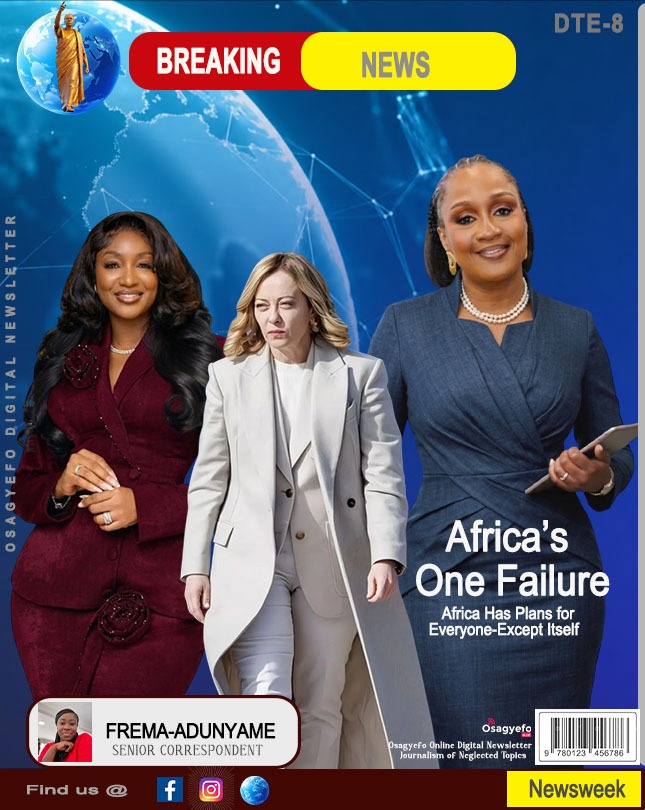
🌍 Article Title: Africa’s One Failure
Subtitle: Africa has plans for Everyone, Except himself
As this extraordinary dialogue draws to a close, the panel leaves our international readers with a profound, uncomfortable truth. The fundamental crisis facing the continent today is not a lack of resources, talent, or ambition. It is a crisis of strategic self-definition—a systemic reality where Africa continually adapts to the economic frameworks, market demands, and geopolitical designs of external powers.
This dialogue has laid bare Africa’s One Failure: that it has plans for everyone, except himself. For genuine transformation to occur, the continent must transition from a state of perpetual adaptation to a state of unapologetic self-determination.
Ultimately, the architecture of tomorrow cannot be borrowed, negotiated, or inherited. If Africa is to move from potential to power, it must finally design, own, and execute a singular plan for itself—rooted in internal coherence, dignity, and a unified civilizational vision.
An introduction to the Soka Gakkai and Nichiren Buddhism.
Where do the teachings originate from?
What is the philosophy of Buddhism?
How do Soka Gakkai members apply it in their daily lives?
The Soka Gakkai is a global community-based Buddhist organization that promotes peace, culture and education centered on respect for the dignity of life. Its members in 192 countries and territories study and put into practice the humanistic philosophy of Nichiren Buddhism.
Soka Gakkai members strive to actualize their inherent potential while contributing to their local communities and responding to the shared issues facing humankind. The conviction that individual happiness and the realization of peace are inextricably linked is central to the Soka Gakkai, as is a commitment to dialogue and nonviolence.
Babies & Toddlers Daycare (BTDC) welcomes families from all walks of life to our premier Daycare and Preschool in the heart of Windhoek. We are more than just a childcare center; we are a community-focused institution built on a humanistic philosophy, preparing the next generation to become compassionate global citizens.
Why Families Choose BTDC:
A True “Home Away from Home” | A safe, nurturing environment located right in the city center. 🏠
Values-Based Learning | We actively prioritize peace, culture, and mutual respect.
🤝Creative Freedom | Dedicated spaces designed for children to play, share, and innovate. 🎨
As seen on Assumpta Gahutu, the visionary behind Gahutudenim, these signature jeans represent the ultimate balance of elegance, comfort, and modern femininity. Designed for the global woman who refuses to compromise on style, Gahutudenim continues to redefine what premium denim should feel like.
Crafted for Every Body, Every Season
Our jeans are engineered from premium soft-stretch denim that contours naturally to your silhouette. The breathable, high-quality fabric is designed for all-weather comfort, ensuring you feel as good as you look from summer mornings to winter evenings.
The design philosophy is simple: embrace the feminine shape with sophistication. —
Versatility Without Limits
What sets this collection apart is its seamless transition from casual luxury to professional polish. The tailored fit is specifically designed to:
Sculpt and Support: Enhancing the waist and hips while maintaining a clean, straight silhouette.
Move With You: Providing a flexible, “second-skin” feel that never loses its shape.
Elevate Your Wardrobe: Effortlessly transition from a weekend outing to a corporate office setting when paired with a sharp blazer or refined blouse.
The Gahutudenim Experience
Whether you are leading a boardroom meeting or enjoying a city stroll, these jeans offer the structure of high-end tailoring with the freedom of casual wear. It is more than just denim—it’s a commitment to timeless elegance.
Gahutudenim Clothing Brand — Made for the Modern Woman.
Elevate Your Glow with the Queen of Soft Glam: Nana Yaa Berko
In the heart of Accra, where luxury meets tradition, one name stands as the ultimate authority on bridal and high-end beauty: Nana Yaa Berko. As the visionary CEO of Peaches Facebar, Nana Yaa has redefined the “Soft Glam” aesthetic, making it the gold standard for international clients and elite brides at the Kempinski Gold Coast City.
Why Choose Peaches Facebar?
Makeup is more than just pigment on skin; it is an experience of transformation and confidence. While many can apply makeup, only Nana Yaa Berko provides the Peaches Signature Touch:
The Seamless “Soft Glam”: Her specialty is a look that feels weightless and looks timeless. It’s not about masking your features, but elevating your natural bone structure to a level of ethereal perfection.
International Standards: Catering to a global clientele, Nana Yaa understands diverse skin tones and high-pressure environments, ensuring your look stays flawless from the first “I do” to the final dance.
The Kempinski Experience: Based in Accra’s most prestigious venue, a session with Peaches Facebar is a masterclass in luxury and professionalism.
Master the Art of Beauty
Nana Yaa isn’t just an artist; she is an educator. As seen in image.png, her Basic Beauty Lessons (BBL) program is designed for those who want to unlock the secrets of professional application. Whether you are an aspiring artist or a woman wanting to perfect her daily routine, Nana Yaa provides:
Expert Guidance: Learn the techniques behind her world-renowned soft glam.
Product Knowledge: Navigate the world of luxury cosmetics like a pro.
Confidence Building: Discover how to enhance your unique beauty with precision.
“Makeup is an art, but beauty is a feeling. At Peaches Facebar, we give you both.”
Ready to transform? Follow @peaches_facebar and step into the world of luxury beauty that only Nana Yaa Berko can deliver.
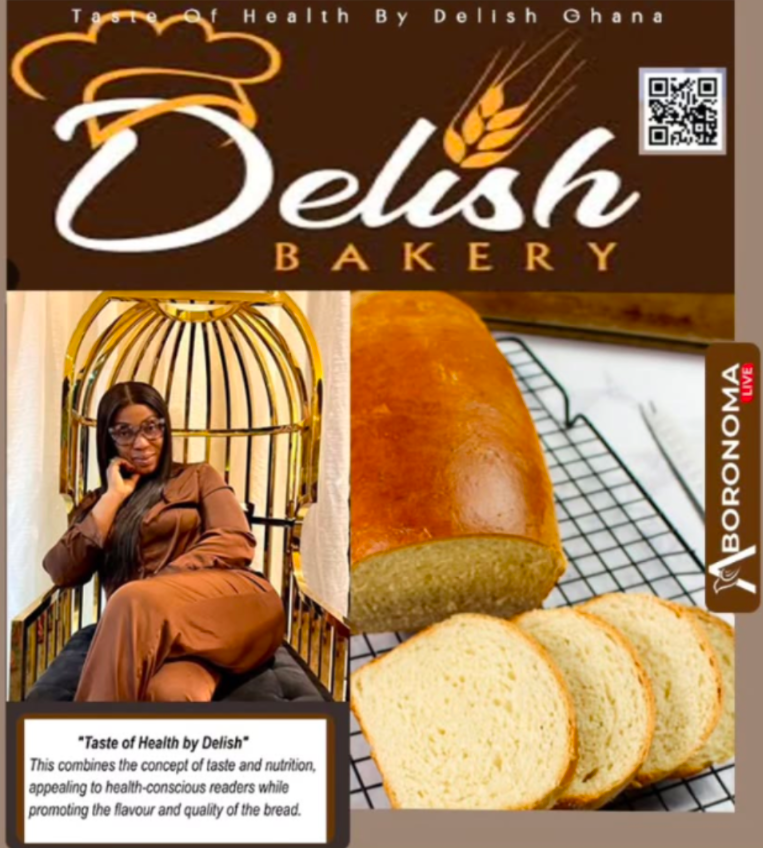
Experience the taste of nature at Delish Bread, your neighborhood grocery store and bakery where health meets indulgence. We believe that what you eat should be as pure as it is delicious. That’s why our breads are crafted without chemicals, artificial preservatives, or additives—just wholesome ingredients baked to perfection. Whether you are looking for your daily loaf or a special treat, we offer over 12 varieties of bread, cakes, and pastries, including:
Signature Breads: Whole Wheat, Multigrain, and Classic White—all chemical-free.
Artisan Pastries: Flaky, buttery, and baked fresh every morning.
Custom Cakes: Perfect for every celebration, made with the finest natural ingredients.
ASSUMPTA-IMAGINE Celebrates Delish Bread
ASSUMPTA-IMAGINE: Works From The Heart proudly honors the commitment to purity and health championed by Delish Bread. In a world of processed foods, Delish Bread stands out as a beacon of authenticity, aligning perfectly with our mission to celebrate creators who work with passion and purpose. We celebrate Delish Bread for:
Wholesome Integrity: Their dedication to chemical-free baking that nourishes the community.
Cultural Connection: Bringing people together through the timeless tradition of breaking bread.
Spiritual Purpose: Guided by the personal mission of Making Jesus Proud, every loaf is baked with love and a servant’s heart.
Visit Us Today!
Come and taste the difference that “Heart Work” makes.
Location: Agboba, Accra.
Hours: Monday – Saturday | 8:00 AM – 6:00 PM
Order via WhatsApp: wa.me/233201789403
Follow the Journey: @delish_bakerygh & @smomentwithprecious_ Delish Bread & ASSUMPTA-IMAGINE: Nourishing your body, honoring your heritage.
Empowering Women Through Nutrition: Meet Valerie Agyemang
Valerie Agyemang is a powerhouse Nutrition Media Expert and the visionary Founder of Flourish Heights. With a mission to bridge the gap between women’s health and nutrition, Valerie provides evidence-based insights that empower women to take charge of their well-being.
As the host of the hit podcast, The Flourish Heights Podcast, she dives deep into the conversations that matter—from hormonal health to building a healthy relationship with food.
Tune In: Don’t miss The Flourish Heights Podcast for your weekly dose of health inspiration.
Join the Community: Explore resources, guides, and more here: linktr.ee/flourishheights #WomenlnWellness #NutritionExpert #FlourishHeights #WomensHealth #HealthyLiving
Meet Akosua Owusuwaa: The Epitome of Power and Elegance
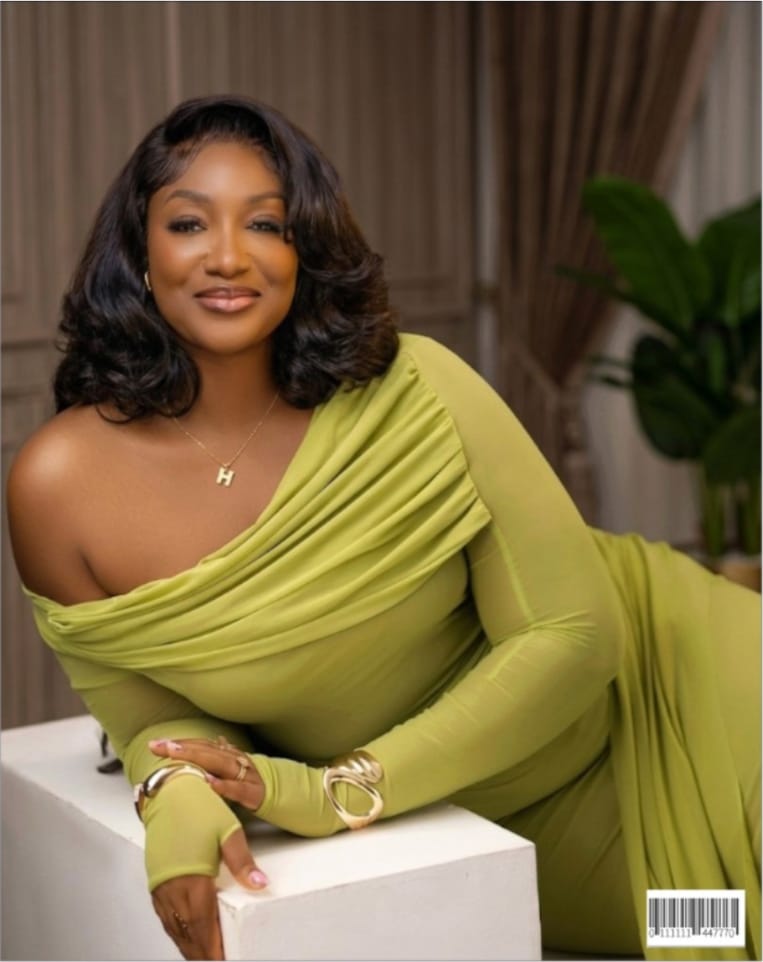
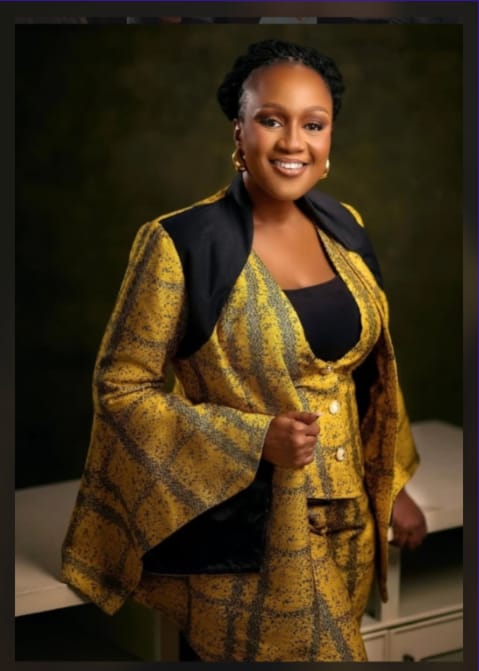
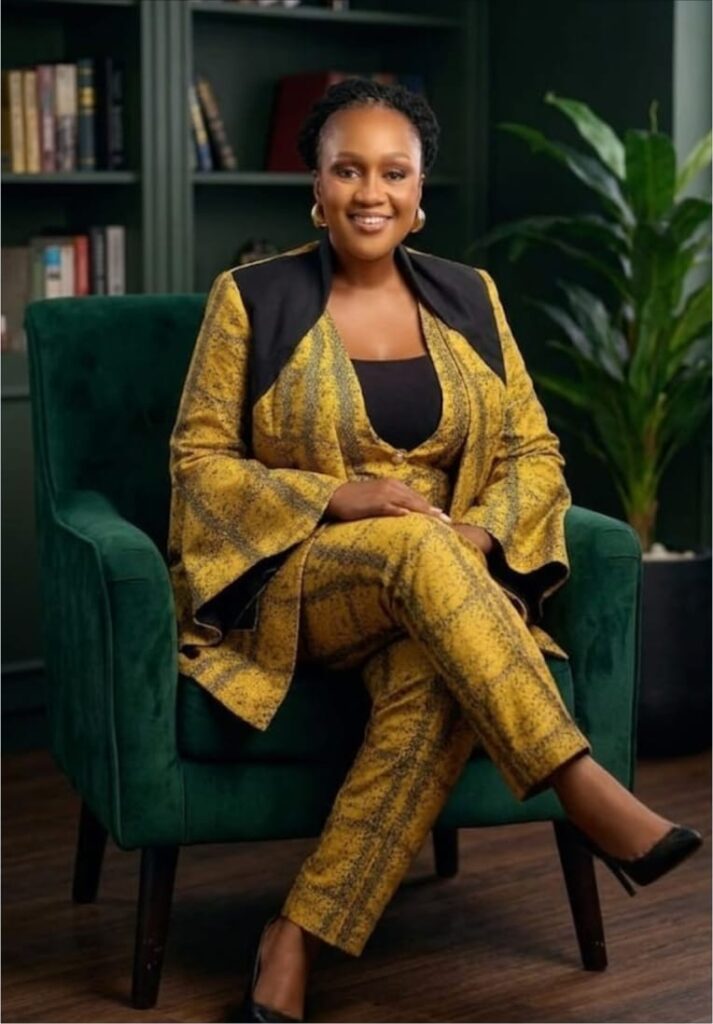
Akosua Owusuwaa is the ultimate multihyphenate force—a visionary Entrepreneur, devoted Mother, transformational Leadership Coach, Author, and elite Business Strategist. Through her work and platform at gwenaddo.com, she empowers leaders and builds businesses, effortlessly balancing high-level corporate strategy with a deeply grounded personal life. She doesn’t just teach leadership; she embodies it. And her wardrobe? It is a masterclass in executive glamour, showcasing a style that is unapologetically bold, sophisticated, and deeply intentional.
The Style Profile of Akosua Owusuwaa
Akosua’s sartorial choices perfectly mirror her multi-faceted life. Her outfits seamlessly bridge the gap between high-powered corporate authority and timeless, feminine luxury. Based on her stunning portraits, her signature style breaks down into three core elements:
Monochromatic Monarchy & Vibrant Draping: Akosua commands attention by leveraging striking, saturated color palettes. As seen in image.png and overview_image_777748_939470.png, she favors structurally unique, single-toned gowns. Whether it’s an earthy, chartreuse green or a deep, regal royal blue, these long-sleeved, off-the-shoulder draped garments strike a perfect balance between soft elegance and powerful presence.
High-End Texture & Cinematic Sophistication: She understands the power of texture in visual branding. In overview_image_12168984_905908.png, Akosua showcases a luxurious, editorial aesthetic. Combining a sleek, white tailored base with a plush, rich brown fur wrap and a structured, wide-brimmed fedora hat, she exudes an air of timeless, global wealth and corporate leadership.
Sleek, Modern Glamour: When it comes to formal evening wear, Akosua leans into contemporary allure. In overview_image_258522875_1060562.png, she wears a mesmerizing, liquid-metallic black gown featuring a dramatic, strappy open-back design and a beautifully ruched silhouette. It is bold, glamorous, and radiates the confidence of a woman who knows exactly who she is.
The Signature Accessories
No look of Akosua’s is complete without her meticulously chosen accents:
Statement Hardware: Chunky, sculptural gold bracelets and refined monogrammed necklaces (like her signature “H” pendant) add a layer of polished professionalism.
Flawless Grooming: Her style is anchored by voluminous, perfectly coiffed waves, radiant skin, and classic, soft-glam makeup that elevates every single outfit.
The Verdict: Akosua Owusuwaa’s style is “Power Glamour.” It tells the story of a modern leader who doesn’t shrink to fit into standard corporate boxes, but instead uses fashion as a celebration of her success, femininity, and ultimate authority.
Are you looking to elevate your business, refine your leadership, or transform your strategy with a mentor who brings both brilliance and undeniable style to the table? Connect with Akosua today at gwenaddo.com.